
For Mississauga homeowners, understanding furnace replacement costs starts with recognizing that no single number applies to every home. The final quote your technician presents reflects a layered set of decisions: the size and efficiency of the equipment, how it connects to your existing venting and ductwork, what electrical or gas work is required, and whether permits are needed. Each factor can shift the total meaningfully. This overview walks through the major components so you can read a quote intelligently, ask the right questions, and avoid surprises once installation day arrives.
Heating Load, Equipment Selection, and AFUE Ratings
Before any price discussion makes sense, a qualified technician needs to determine how much heating capacity your home actually requires. This is called a heating load calculation, and it accounts for your home’s square footage, insulation levels, window area, ceiling height, air leakage, and local climate data for Mississauga and the Greater Toronto Area. Skipping this step and simply matching the old furnace’s size is a shortcut that can leave you with a unit that short-cycles, wears out faster, or fails to keep up on the coldest January nights.
Once capacity is established, efficiency becomes the next major cost driver. Furnace efficiency is expressed as Annual Fuel Utilization Efficiency, or AFUE. Natural Resources Canada’s EnerGuide furnace page explains that a higher AFUE indicates that more of the fuel becomes usable heat. Higher-efficiency condensing equipment can cost more upfront, so compare model ratings alongside your home’s heating load, expected ownership period, and the complete installed scope.
Blower motor type also affects equipment price. A single-stage furnace with a standard blower is the most straightforward option. Two-stage and modulating furnaces paired with variable-speed ECM blower motors usually carry a higher equipment cost, but they can support quieter operation and more even temperatures. In homes with compatible cooling equipment, variable-speed airflow may also help with humidity management during cooling season.
Venting, Combustion Air, and Condensate Management
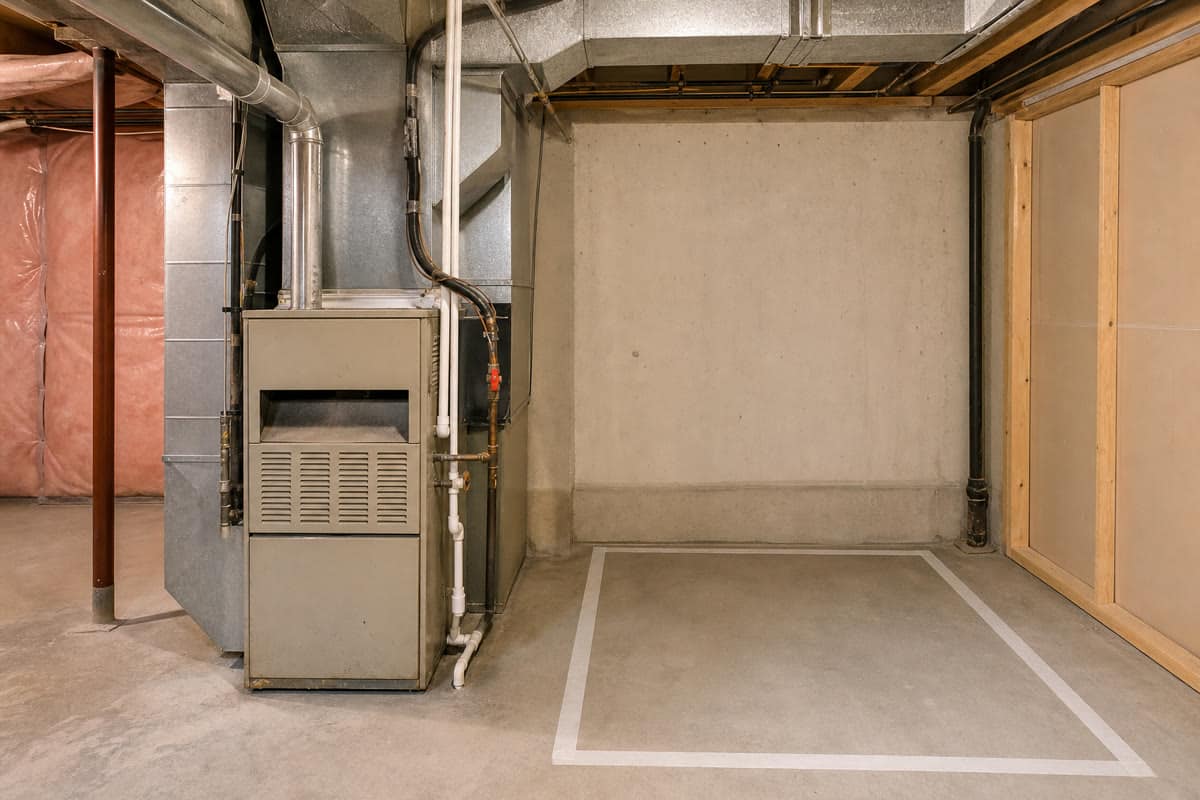
Venting is one of the most variable cost components in a furnace replacement. Older conventional equipment may use an existing metal flue or masonry chimney, while condensing equipment uses an approved venting system and creates condensate that must drain safely. A change in furnace type can therefore require new vent routes and a review of any water heater that shared the old flue.
Combustion air supply is a related consideration. Older furnaces may draw combustion air from the surrounding mechanical room. Many modern high-efficiency units use a sealed combustion design with a dedicated intake pipe, which reduces reliance on indoor air and can support efficient operation when the system is selected and installed correctly.
Condensate management is unique to high-efficiency furnaces. These units produce acidic condensate water that must drain properly. If your mechanical room lacks a nearby floor drain, a condensate pump and drain line will be part of the installation scope. In finished basements, routing that drain line discreetly adds labour time. All of these venting and drainage details should appear explicitly in any written quote you receive, because they represent real work that varies from home to home across the Mississauga area.
Ductwork, Electrical, and Gas Line Considerations
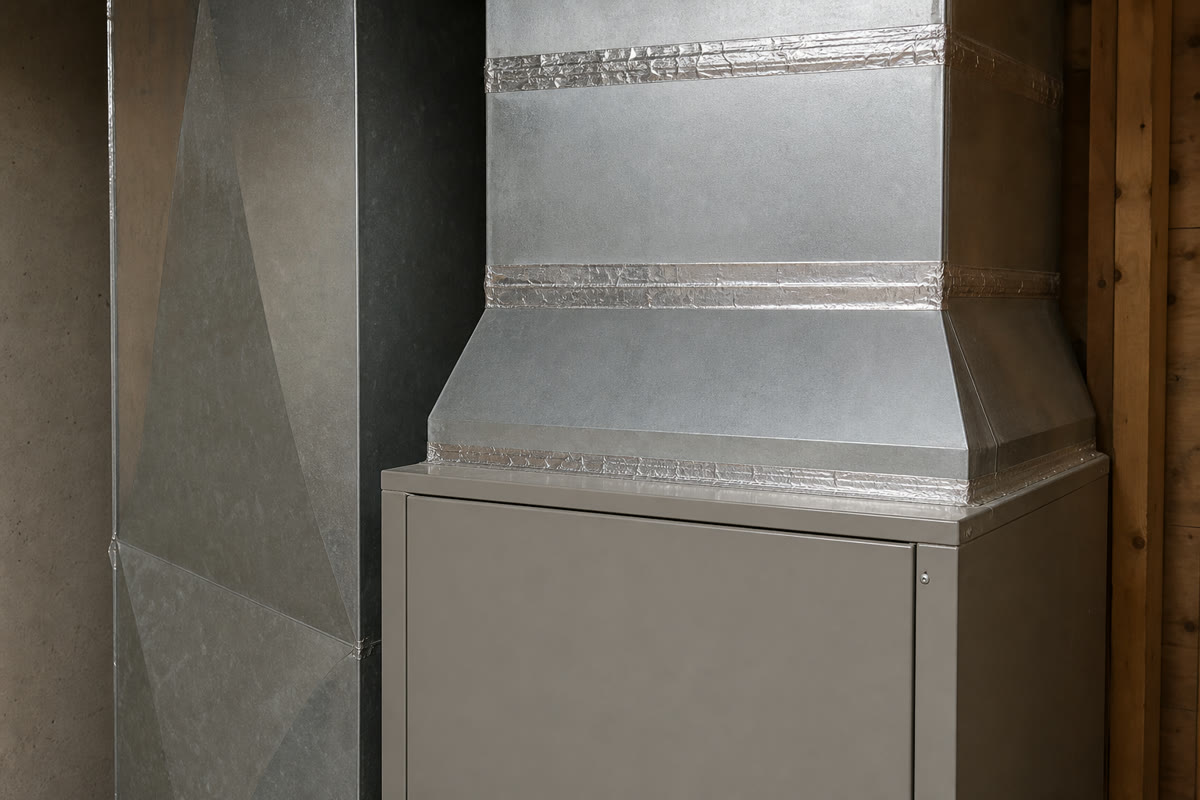
The furnace itself is only part of the system. The ductwork it pushes air through has a direct effect on comfort and efficiency, and its condition should be assessed during any replacement project. Leaky supply or return ducts waste conditioned air before it reaches living spaces. Undersized ducts can restrict airflow and cause the new furnace to work harder than necessary. Sealing accessible duct joints or adding a return-air drop are common additions to a replacement scope that affect the final cost.
Electrical requirements vary by equipment. Variable-speed blower motors and communicating controls may need different wiring than the existing system provides. If the panel, disconnect, or furnace circuit does not suit the selected equipment, electrical work may be part of the quote. Confirm that during the site assessment.
Gas line sizing is another factor. A higher-input furnace may require a larger gas supply line than what currently serves the appliance. If other gas appliances share the same branch, a technician will verify that the existing line can deliver adequate pressure and volume. Upgrading a gas line involves a licensed gas technician and adds to the project cost.
Finally, thermostat compatibility matters. A communicating or smart thermostat may be required or recommended with certain modulating furnace models. Explore your options on our HVAC cost estimator page to get a clearer picture of how these choices interact.
Permits, Equipment Removal, and What a Complete Quote Should Include
Permit and inspection requirements depend on the installation scope. A like-for-like replacement may be treated differently from a project that changes efficiency type, venting, ductwork, gas lines, or electrical components. Ask the contractor to identify the approvals and inspections included in the quote, then confirm the project-specific requirement with the municipality before work begins.
Removal and disposal of the old furnace is another cost that should be stated explicitly. Proper handling of older equipment and cleanup of the work area are part of a professional job. Ask whether removal and disposal are included in the quote or billed separately.
A complete, written quote for a furnace replacement should itemize the following:
- Equipment model, capacity, and AFUE rating
- Venting type, materials, and any chimney or flue work
- Condensate drainage plan, including any pump or drain line
- Ductwork modifications or sealing
- Electrical and gas line work, if required
- Thermostat and controls
- Permit fees and inspection coordination
- Old equipment removal and disposal
- Labour, including estimated scope of work
A quote that bundles everything into a single number without line items makes it very difficult to compare proposals fairly. Reviewing our heating services page gives you a sense of the full scope of work a professional installation involves.
Frequently Asked Questions
Does a higher AFUE furnace always make financial sense for my home?
Not automatically. The payback period depends on how much you heat, current gas rates, and how long you plan to stay in the home. A technician can walk through the operating cost difference between efficiency tiers based on your home’s heating load, helping you make a decision grounded in your specific situation rather than a general rule.
Why do two quotes for the same furnace model sometimes differ significantly?
Scope differences are the most common reason. One quote may include new venting, duct sealing, and permit fees while another covers only the equipment swap. Always compare itemized quotes. Labour rates, warranty terms on installation workmanship, and the contractor’s experience with your specific equipment brand also contribute to price variation.
Is a permit really necessary for a furnace replacement in Mississauga?
It depends on the work being completed. Some furnace replacement projects may require permits or inspections, especially when the scope changes venting, ductwork, gas lines, electrical components, or equipment type. Confirm the exact approvals for the quoted scope rather than assuming every like-for-like replacement follows the same process.
What happens to my existing chimney if I switch to a high-efficiency furnace?
A high-efficiency condensing furnace typically uses a dedicated approved venting system rather than relying on the old metal flue or masonry chimney. If a gas water heater still vents through that chimney, the chimney may need to be assessed or modified so the water heater can vent safely on its own. Your technician should review this during the site visit and include any required venting or chimney work in the quote.
For help reviewing furnace replacement options, contact Furnace King Home Services or call (905) 564-5464 to discuss service for your Mississauga home.