
What It Means When Your Boiler Is Losing Pressure
If you’ve noticed the needle on your boiler’s pressure gauge creeping toward the red zone, you’re dealing with one of the most common service calls we get from homeowners across Oakville and the surrounding Greater Toronto Area. Boiler pressure loss happens when water is escaping from the sealed heating system somewhere it shouldn’t, or when air is finding its way in and displacing water that needs to stay put. A healthy boiler system holds a fairly narrow pressure range, and when that pressure drops, your boiler may struggle to circulate hot water efficiently, trip out entirely, or stop producing heat and hot water just when you need it most.
It’s worth understanding upfront that a small amount of pressure drift over weeks or months is often normal. Sealed systems aren’t perfectly airtight forever, and a slow, gradual dip that you top up once every few months usually isn’t cause for alarm. What matters is the pattern: how fast the pressure is dropping, how often you’re having to refill, and whether you can see or hear anything unusual around your radiators, pipes, or the boiler itself. Getting familiar with that pattern is the first step toward figuring out whether this is a quick DIY fix or something that needs a trained eye.
How to Read Your Pressure Gauge the Right Way
Most residential boilers have an analog or digital gauge showing acceptable operating pressure marked in a green zone, usually somewhere between 1 and 1.5 bar when the system is cold, though this varies by manufacturer and installation. If the needle sits below that green range, your system is underpressurized. If it sits above it, you may have a different problem related to overfilling or a failed expansion vessel, which we’ll get to shortly.
When you check the gauge, do it when the heating has been off for a couple of hours so the system is cold. Pressure naturally rises when water heats up and expands, so checking on a hot system can give you a misleadingly high reading. Write down the pressure and the date, then check again a few days later. That simple habit tells you whether you’re dealing with a one-time dip, perhaps from bleeding a radiator, or a steady leak that’s draining the system over time.
Pinhole Leaks in Pipework and Radiators
One of the most frequent culprits behind gradual pressure loss is a pinhole leak somewhere in the copper pipework or inside a radiator itself. These leaks can be tiny, sometimes no bigger than a pinprick, and they often show up as a small damp patch, a faint tide mark of limescale, or a patch of rust on the underside of a radiator or along an exposed pipe run. Over years, internal corrosion or sediment buildup can wear a thin spot in the metal until it finally gives way.
These leaks are sneaky because the water loss can be so slow that you never see an actual puddle. Instead, you just notice the pressure gauge reading a little lower every few weeks. If you find a leak, even a small one, it’s best treated as a heads-up rather than something to ignore, since pinhole leaks tend to get worse rather than better on their own.
A Faulty Pressure Relief Valve
Your boiler’s pressure relief valve, sometimes called a PRV or safety valve, is designed to release water if the system pressure climbs too high, protecting the boiler and pipework from damage. When this valve wears out or its seal degrades, it can start weeping water even at normal operating pressure, slowly bleeding the system down over time. You’ll often spot this as a small trickle or drip coming from a discharge pipe that typically runs outside the house, sometimes just above ground level near an exterior wall.
A dripping relief valve is one of those issues that’s easy to dismiss because the drip itself seems minor. In our experience, though, it’s rarely something that resolves on its own, and continuing to top up the pressure while a relief valve leaks just delays a straightforward repair while wasting water and putting unnecessary wear on the rest of the system.
Bleeding Radiators Without Repressurizing
If you’ve recently bled a radiator to clear trapped air and get rid of that telltale cold spot at the top, you may have inadvertently let some system water out along with the air. This is one of the most common, and most easily explained, reasons for a sudden pressure drop. It’s not a sign of a leak at all; it’s simply a side effect of routine maintenance that most homeowners handle themselves without issue.
The fix here is usually as simple as topping the system back up through the filling loop once you’ve finished bleeding all the radiators in the house. If you bled several radiators in one session, expect the pressure drop to be a bit more noticeable than if you only did one. As long as the pressure holds steady in the days afterward, this kind of dip is nothing to worry about.
A Failing Expansion Vessel
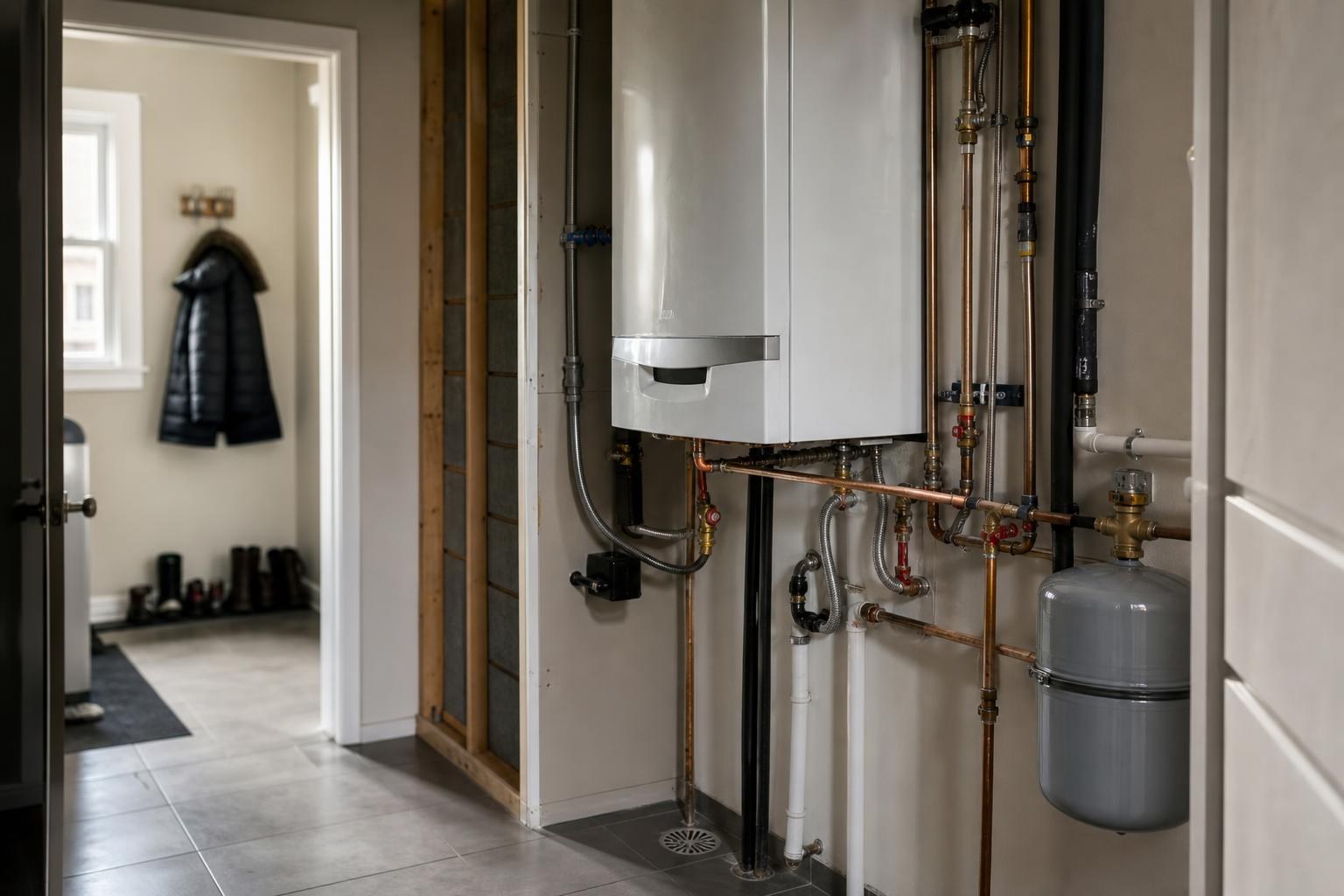
Inside most boilers sits an expansion vessel, a sealed container with a rubber diaphragm and a cushion of air that absorbs the natural expansion of water as it heats up. When that internal diaphragm fails or the air charge leaks out over time, the vessel can no longer do its job properly, and system pressure becomes unstable. This can show up as pressure that swings unpredictably between too high and too low, or as pressure that seems to drop faster than a typical pinhole leak would explain.
Expansion vessel problems are trickier to diagnose than a visible drip because there’s usually nothing to see from the outside. If your pressure behaviour seems erratic rather than a slow, steady decline, and you’ve ruled out an obvious leak, a failing expansion vessel is worth having checked by a technician who can test the vessel’s air charge and diaphragm condition directly.
Loose Fittings and Connections
Sometimes the source of a pressure drop is refreshingly simple: a fitting somewhere in the system, whether at a radiator valve, a pipe joint, or a connection point near the boiler itself, has loosened slightly over time due to vibration, thermal cycling, or just age. These connections can weep small amounts of water without producing an obvious puddle, especially if they’re tucked behind a radiator or under flooring.
A visual inspection of accessible joints and valves, particularly at radiator connections throughout the house, can sometimes catch this before it becomes a bigger issue. If you find dampness or mineral staining around a fitting, it’s often a straightforward repair, but it does require getting eyes on the exact spot, which isn’t always easy for a homeowner to do safely, especially around fittings close to the boiler’s internal components.
How to Safely Check for Leaks Around Your Home
Before assuming the worst, it’s worth doing a methodical walk-through of your home’s heating system. Start at the boiler itself and look underneath and around the casing for any signs of moisture, staining, or mineral deposits. Then work your way through each room, checking the areas around radiator valves, bleed points, and any exposed pipework, particularly where pipes run through walls, floors, or unheated spaces like a basement or crawl space where a leak might go unnoticed longer.
Look for dried white or greenish mineral trails, rust spots, bubbling paint near baseboards, or unexplained damp patches on flooring or drywall. It also helps to feel around fittings with a dry paper towel; even a leak too small to see can leave a damp mark on tissue pressed against a joint. If you find active dripping near the boiler’s electrical components, don’t attempt to investigate further yourself. Turn off the system at the switch if it’s safe to do so and treat that as a signal to get help rather than a DIY project.
When Repressurizing via the Filling Loop Makes Sense
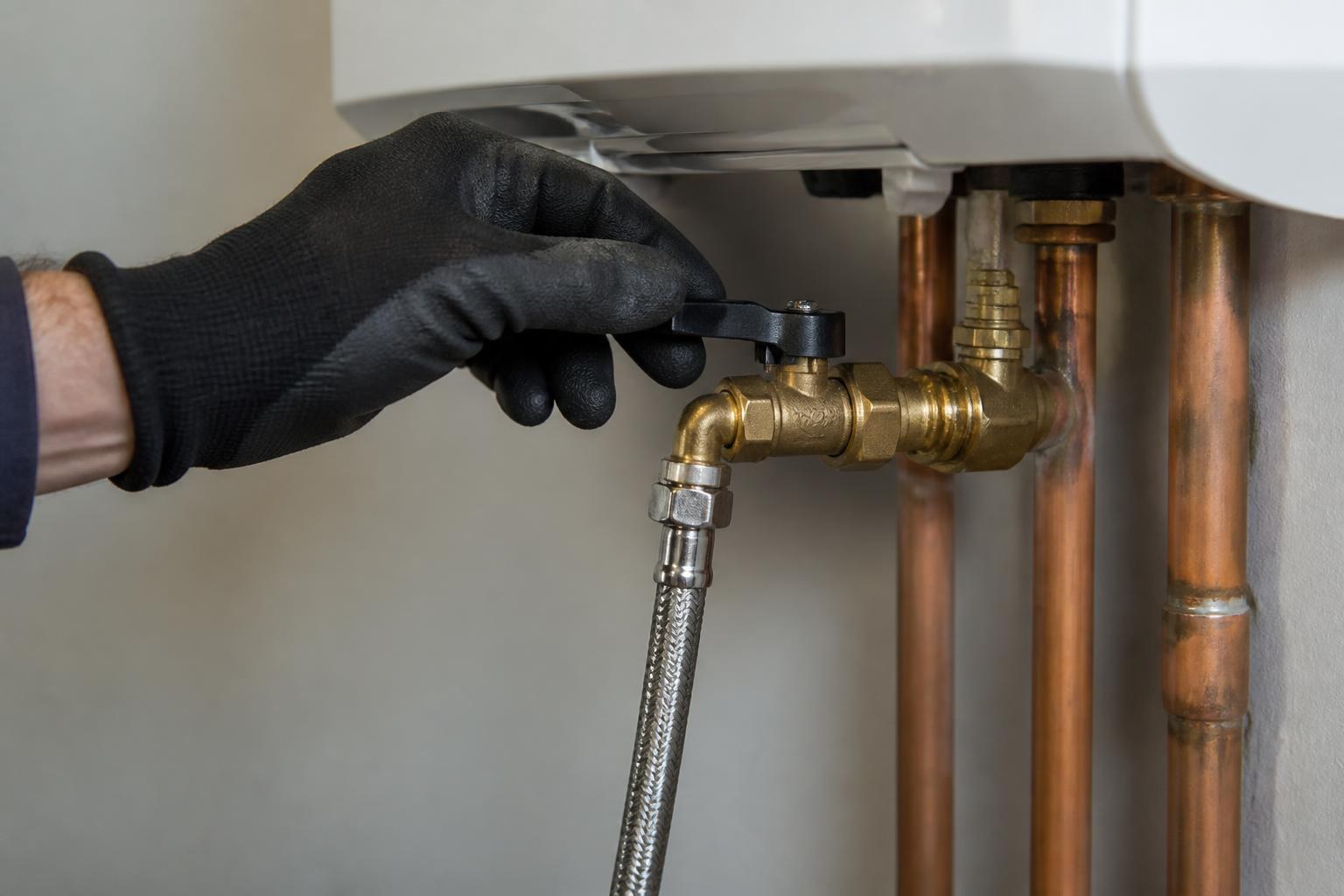
If your pressure has dropped once, you’ve checked the visible pipework and radiators and found nothing concerning, and the drop coincides with something explainable like bleeding a radiator, topping the system back up yourself through the filling loop is a perfectly reasonable step. Most boilers make this process straightforward: locate the filling loop, usually a braided hose connecting the cold mains to the heating system near the boiler, open the valves slowly until the gauge reaches the manufacturer’s recommended pressure, then close the valves fully and confirm the connection isn’t dripping.
The key word here is once. A single top-up to restore normal pressure after routine maintenance is normal homeowner territory. What’s not reasonable is treating the filling loop as a permanent fix for a system that keeps losing pressure week after week. If you find yourself repeating this process on any kind of regular schedule, that’s your system telling you there’s an underlying issue that a refill alone won’t solve, and continuing to mask it can lead to bigger problems, including damage to boiler components that weren’t designed to run under-pressurized.
When to Stop Topping Up and Call a Professional
There’s a clear line between a one-off pressure dip and a system that needs professional attention. If you’re refilling more than once every few weeks, if the pressure drops noticeably within a day or two of topping up, if you’ve found visible water anywhere in the system, or if your boiler is displaying fault codes or shutting down on low pressure, it’s time to bring in a technician rather than keep reaching for the filling loop. Repeated low-pressure lockouts in particular are a sign the boiler’s safety systems are doing exactly what they’re supposed to do: protecting the appliance from running in a condition it wasn’t designed for.
This is especially true heading into the colder months here in Oakville, when a boiler that quietly loses pressure overnight can leave you without heat on the coldest morning of the year. Our technicians diagnose pressure loss by pressure-testing the system, inspecting the expansion vessel and relief valve, and tracing pipework for hidden leaks, rather than guessing. You can learn more about how we approach these repairs on our boiler repair and installation page, and if you’re dealing with a sudden pressure drop alongside no heat or visible leaking, our emergency services team is available to help before the situation gets worse.
Frequently Asked Questions About Boiler Pressure Loss
Is it normal for boiler pressure to drop a little over time?
Yes, a small, gradual drop over several weeks or months is common and doesn’t necessarily point to a serious problem. What matters is the rate of loss. A slow drift you top up occasionally is very different from pressure that disappears within days of refilling.
Can I keep refilling my boiler myself instead of calling someone?
You can safely top up once through the filling loop if the drop was a one-time event, like after bleeding a radiator. If you find yourself repeating the process regularly, that pattern indicates an underlying leak or component failure that repeated refills won’t fix and may worsen.
What’s the difference between low pressure and no heat at all?
Low pressure can cause reduced heating efficiency, but many boilers are designed to lock out entirely once pressure drops below a safe threshold, which results in no heat or hot water at all. If your boiler has shut down and won’t restart after a normal refill attempt, that’s a sign to call for repair rather than continuing to troubleshoot on your own.
How quickly should I get a pressure relief valve leak looked at?
Sooner rather than later. A weeping relief valve rarely seals itself back up, and letting it continue wastes water, keeps draining system pressure, and puts additional wear on other components while the underlying valve issue goes unaddressed.
Boiler pressure problems are one of those issues that are easy to put off until the system finally shuts down on a cold night, but catching the cause early almost always means a simpler, less disruptive repair. If your gauge keeps dipping, you’ve spotted a leak, or your boiler keeps losing pressure no matter how many times you top it up, contact our team through our contact page to schedule a diagnostic visit and get your heating system back to running the way it should.