
Choosing the right air conditioner for your Brampton home is one of the most important decisions you will make as a homeowner. Getting the AC sizing in Brampton wrong can lead to sky-high energy bills, uneven cooling, and a system that wears out years before it should. Whether you are building a new home or replacing an aging unit, understanding how to properly size your air conditioner will save you money and keep your family comfortable all summer long.
Why AC Sizing Matters More Than You Think

Many homeowners assume that bigger is always better when it comes to air conditioning. That is a costly mistake. An oversized AC unit will cool your home too quickly, cycling on and off in short bursts. This rapid cycling prevents the system from properly removing humidity, leaving your home feeling cold and clammy. It also puts excessive wear on the compressor, shortening the lifespan of your equipment.
An undersized unit creates the opposite problem. It runs constantly, struggling to reach your desired temperature on the hottest days. Your energy bills climb, the system wears out faster, and certain rooms never feel comfortable. The goal is to find the perfect balance where your AC runs in steady, efficient cycles.
Understanding BTU Calculations for Your Home
Air conditioner capacity is measured in BTUs (British Thermal Units) per hour or in tons of cooling. One ton equals 12,000 BTUs. As a rough starting point, most homes in the Greater Toronto Area need approximately 20 to 25 BTUs per square foot of living space. A 2,000 square foot Brampton home would need roughly 40,000 to 50,000 BTUs, or about 3.5 to 4 tons of cooling capacity.
However, square footage is only the beginning. A proper calculation also considers ceiling height, window size and orientation, insulation quality, number of occupants, and heat-generating appliances. South-facing windows, for example, can increase cooling demand significantly. Older Brampton homes with less insulation will need more cooling capacity than newer builds that meet modern building codes.
According to Natural Resources Canada, proper sizing is the single most important factor in AC efficiency and performance.
What Is a Manual J Load Calculation?
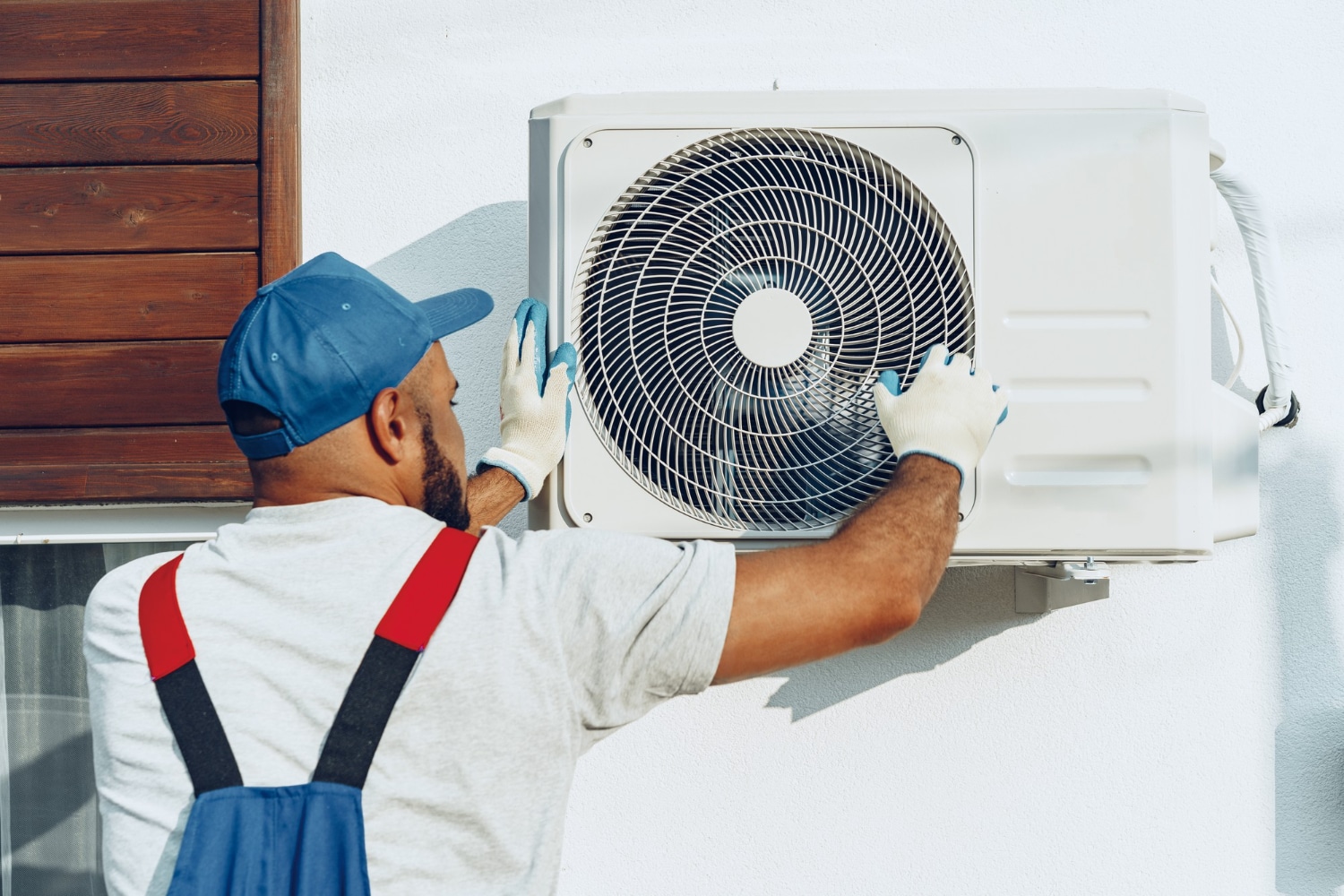
The gold standard for AC sizing is a Manual J load calculation. This is a detailed engineering assessment performed by a qualified HVAC technician who evaluates your home room by room. The calculation accounts for insulation R-values, window types, ductwork layout, air leakage, local climate data, and even the colour of your roof.
A Manual J calculation typically takes 30 to 60 minutes and gives your HVAC contractor precise data to recommend the right equipment. Any reputable air conditioning installation company will perform this assessment before recommending a system. If a contractor quotes you a price without measuring your home, consider that a red flag.
SEER2 Ratings and AC Sizing in Brampton
Once you know the right capacity, the next decision is efficiency. SEER2 (Seasonal Energy Efficiency Ratio 2) ratings tell you how efficiently the unit converts electricity into cooling. The minimum SEER2 rating for new central air conditioners in Canada is 14.3. Higher-efficiency models range from 16 to 24 SEER2.
A higher SEER2 rating means lower operating costs, but the upfront price increases as well. For most Brampton homeowners, a 16 to 18 SEER2 unit offers the best balance of purchase price and long-term savings. If you plan to stay in your home for 10 or more years, investing in a 20+ SEER2 unit can pay for itself through energy savings.
Variable-speed and two-stage compressors maintain more consistent temperatures and operate more quietly than single-stage units. They also do a better job of dehumidifying, which matters during those humid Ontario summers.
Get Your AC Sized Right the First Time
The risks of guessing are simply too high. An improperly sized air conditioner will cost you more to operate, break down more frequently, and fail to keep your home comfortable. Working with an experienced HVAC contractor who performs a proper load calculation is the smartest investment you can make.
Furnace King Home Services has been helping homeowners across Brampton, Mississauga, and the GTA choose the right air conditioning systems for decades. Our technicians perform full Manual J load calculations on every installation to ensure your new AC is perfectly matched to your home.
How do I know what size AC I need for my house?
The most accurate way is to have a certified HVAC technician perform a Manual J load calculation. This considers your home’s square footage, insulation, windows, orientation, and local climate data. As a rough guide, you need about 20 to 25 BTUs per square foot, but professional sizing accounts for variables that online calculators miss.
What happens if my AC is too big for my home?
An oversized air conditioner short-cycles, turning on and off rapidly. This wastes energy, fails to remove humidity properly, causes uneven temperatures, and puts extra stress on the compressor. You end up with higher bills and a shorter system lifespan.
Is a two-stage AC worth the extra cost?
For most Ontario homes, yes. A two-stage or variable-speed air conditioner runs at lower capacity most of the time, using less energy and providing more even cooling. It only ramps up to full power on the hottest days. The energy savings typically offset the higher purchase price within five to seven years.
Does AC sizing affect my energy rebates?
Yes. Many rebate programs, including those through ENERGY STAR, require that equipment be properly sized for the home. An oversized or undersized unit may not qualify for available incentives. Proper AC sizing in Brampton ensures you maximize every rebate dollar available.
Do not leave your comfort to guesswork. Call Furnace King at (905) 564-5464 or visit furnaceking.ca to schedule your appointment.
Frequently Asked Questions
When should I replace my air conditioner?
Consider replacement if your AC is over 10-12 years old, requires frequent repairs costing more than 50% of a new system, uses R-22 refrigerant (being phased out), or your energy bills keep climbing despite maintenance.
What SEER rating should I look for?
For Ontario homes, a minimum SEER2 rating of 14.3 is recommended. Higher SEER ratings (16-20+) cost more upfront but deliver greater energy savings over time. ENERGY STAR certified units are a reliable benchmark.
How much does AC installation cost in Ontario?
Central AC installation in Ontario typically ranges from $3,500 to $7,500 depending on system size, efficiency rating, and ductwork condition. High-efficiency systems may qualify for manufacturer or utility rebates.