
If you’re shopping for a heat pump in Ontario, you’ve probably heard the old myth: “Heat pumps don’t work in Canadian winters.” That was true twenty years ago. Today’s cold-climate heat pumps are engineered to operate reliably down to -25°C and beyond — and they’re transforming how GTA homeowners heat their homes.
As a Bosch Approved Dealer serving Mississauga, Brampton, Etobicoke, and the surrounding GTA, Furnace King has installed hundreds of cold-climate heat pumps. We’ve seen first-hand which brands and models deliver when the temperature drops. Here’s what you need to know before choosing a unit for your home.
What Makes a Cold-Climate Heat Pump Different?
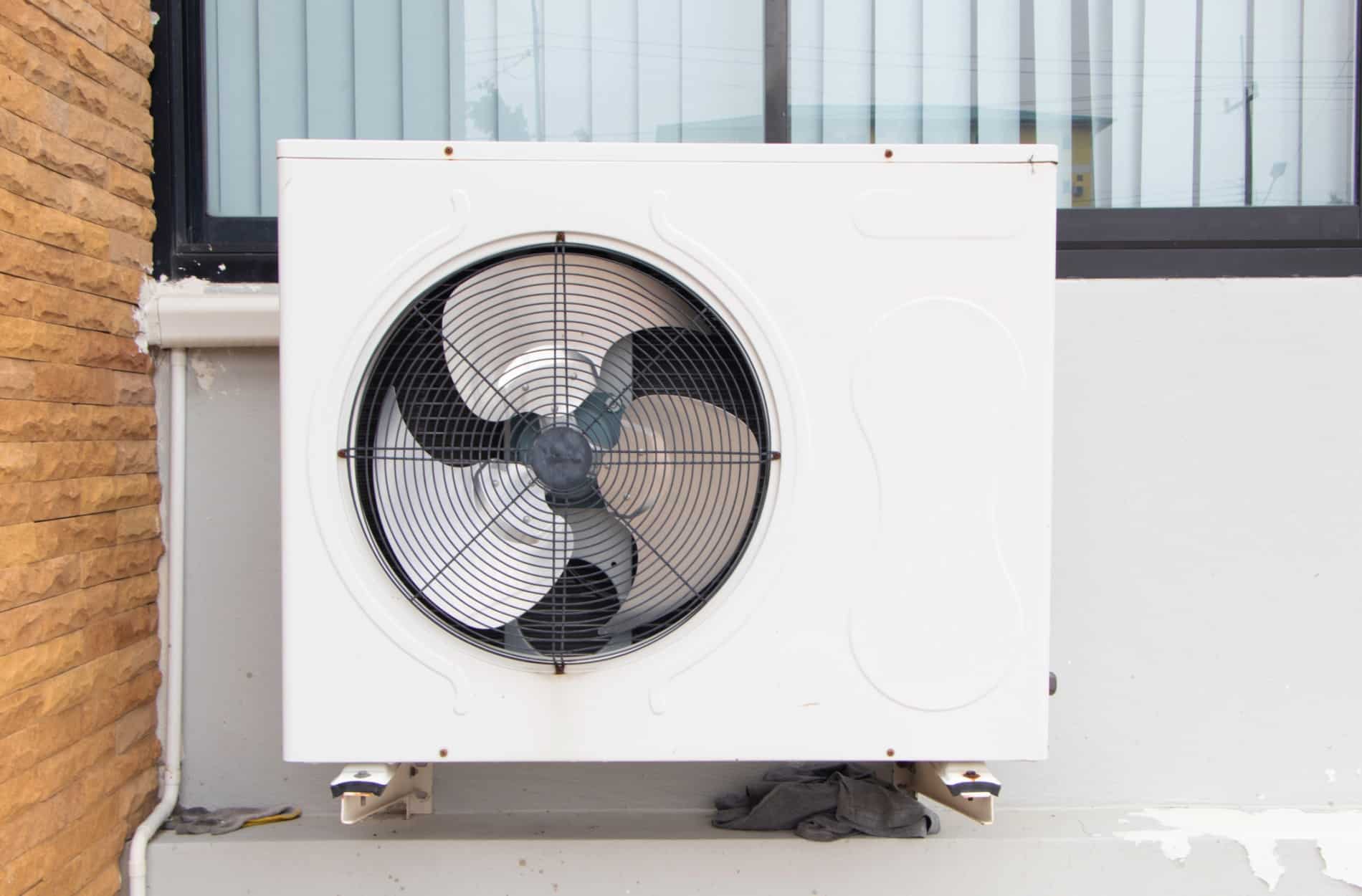
A standard heat pump works by extracting heat from outdoor air and moving it inside. That process becomes harder as the temperature drops because there’s less thermal energy available in colder air. Standard models start losing significant heating capacity below -10°C and may shut down entirely around -15°C to -20°C.
Cold-climate heat pumps solve this problem with three key technologies:
- Enhanced Vapour Injection (EVI) compressors — These compressors inject refrigerant vapour at an intermediate pressure point during the compression cycle, allowing the system to extract more heat from cold air and maintain higher output temperatures. This is the single biggest differentiator between standard and cold-climate units.
- Variable-speed inverter drives — Instead of cycling on and off at full power, inverter-driven compressors modulate their speed continuously. At -15°C, the compressor ramps up to maximum speed to maintain heating output. In milder weather, it runs at a fraction of its capacity, saving energy and reducing wear.
- Improved defrost cycles and larger heat exchangers — Cold-climate models have optimized defrost timing that minimizes the energy wasted on melting ice from the outdoor coil. Larger heat exchangers improve heat transfer efficiency even when outdoor air is frigid.
The result? Where a standard heat pump loses 50% or more of its heating capacity at -15°C, a cold-climate unit retains 75–80% of its rated capacity at the same temperature.
Top Cold-Climate Heat Pumps for Canadian Winters
After years of installing and servicing heat pumps across the GTA, these are the models we recommend most for Ontario homeowners. Each has been proven in our climate.
Bosch IDS 2.0 — Our Top Pick
Furnace King is a Bosch Approved Dealer, and the IDS 2.0 is our go-to recommendation for most GTA homes. Here’s why:
- Rated operating temperature: Down to -25°C
- SEER2 rating: Up to 18.5
- HSPF2 rating: Up to 10.0
- Compressor type: Variable-speed inverter with EVI
- Standout feature: Exceptional balance of cold-weather performance, energy efficiency, and long-term reliability
The Bosch IDS 2.0 isn’t the flashiest model on paper, but it consistently delivers where it counts. Its inverter compressor is remarkably quiet, and the build quality means fewer service calls over its lifespan. For Mississauga homeowners who want a dependable, efficient cold-climate heat pump, the IDS 2.0 is hard to beat.
Trane XV20i
- Rated operating temperature: Down to -25°C
- SEER2 rating: Up to 20
- HSPF2 rating: Up to 10.0
- Compressor type: Variable-speed with Climatuff™ technology
- Standout feature: Among the highest efficiency ratings in the industry
The Trane XV20i is a premium unit with top-tier efficiency numbers. If maximum energy savings is your priority and you’re willing to invest in a higher upfront cost, the XV20i delivers. Trane also has an excellent warranty program, which adds peace of mind for Canadian homeowners.
Mitsubishi Hyper-Heating (H2i)
- Rated operating temperature: Down to -25°C
- SEER2 rating: Up to 20.0
- HSPF2 rating: Up to 13.0 (ductless models)
- Compressor type: Variable-speed inverter with flash injection
- Standout feature: Best ductless/mini-split option for cold climates
Mitsubishi’s Hyper-Heating line is the gold standard for ductless cold-climate heating. If your home doesn’t have existing ductwork — or if you want zone-by-zone temperature control — the H2i series is an excellent choice. These mini-split units are particularly popular for additions, converted garages, and older homes without central duct systems.
Amana AVXC20
- Rated operating temperature: Down to -20°C
- SEER2 rating: Up to 20
- HSPF2 rating: Up to 10.0
- Compressor type: Variable-speed inverter
- Standout feature: Lifetime compressor warranty (to the original owner)
The Amana AVXC20 offers strong efficiency ratings and comes with one of the best warranties in the business — a lifetime replacement warranty on the compressor for the original homeowner. Its -20°C rating is slightly less than the other models here, but for most GTA winters, that’s more than adequate.
Cold-Climate Heat Pump Comparison Table
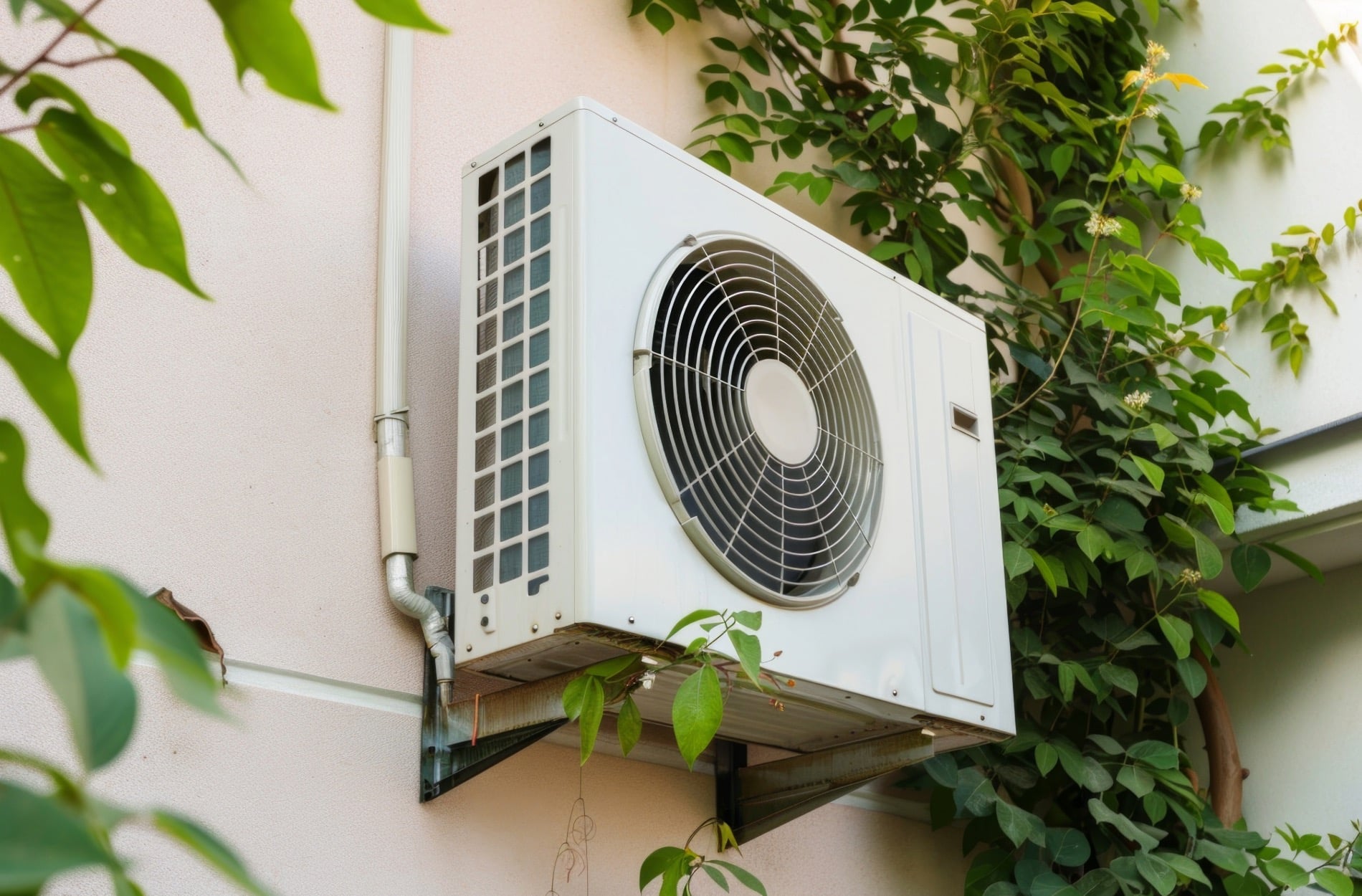
| Model | Min. Temp | SEER2 | HSPF2 | Type | Approx. Price (Installed) |
|---|---|---|---|---|---|
| Bosch IDS 2.0 | -25°C | Up to 18.5 | Up to 10.0 | Ducted | $6,000–$10,000 |
| Trane XV20i | -25°C | Up to 20 | Up to 10.0 | Ducted | $8,000–$12,000 |
| Mitsubishi H2i | -25°C | Up to 20.0 | Up to 13.0 | Ductless | $4,500–$8,000 |
| Amana AVXC20 | -20°C | Up to 20 | Up to 10.0 | Ducted | $7,000–$11,000 |
Note: Installed prices are estimates for a typical GTA home and include equipment, labour, and standard installation materials. Actual cost depends on your home’s specific requirements. Furnace King provides free in-home estimates with exact, no-surprise pricing.
Understanding HSPF and SEER Ratings
When comparing cold-climate heat pumps, two efficiency ratings matter most:
HSPF2 (Heating Seasonal Performance Factor) measures heating efficiency over an entire season. The higher the number, the more heat you get per dollar of electricity. For cold-climate operation in Ontario, HSPF2 is the more important rating. Look for units with HSPF2 of 9.0 or higher.
SEER2 (Seasonal Energy Efficiency Ratio) measures cooling efficiency. Since your heat pump also replaces your air conditioner, a higher SEER2 means lower cooling costs in summer. Units rated SEER2 16 or higher are considered high-efficiency.
Both ratings are calculated under standardized test conditions, so they allow fair comparisons between brands. However, real-world performance also depends on proper sizing, installation quality, and your home’s specific characteristics — which is why working with an experienced installer matters as much as choosing the right brand.
How COP Changes with Temperature
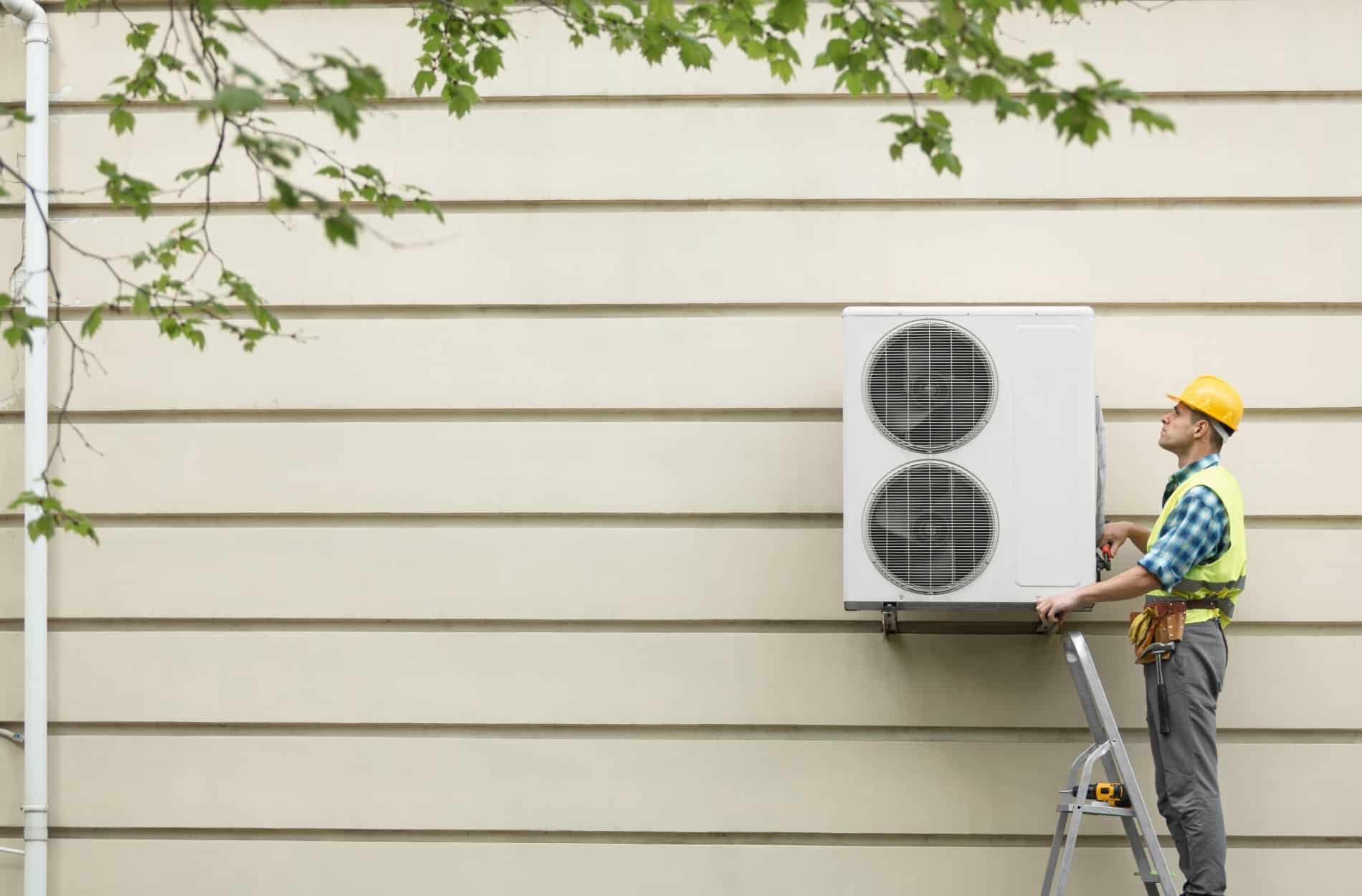
A heat pump’s efficiency at any given moment is measured by its Coefficient of Performance (COP) — how many units of heat it produces per unit of electricity consumed. A COP of 3.0 means you get three dollars of heat for every dollar of electricity. Here’s how COP typically changes as the temperature drops:
| Outdoor Temperature | Typical COP | Efficiency vs. Electric Baseboard |
|---|---|---|
| +8°C (autumn day) | 3.5 | 350% efficient |
| -5°C (mild winter day) | 2.5 | 250% efficient |
| -15°C (cold winter day) | 2.0 | 200% efficient |
| -25°C (extreme cold snap) | 1.5 | 150% efficient |
Even at -25°C, a cold-climate heat pump is still 50% more efficient than electric baseboard heating. The key insight is that your heat pump spends the vast majority of winter operating at milder temperatures where the COP is 2.0 or higher — the extreme cold days are the exception, not the rule.
Why Cold-Climate Heat Pumps Work in the GTA
Mississauga’s average January temperature is approximately -7°C. On a typical winter day, a cold-climate heat pump operates at a COP of 2.0 to 2.5 — delivering twice as much heat per dollar compared to a gas furnace. Temperatures rarely drop below -20°C in the GTA, which means a cold-climate heat pump handles 90–95% of heating hours without any assistance.
For the handful of extreme cold days each year, most homeowners opt for a hybrid heat pump system that pairs the heat pump with their existing gas furnace. The furnace kicks in as backup only when needed, giving you the best of both worlds: heat pump efficiency for most of the year, and gas reliability on the coldest nights.
Ontario’s electrical grid is another advantage. Over 90% of Ontario’s electricity comes from clean sources — nuclear, hydro, wind, and solar. That means running a heat pump in Ontario produces dramatically fewer greenhouse gas emissions than burning natural gas, even accounting for grid losses.
What to Look for When Choosing a Cold-Climate Heat Pump
Beyond the brand and model, here are the factors that matter most for Ontario homeowners:
- Minimum operating temperature — Look for -25°C rated units. Anything rated only to -15°C is not a true cold-climate model.
- Variable-speed compressor — Non-negotiable for cold-climate performance. Single-stage and two-stage units cannot match the efficiency or comfort of a variable-speed inverter.
- HSPF2 rating of 9.0+ — This ensures strong heating efficiency over the full season, not just at mild temperatures.
- Proper sizing — An oversized unit short-cycles and wastes energy. An undersized unit can’t keep up on cold days. A Manual J load calculation by a qualified technician is essential.
- Installation quality — Even the best equipment underperforms if improperly installed. Refrigerant charge, airflow, and ductwork sealing all affect real-world performance by 20–30%.
For a deeper dive into how the top brands compare across all performance categories, check out our head-to-head heat pump brand comparison.
Additional Resources
For more information from trusted sources:
Curious what a cold-climate heat pump costs in Ontario? Use our free HVAC cost estimator to get an instant price range.
Frequently Asked Questions
What temperature do heat pumps stop working?
Standard heat pumps begin losing significant efficiency below -10°C and may shut down around -15°C to -20°C. Cold-climate heat pumps with enhanced vapour injection (EVI) technology continue operating down to -25°C or even -30°C, though at reduced efficiency. In the GTA, where winter lows rarely drop below -20°C, a properly sized cold-climate heat pump handles the vast majority of heating days without backup.
What is a cold climate heat pump and how is it different?
A cold climate heat pump uses enhanced vapour injection (EVI) compressor technology and variable-speed inverter drives to maintain heating capacity at much lower outdoor temperatures. Unlike standard models that lose 50%+ of capacity at -15°C, cold-climate units like the Bosch IDS 2.0 retain 75–80% capacity at that temperature. They also have improved defrost cycles and larger heat exchangers optimized for cold operation.
Which heat pump brand is best for Canadian winters?
The top performers for Canadian winters are the Bosch IDS 2.0 (rated to -25°C, excellent cold-weather COP), Trane XV20i (rated to -25°C, variable speed), and Mitsubishi Hyper-Heating (rated to -25°C, strong mini-split option). As a Bosch Approved Dealer, Furnace King recommends the IDS 2.0 for most GTA homes due to its balance of cold-climate performance, efficiency, and reliability. The best choice depends on your home’s ductwork, size, and budget.
Do you need a backup furnace with a cold climate heat pump?
In the GTA, a cold-climate heat pump can handle 90–95% of heating hours as the sole source. However, many homeowners choose to keep their existing gas furnace as backup for the handful of extreme cold days each winter. This hybrid approach costs less than upgrading to the highest-capacity heat pump and provides peace of mind. If your current furnace is still in good condition, adding a heat pump to create a hybrid system is often the smartest move.
Get Expert Help Choosing the Right Heat Pump
Choosing the right cold-climate heat pump isn’t just about picking a brand — it’s about matching the right equipment to your home’s specific needs, sizing it correctly, and installing it properly. As a Bosch Approved Dealer with years of experience installing all major brands, Furnace King can help you navigate the options and find the best fit for your home and budget.
We offer free in-home assessments with a complete Manual J load calculation, honest recommendations (including when a heat pump might not be the best choice for your situation), and expert installation backed by our workmanship guarantee. Serving Mississauga, Brampton, Etobicoke, and the surrounding GTA.
Call Furnace King at (905) 564-5464 or request a free estimate online to find out which cold-climate heat pump is right for your home.