
Homeowners who want to compare air conditioner brands in Ontario often start with brand names and end up confused by overlapping model numbers, competing efficiency claims, and installer opinions that are hard to verify independently. A more reliable approach is to evaluate each candidate system against the same set of technical criteria before accepting a quote. This framework covers the factors that influence central air conditioner performance in Ontario’s climate, including comfort, sound, operating efficiency, and long-term serviceability. Applying it consistently across brands puts you in a stronger position when reviewing proposals from contractors in Mississauga and the Greater Toronto Area.
Load Matching, Capacity, and Efficiency Ratings
The single most consequential decision in any central AC replacement is selecting the right cooling capacity for the home. An oversized unit short-cycles, meaning it reaches the thermostat setpoint before completing a full dehumidification cycle, leaving indoor air feeling clammy even when the temperature reads correctly. An undersized unit runs continuously on the hottest days and never catches up. Neither outcome is acceptable, and neither is corrected by choosing a premium brand.
Proper sizing requires a recognized cooling-load method appropriate for Canadian homes, such as CSA F280, accounting for insulation, window area and orientation, ceiling height, occupancy, and local design temperatures. Ask the contractor to show the load calculation rather than relying on a square-foot rule of thumb.
Once capacity is established, efficiency comparisons become meaningful. In Canada, the relevant metric is the Seasonal Energy Efficiency Ratio 2 (SEER2), which replaced the older SEER standard and uses a more realistic test protocol. Higher SEER2 numbers indicate lower operating costs, but the relationship is not linear, and the benefit of moving from a mid-range to a top-tier rating depends heavily on how many cooling hours your home accumulates each season.
Natural Resources Canada’s EnerGuide label guidance explains how to compare models within a similar equipment class. Match capacity and system type first; only then does an efficiency-rating comparison tell you something useful.
Use our HVAC cost estimator to get a preliminary sense of system costs before meeting with contractors.
Compressor Staging, Sound Levels, and Controls
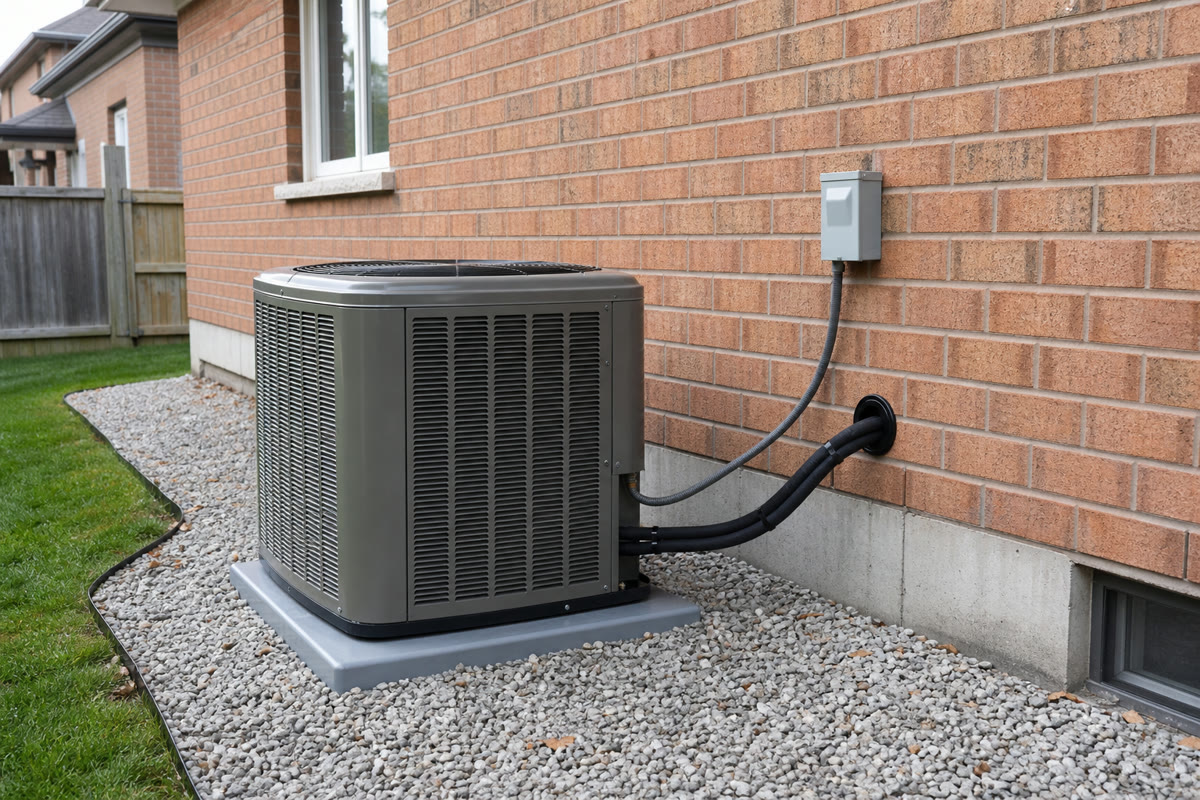
Beyond capacity and efficiency, the compressor type shapes how a system feels to live with day to day. Single-stage compressors run at full output or not at all. Two-stage compressors add a lower output setting for mild days, which improves humidity control and reduces the abrupt on-off cycling that single-stage units produce. Variable-capacity compressors modulate continuously across a wide range, offering the smoothest comfort and the best part-load efficiency, though they carry a higher upfront cost and require matched indoor components to deliver their rated performance.
Sound Ratings
Outdoor unit sound is measured in decibels, usually shown as dB or dBA. Manufacturers publish this figure in their specification sheets. When comparing brands, review the spec sheet for the exact model number being quoted, not a range average. Even a modest published sound-rating difference can matter when the outdoor unit sits near a bedroom window, patio, or neighbouring property.
Smart Controls and Compatibility
Some systems, especially premium product lines, support communicating controls that can display diagnostic data and provide remote access. Compatibility is brand-specific and sometimes model-specific within a brand. Before committing to a system, confirm that the thermostat included in the quote is genuinely compatible with the indoor air handler or furnace coil already in your home, or that a compatible replacement is included in the scope of work.
Zoning systems, humidity sensors, and ventilation controls can integrate with some platforms and not others. If those features matter to you, verify compatibility before signing, not after installation.
Refrigerant Type, Matched Coils, and Serviceability
Refrigerant type is now a practical purchasing consideration. Older R-410A equipment is increasingly being replaced in new product lines by lower-GWP options such as R-454B or R-32. When comparing brands, note the refrigerant used by each exact model and ask how that choice may affect future service availability and cost.
Matched Indoor Coils
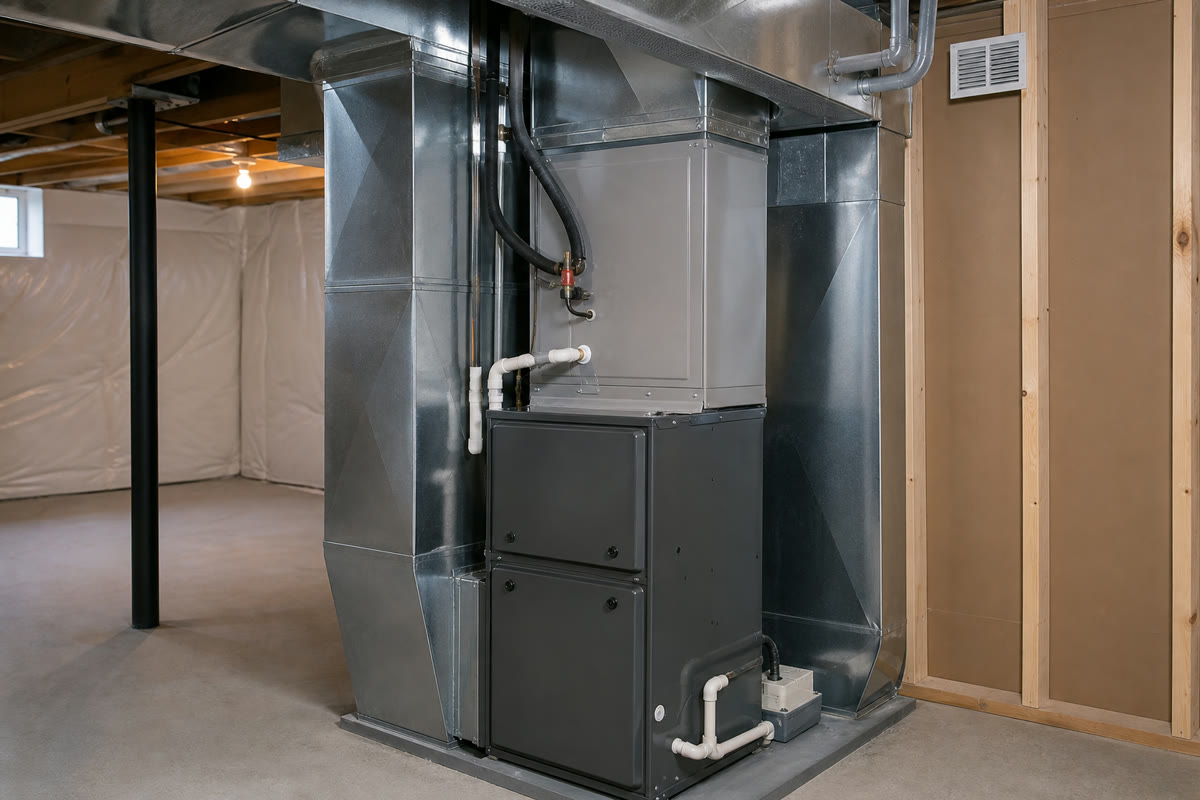
A central air conditioner is a split system. The outdoor condensing unit must be paired with a compatible indoor evaporator coil, and that coil must be matched to the furnace or air handler it sits on. Efficiency ratings published by manufacturers are based on tested combinations of specific outdoor and indoor components. Installing a mismatched coil can reduce actual efficiency, affect warranty eligibility, and create refrigerant-charge problems that are difficult to diagnose later.
When reviewing quotes, confirm that the indoor coil is explicitly listed as a matched component for the outdoor unit being proposed. If your existing coil is being retained, ask the contractor to verify compatibility in writing.
Parts Availability and Service Network
A brand with strong distribution in Ontario can make replacement parts easier to source and may reduce service delays. Ask contractors which brands their service technicians work on most frequently and where parts are sourced locally. This is particularly relevant for variable-capacity systems, which contain more electronic components than single-stage equipment.
Warranty Terms and Installer Commissioning
Warranty structures vary across brands and model tiers. Manufacturers may separate coverage for compressors, other parts, and labour, and the details can depend on registration, installation conditions, and transferability. Read the actual warranty document for each exact model being quoted, not only the summary on a sales sheet.
Registration and Conditions
Many manufacturers require product registration within a defined window after installation to activate the full warranty term. Some require that installation be performed by a registered contractor. Missing these steps can reduce coverage to a shorter base period. Confirm with your installer who is responsible for completing registration and get that commitment in writing before work begins.
Commissioning Quality
Even the best-rated system on paper performs only as well as its installation. Proper commissioning includes verifying refrigerant charge against manufacturer specifications, confirming airflow across the coil, checking electrical connections and controls, and testing the system through a complete operating cycle. These steps are not optional extras; they are the difference between a system that delivers its rated performance and one that underperforms from day one.
When comparing quotes across contractors serving Mississauga and the Greater Toronto Area, ask each one to describe their commissioning process specifically. A detailed answer is a good sign. A vague one is worth probing further.
For more information about air conditioning services and what to expect from a professional installation, explore the full overview on our site.
Frequently Asked Questions
Is a higher SEER2 rating always worth the extra cost in Ontario?
Not automatically. The value of a higher SEER2 rating depends on how many cooling hours your home accumulates each season and your local electricity rate. Ontario summers are warm but shorter than in southern US markets. A mid-range SEER2 unit that is correctly sized and properly installed often delivers better real-world results than a high-efficiency unit that is oversized or poorly commissioned.
Can I keep my existing indoor coil when replacing the outdoor unit?
Sometimes, but it requires careful verification. The indoor coil must be rated as a matched component for the new outdoor unit to achieve published efficiency and to maintain warranty coverage. If the existing coil is old, corroded, or incompatible with the new refrigerant type, replacement is the more reliable path. Ask your contractor to check manufacturer documentation before assuming the coil can be retained.
What should I look for in a contractor quote beyond the equipment brand?
Look for a documented cooling-load calculation using a recognized Canadian method such as CSA F280, explicit identification of the matched indoor coil, a clear description of the commissioning process, confirmation of who handles product registration, and a breakdown of labour versus equipment costs. A quote that lists only a brand name and a total price leaves too many variables unresolved to compare fairly against other proposals.
How does refrigerant type affect my decision when comparing brands?
Refrigerant type can affect long-term service planning. Newer lower-GWP refrigerants such as R-454B or R-32 are becoming more common as manufacturers move away from R-410A in new equipment. Confirm which refrigerant each quoted model uses, and ask your contractor about local availability for future service calls.
Furnace King Home Services serves homeowners in Mississauga and the Greater Toronto Area with straightforward HVAC guidance. For air conditioning service questions, call (905) 564-5464 or visit our contact page to get in touch online.