
If your Burlington furnace lights briefly and then shuts off again, over and over, a dirty or failing flame sensor is one of the most common culprits we find. It is a small part that plays an outsized role in whether your furnace runs at all, and understanding how it works can help you recognize the shutdown pattern and know when to stop troubleshooting and call a technician.
What a Flame Sensor Actually Does
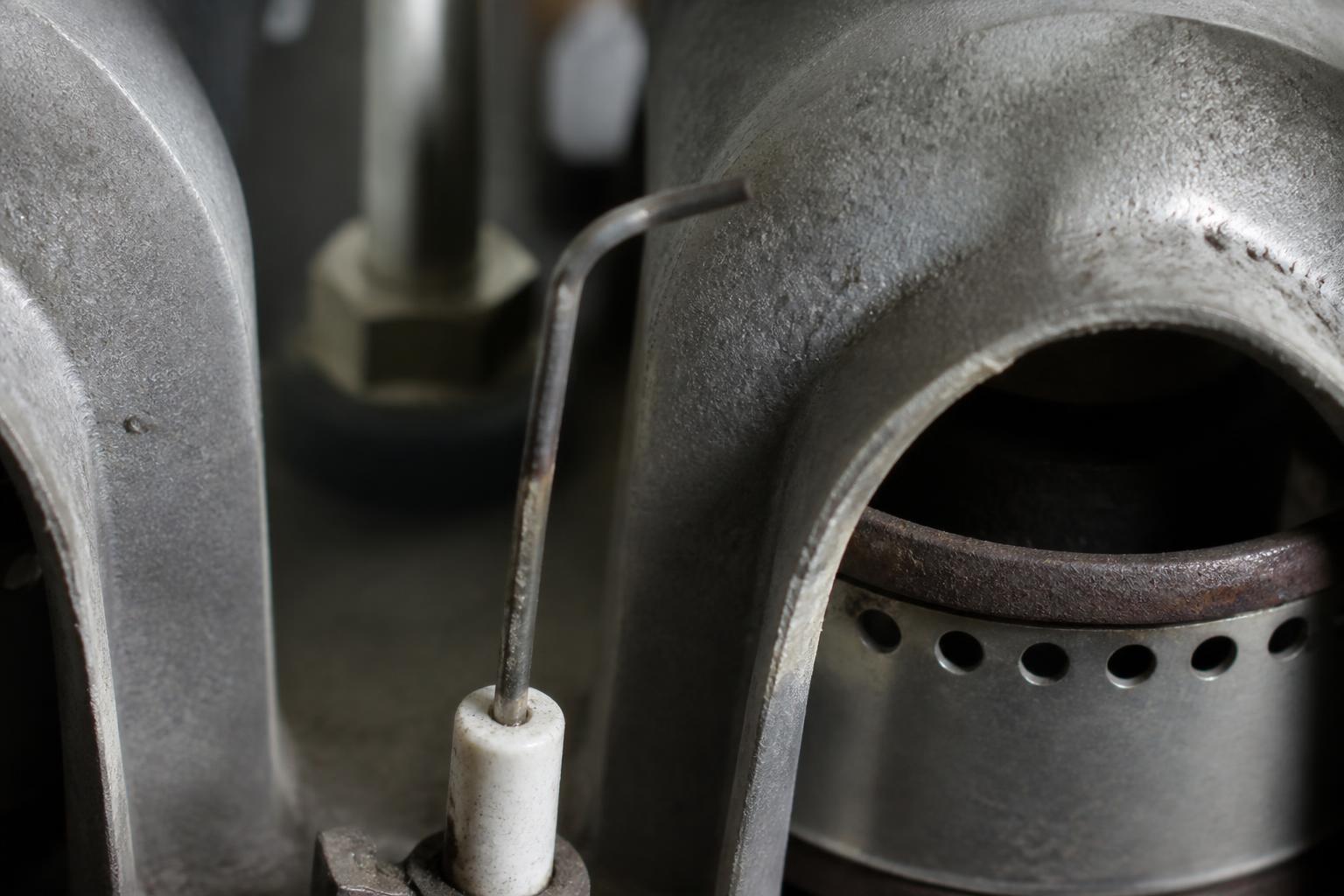
The flame sensor is a thin metal rod positioned in the burner assembly, directly in the path of the flame. Its job is purely safety-related: it confirms that a flame is actually present after the gas valve opens. If the sensor does not detect a flame within a few seconds, the furnace’s control board shuts off the gas valve to prevent unburned gas from continuing to flow into your home. That single function is why a furnace with a bad flame sensor will often light for a moment, then shut down, then try to light again in a repeating pattern. Carrier’s flame-sensor explainer describes the same safety sequence and why a failed confirmation signal produces a shutdown.
Signs You’re Dealing with a Flame Sensor Problem
- The furnace ignites, runs for a few seconds to about a minute, then shuts off.
- The burner tries to relight, sometimes multiple times, before the system locks out entirely.
- You see the flame ignite normally, meaning the ignitor and gas valve are working, but the furnace still shuts down shortly after.
- The furnace worked fine last heating season and started this pattern with no other changes.
This pattern is distinct from short cycling caused by a dirty air filter or closed vents, where the furnace runs longer before shutting off due to overheating. A flame sensor issue tends to show up as a much shorter run time, often under a minute.
Why Flame Sensors Get Dirty
Over a heating season, the sensor sits directly in the combustion flame and gradually accumulates a thin layer of carbon and oxidation. That coating acts like an insulator, weakening the tiny electrical signal the sensor sends to the control board even when the flame itself is burning normally. Eventually, the signal drops below the threshold the control board needs to see, and it shuts the gas valve even though nothing is actually wrong with the flame. This buildup happens gradually, which is why the problem often develops partway through the season rather than being present from day one.
What a Technician Checks
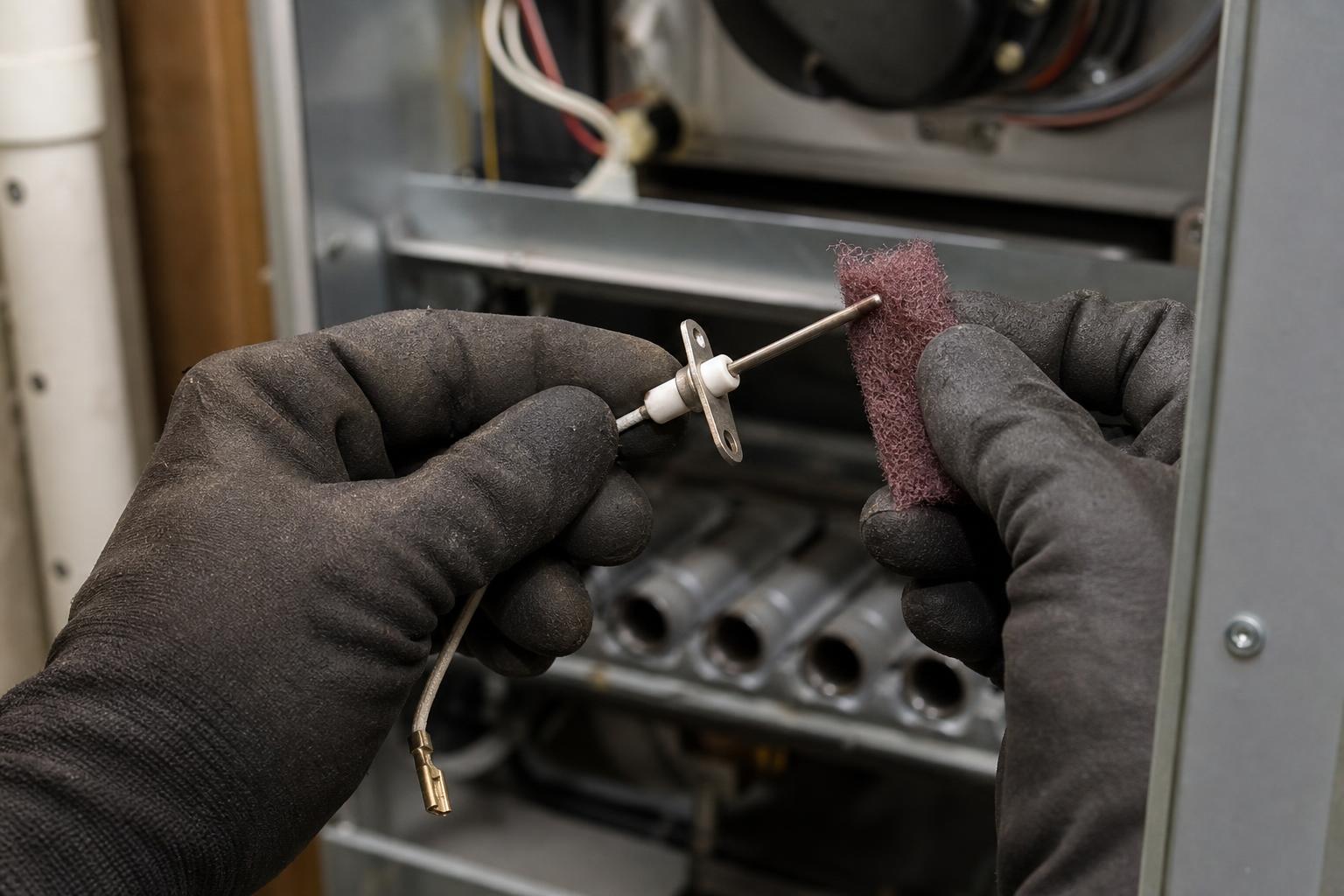
A proper flame sensor diagnosis goes beyond a visual look at the part. During a maintenance visit, our technicians typically remove the sensor, clean it with a fine abrasive pad rather than sandpaper that could scratch and roughen the surface, and reinstall it with the correct clearance from the flame. Just as important, they measure the microamp signal the sensor produces while the furnace is running, since a weak but present signal can still be enough to fail on a cold, humid day even after a cleaning. If the reading stays low after cleaning, the sensor itself may need replacement rather than another cleaning.
When It’s More Than the Flame Sensor
Occasionally what looks like a flame sensor problem is actually something else: a grounding issue with the sensor’s wiring, a control board that is misreading a good signal, or, on rare occasions, a flame that looks fine visually but is not actually making solid contact with the sensor rod due to a burner alignment issue. This is part of why a repeating lockout pattern is worth having looked at by a technician rather than assuming a cleaning alone will solve it every time.
Preventing Repeat Flame Sensor Issues
- Keep the furnace filter clean; poor airflow can affect combustion consistency over time.
- Schedule an annual furnace tune-up so the sensor gets cleaned before it accumulates enough buildup to cause a failure.
- Avoid running the furnace with the access panel removed for extended periods, since draft changes can affect the flame pattern.
Furnace Age and How Often Sensors Need Attention
Newer furnaces are not immune to flame sensor buildup, since the issue is caused by normal combustion byproducts rather than a manufacturing defect, but older units in Burlington homes that have gone a season or two without a tune-up tend to show up on more service calls for this specific issue. If your furnace is due for or overdue on an annual check, a flame sensor problem is one of the more likely reasons it starts acting up partway through a cold stretch, right alongside a dirty filter. Households that stay consistent with annual maintenance tend to catch the early stages of sensor buildup before it ever produces a full lockout, which means fewer surprise no-heat calls during the coldest part of the season.
Restarting a Locked-Out Furnace Safely
Most furnace control boards allow a limited number of ignition retries before locking out completely, usually signaled by a specific blink pattern on the control board’s status light. If your furnace has locked out, cycling the power at the switch or breaker once and giving it a few minutes before trying again is generally safe. If it locks out again on the next attempt, repeated restarting does not fix the underlying cause and just delays getting the actual issue diagnosed, so that is the point to call for service rather than keep cycling the power.
What to Expect from a Service Call
When a Burlington homeowner calls about a furnace that keeps shutting off shortly after ignition, a technician typically starts by asking about the specific pattern: how quickly it shuts off, whether it tries to relight, and how many attempts happen before it stays off. That description alone often narrows the likely cause before the technician even opens the panel. From there, the visit usually includes a flame sensor check and microamp reading, a look at the igniter and gas valve to rule out related components, and a filter and airflow check, since restricted airflow can sometimes contribute to an inconsistent flame that makes the sensor’s job harder even when the sensor itself is not the root problem.
Frequently Asked Questions
Can I clean the flame sensor myself?
Some homeowners do, using a soft abrasive pad and following the manufacturer’s shutoff procedure carefully, but incorrect reinstallation or using the wrong cleaning material can make the problem worse or create a safety issue, so many Burlington homeowners prefer to have it done during a scheduled maintenance visit.
How do I know if it’s the flame sensor and not something else?
A furnace that ignites and then shuts off within the first minute, repeating the cycle a few times before locking out, is a strong sign of a flame sensor issue. A technician can confirm this with a microamp reading in under a few minutes.
How often should the flame sensor be cleaned?
Once per heating season as part of routine maintenance is typically enough for most residential furnaces, though homes with pets or higher dust levels may benefit from more frequent checks.
Is a furnace that keeps shutting off dangerous to keep running?
The lockout behavior itself is a safety feature working as intended, so it is not dangerous to attempt a restart, but repeated lockouts mean the furnace is not reliably heating your home and should be diagnosed rather than restarted indefinitely.
Does a bad flame sensor mean I need a new furnace?
No. Flame sensors are a low-cost, commonly replaced component, and addressing one does not typically point to a larger furnace problem unless it keeps recurring shortly after cleaning or replacement.
A furnace that lights and immediately shuts off is often a quick fix once the actual cause is confirmed. Call Furnace King Home Services at (905) 564-5464 to schedule a visit, or if the shutdown pattern keeps repeating after a basic check, our HVAC maintenance team can test and clean the sensor properly. You can also reach us anytime through our contact page.