
What Does SEER Actually Measure?
If you’ve started shopping for a new air conditioner, you’ve probably run into the term SEER and wondered what it actually tells you. SEER stands for Seasonal Energy Efficiency Ratio, and in plain language, it’s a measure of how much cooling output a system produces over a typical cooling season compared to how much electricity it consumes to do it. Think of it as a fuel-economy rating for your air conditioner, similar to the miles-per-gallon sticker on a car window.
The math behind SEER accounts for the fact that cooling demand isn’t constant — some days are mild, some are brutally hot, and a well-designed system needs to perform efficiently across that whole range, not just at peak load. The higher the SEER number, the more cooling you’re getting for every unit of electricity the system draws over an average season. It’s a useful shorthand for comparing options, but it’s not the only number that matters, which we’ll get into below.
Why Higher SEER Usually Means Lower Operating Costs — But More Upfront Cost
As a general rule, the higher a unit’s SEER rating, the less electricity it needs to move the same amount of heat out of your home. Over a full cooling season, that efficiency can translate into a noticeably lower electricity bill, especially in a climate like the Greater Toronto Area where summers bring stretches of sustained heat and humidity that keep a system running for hours at a time.
That efficiency doesn’t come free, though. Higher-SEER equipment generally uses more advanced compressor technology, better heat exchanger design, and more refined controls, all of which add to the manufacturing cost and, in turn, the purchase price. So when you’re comparing options, you’re really weighing two numbers against each other: what you’ll pay to buy and install the system, and what you’ll pay to run it month after month for as long as you own it.
The General Range of SEER Ratings on the Market Today
You’ll typically see central air conditioners grouped into a few broad efficiency tiers. At the lower end are standard-efficiency units, which are usually the most affordable to purchase and install, and which suit homeowners who prioritize a lower upfront cost or who don’t run their AC constantly throughout the season. In the middle are mid-range units, which strike a balance — a moderate price increase over standard equipment in exchange for meaningfully better efficiency and, often, quieter operation.
At the top end are high-efficiency units, which use the most advanced compressor and coil technology available and deliver the lowest operating costs of the bunch. These systems cost more to buy, but for homes that run their air conditioning heavily throughout a long, humid summer, the efficiency gain can matter a great deal over the life of the equipment. We generally recommend our air conditioning team walk through your specific home and usage pattern with you before deciding which tier makes the most sense, since the “right” SEER rating really depends on your household, not a one-size-fits-all answer.
Thinking Through the Payback Tradeoff
One of the most useful questions to ask yourself when comparing SEER ratings is simple: how long do you plan to stay in this home? A higher-SEER system costs more upfront, and it takes time for the savings on your monthly electricity bill to offset that extra cost. If you’re planning to stay put for a decade or more, that longer runway gives the efficiency savings more time to add up and can make the higher-SEER option the more sensible long-term choice.
On the other hand, if you’re in a starter home you expect to sell in a few years, or if your budget is tighter right now, a standard or mid-range unit that still cools your home reliably and comfortably may be the more practical decision. There’s no universally “correct” answer here — it’s really a personal math problem that balances your upfront budget, how long you’ll benefit from the savings, and how much you value lower monthly bills versus a lower purchase price today.
It also helps to think beyond pure dollars. A quieter, more efficient system can make a home more comfortable day to day and can be an attractive feature if you do end up selling, since buyers increasingly ask about a home’s HVAC efficiency during showings.
Other Factors That Affect Your Real-World Cooling Costs
Here’s something that catches a lot of homeowners off guard: SEER only tells part of the story. Two homes with identical SEER-rated equipment can end up with very different electricity bills and very different comfort levels, because so much depends on how well the rest of the cooling system is set up. A few of the biggest factors we see in Vaughan homes include:
- Correct sizing: An air conditioner that’s too large for your home will cycle on and off frequently, wasting energy and struggling to properly remove humidity. One that’s too small will run constantly and still fall short on hot days. Proper sizing based on your home’s square footage, insulation, and layout matters just as much as the SEER rating itself.
- Ductwork condition: Leaky, poorly sealed, or undersized ductwork can quietly waste a large share of the cooled air your system produces before it ever reaches your living space, no matter how efficient the equipment is.
- Insulation and air sealing: A well-insulated, well-sealed home holds onto cooled air longer, which means your system doesn’t have to work as hard or as often.
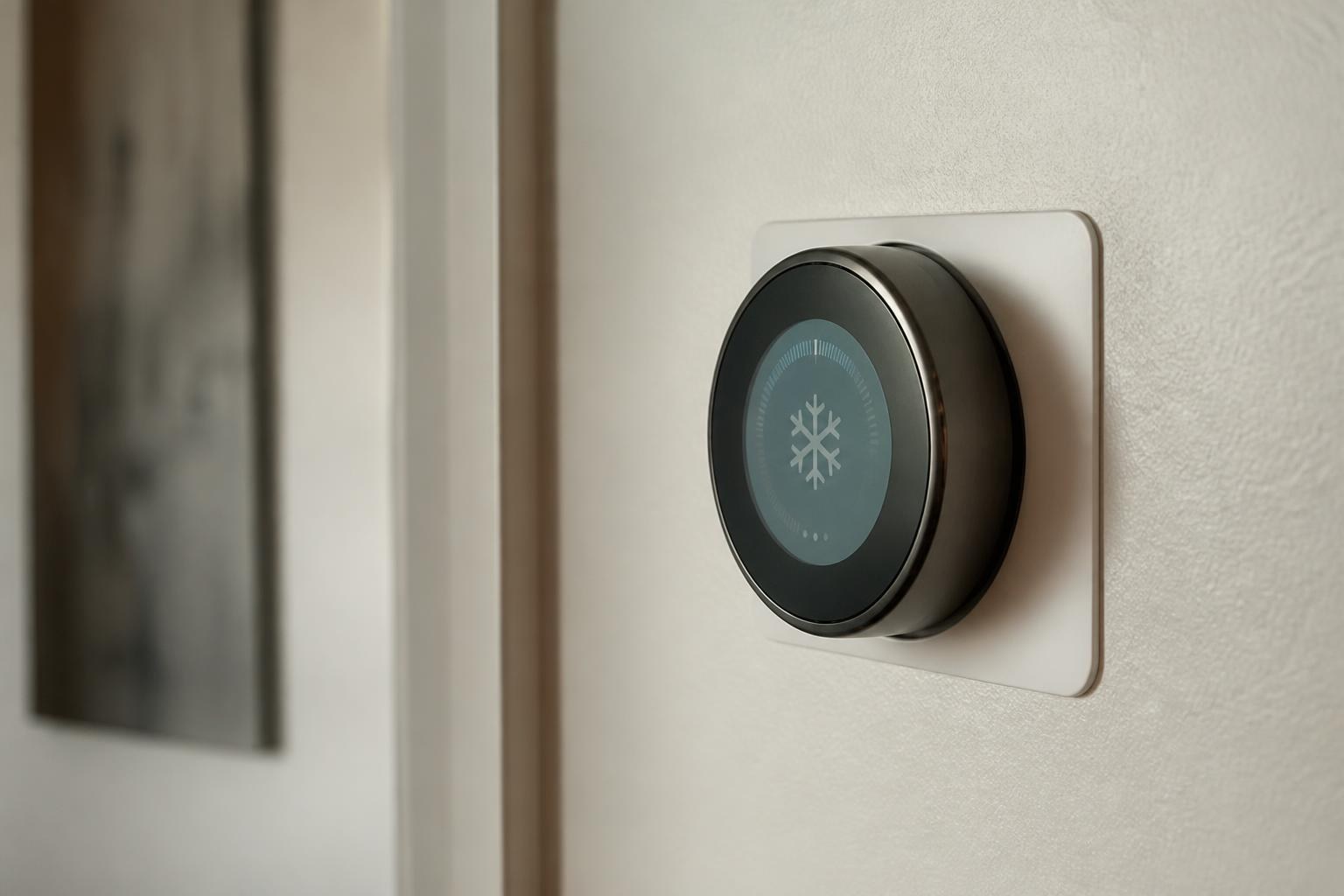
- Thermostat setup: A properly programmed thermostat, ideally a smart one, helps your system run efficiently based on your actual schedule rather than cooling an empty house all day.
- Humidity control: Ontario summers bring real humidity, and a system that manages moisture well will feel more comfortable at a higher thermostat setting, which can reduce how hard your AC needs to work overall.
In other words, pairing a high-SEER unit with leaky ducts and poor insulation won’t get you the efficiency gains you’re expecting. It’s worth having a technician evaluate the whole picture, not just the equipment label.
Weighing SEER Against Sound Level
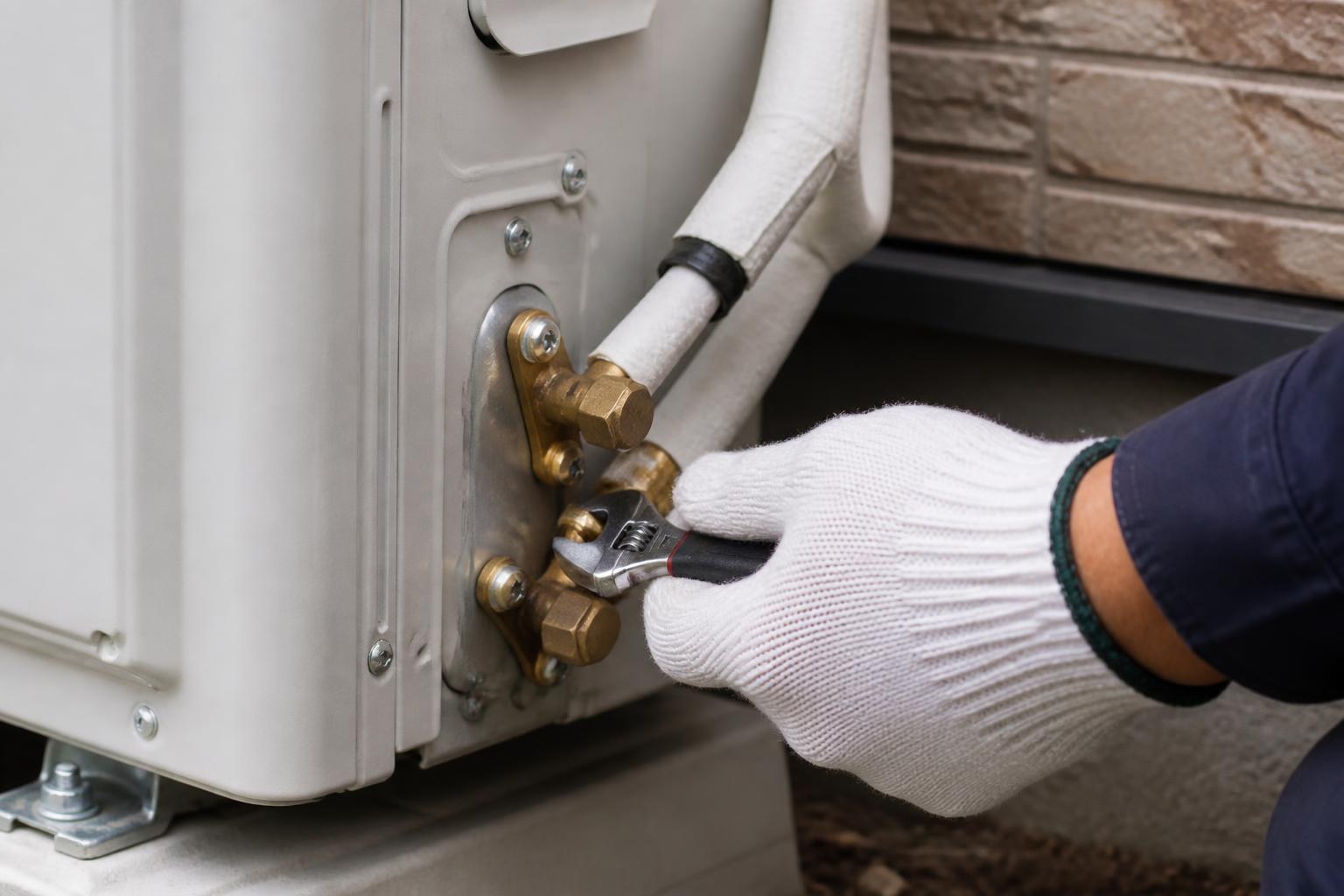
Efficiency isn’t the only thing that changes as you move up through the equipment tiers — sound level often does too. Higher-efficiency systems, particularly those with variable-speed compressors, tend to run at lower speeds more of the time, which generally makes them noticeably quieter than a standard single-stage unit cycling on at full blast. If your outdoor unit sits near a patio, bedroom window, or a neighbour’s property line, that difference in sound level can be a meaningful part of your day-to-day comfort, not just a technical spec on a brochure.
Single-Stage vs. Variable-Speed Compressors
Beyond the SEER number itself, it’s worth understanding how the compressor operates, because that affects comfort in ways a single efficiency rating doesn’t fully capture. A single-stage compressor runs at one speed: full blast, then off. It’s straightforward and generally more affordable, but it can lead to bigger temperature swings between cycles and less precise humidity control.
A variable-speed compressor, by contrast, can ramp up and down to match the cooling load in real time, running longer at lower, gentler speeds rather than cycling on and off abruptly. That tends to produce steadier indoor temperatures, better humidity removal, and quieter operation, on top of the efficiency benefits. If consistent comfort and quiet operation matter to you as much as the electricity bill, it’s worth asking about compressor type alongside SEER rating when you compare systems.
Smart Thermostat Compatibility
Newer, higher-efficiency systems — especially those with variable-speed compressors — often pair with smart thermostats to get the most out of their capabilities, offering finer control over scheduling, humidity targets, and remote adjustments from your phone. If you’re already using or considering a smart thermostat, it’s worth confirming that whichever system you choose is fully compatible, since some advanced features only unlock when the equipment and thermostat are designed to work together.
Putting It All Together When You Compare Systems
When you’re standing in front of a few different quotes, it helps to resist the urge to compare purely on SEER number or purely on price. Instead, look at the whole picture: your budget today, how long you expect to stay in your home, how heavily you run your AC through the summer, the condition of your ductwork and insulation, and how much you value quiet, steady comfort versus the lowest possible purchase price. A standard-efficiency unit installed correctly in a well-sealed home can outperform a high-efficiency unit installed poorly in a leaky one.
That’s really where a proper in-home assessment earns its keep. Rather than guessing at SEER numbers from a spec sheet, our team can look at your existing ductwork, your home’s insulation, your current thermostat setup, and how your household actually uses cooling, then recommend an option from our air conditioning lineup that actually fits your home and your budget, not just the highest number on the shelf.
Frequently Asked Questions
Does a higher SEER rating always mean a more comfortable home?
Not necessarily on its own. SEER measures seasonal energy efficiency, but comfort also depends on correct sizing, compressor type, ductwork condition, and humidity control. A well-matched mid-range system installed correctly can feel more comfortable than a poorly installed high-efficiency one.
How do I know what SEER rating is right for my home?
It depends on how long you plan to stay in your home, your budget, your local climate exposure, and how heavily you use your AC. A technician can walk through these factors with you and recommend a tier that fits your actual situation rather than a generic default.
Will upgrading to a higher-SEER unit lower my monthly electricity bill?
Generally, yes, higher-efficiency units use less electricity to produce the same amount of cooling, which typically shows up as lower bills over a cooling season. How much you notice depends on your home’s insulation, ductwork, thermostat habits, and how often your system runs.
Do I need to replace my ductwork when I install a new air conditioner?
Not always, but it’s worth having your ductwork inspected as part of any new installation. Leaky or poorly sized ducts can undercut the efficiency benefits of even a high-SEER system, so addressing them alongside a new unit often makes sense.
Choosing the right air conditioner for your Vaughan home doesn’t have to mean sorting through SEER numbers on your own. If you’d like help comparing your options and figuring out what actually makes sense for your home and budget, please contact us to request a free estimate and talk to our team about the right system for your household.