
UV Light for Furnace and AC Systems in Mississauga
Two Kinds of UV Lights We Install
Furnace King installs UV lights in furnaces, air handlers and ductwork for homeowners in Mississauga and across the GTA. A UV light for furnace and air conditioner coils is a small ultraviolet lamp that sits inside your equipment, where it helps keep mould and bacteria from growing on the parts that stay damp. We install both kinds: lamps that keep the cooling coil clean, and in-duct units that treat the air moving through the system.
UV lights are useful, but they aren't the right fix for every air problem. We'll tell you what a UV light will and won't do in your home before you decide.
Call (905) 564-5464 or request a quote to talk through a UV light for your system.
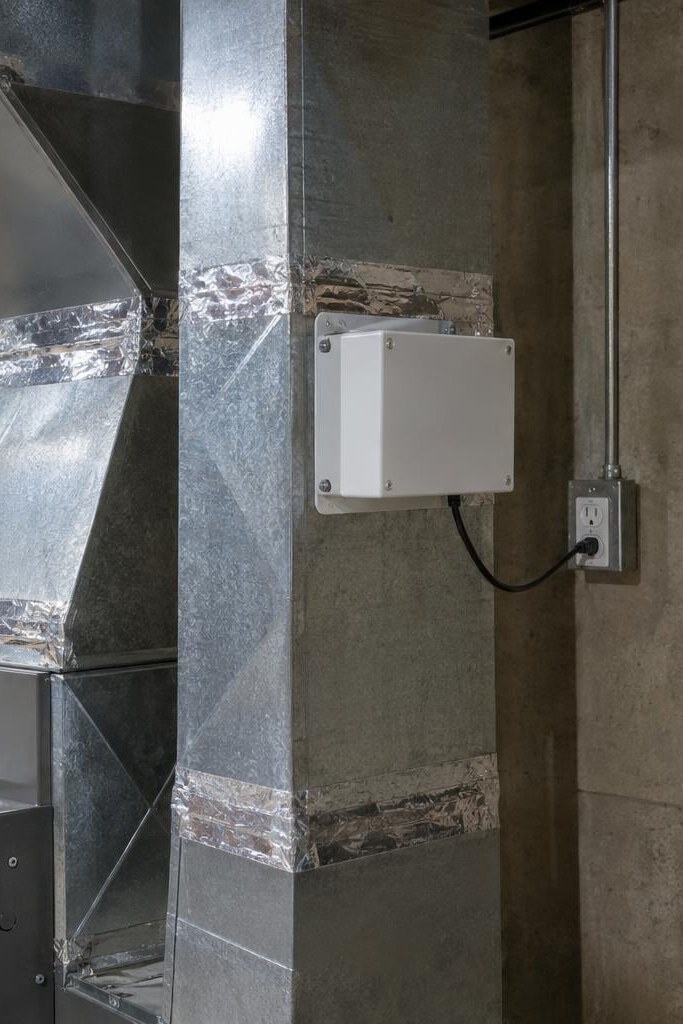
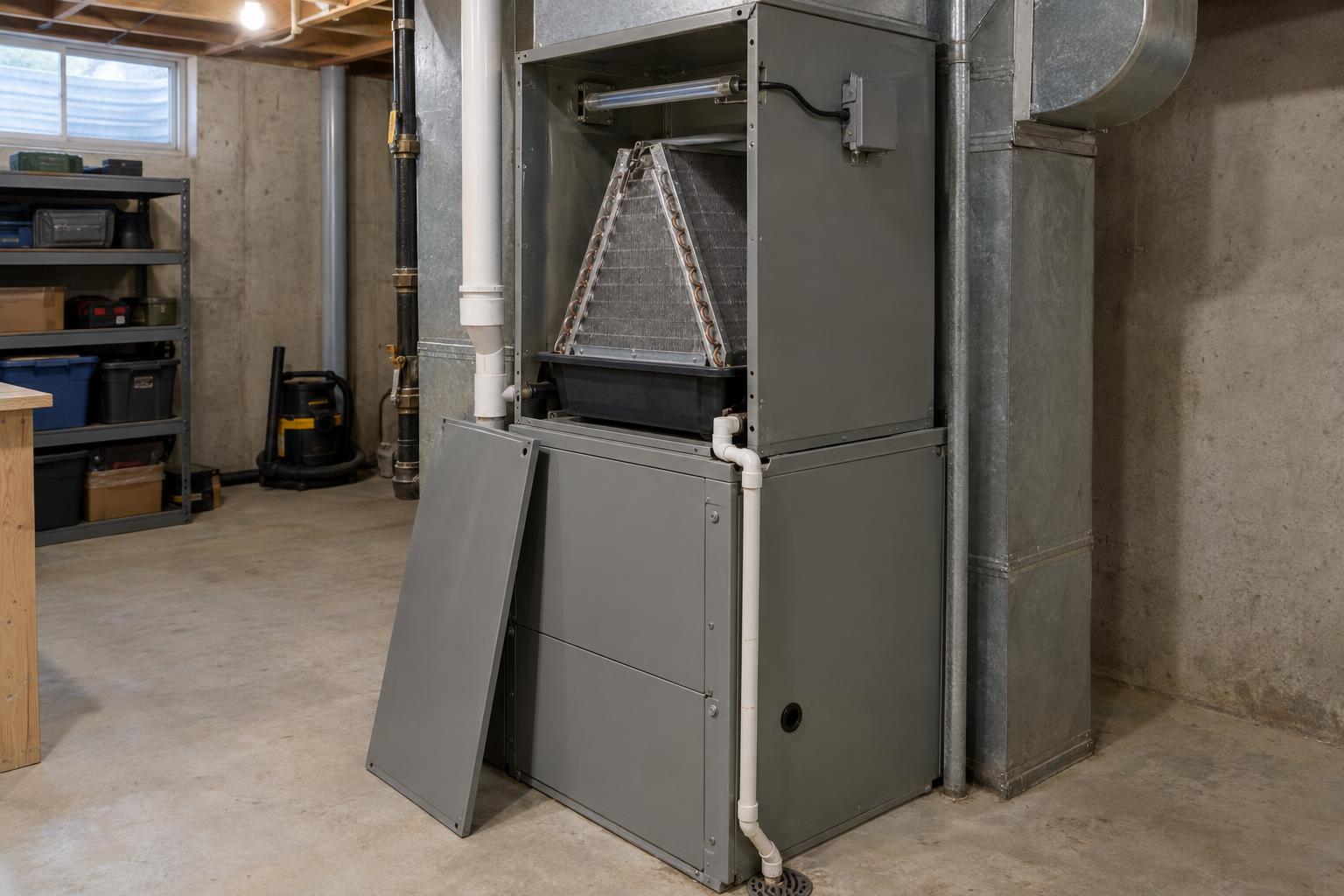
- Coil UV-C lamps. A lamp mounted next to the evaporator coil, the part of your air conditioner that usually sits on top of the furnace and gets wet every time it cools. While the lamp is on, it shines on the coil and drain pan, which is where mould and bacterial film like to grow.
- In-duct UV air purifiers. A lamp installed in the ductwork or air handler that treats air as it passes by. Air only spends a moment in front of the lamp, so this type works best as a supplement to good filtration rather than on its own.
Many homes with central air are candidates for a coil lamp. An in-duct unit makes more sense when you're already filtering well and want an extra layer on top of it.
We install UV lights in Mississauga, Brampton, Etobicoke, Oakville, Burlington, Milton, Toronto, Vaughan, Richmond Hill, Markham, Caledon and Scarborough. Furnace King has served GTA homes for over 40 years and is a TSSA-registered fuels contractor.
UV Lights Work Best on the Cooling Coil
The U.S. Environmental Protection Agency's technical summary on residential air cleaners finds that UV lights are most effective on surfaces they shine on for a long time, such as cooling coils and drain pans. Keeping those surfaces clean has a practical payoff too: the EPA notes that limiting growth on the coil helps it transfer heat, which supports efficiency. A lamp works alongside good drainage and moisture control, not instead of them. The EPA still treats those as the main defence.
That makes a coil lamp a sensible upgrade if:
- Your coil or drain pan has had growth before. A technician found slime or mould during a tune-up, or the drain line keeps clogging.
- You notice a musty smell when the air conditioning starts. A dirty coil is a common source, though not the only one, so we check before recommending a lamp.
- Your basement runs humid in summer. Damp air keeps the coil and pan wet for longer.
UV Lights Are Not Air Filters
Here's the part that often gets skipped. A UV light isn't a filter. It doesn't capture dust, pollen, pet dander or smoke, and the EPA states that UV should be used in addition to filtration, not as a replacement for it. The same report found that typical home UV units don't deliver enough light to kill most germs in moving air, and found no research showing UV reduces dust mite or mould allergens.
So if your main concern is dust, allergies or wildfire smoke, better filtration comes first. A whole-home HEPA filtration system captures the particles a UV light lets through. And if mould is already growing in your home, the fix is removing it and dealing with the moisture behind it; a lamp in the furnace won't reach it.
UV Light Safety, Ozone and Bulb Changes
UV-C light can damage skin and eyes, which is why the lamp lives inside your equipment, behind metal panels. Health Canada points to proper system design and professional maintenance as the way to prevent exposure. Never look at a lit lamp, and turn the power off before opening the furnace.
Some uncoated UV lamps can produce ozone, a lung irritant, so the lamp you choose matters. We'll go over the manufacturer's ozone information with you before anything is installed.
The EPA lists cleaning the lamp and replacing old lamps as the core of UV upkeep, and it points to the manufacturer's recommendations for when. The lamps contain a small amount of mercury, so a used one goes to a household hazardous waste drop-off, not the garbage.
Our UV Light Installation Process
- We look at your system. We check the furnace or air handler, the coil, the drain pan and your current filter, and ask what's bothering you about the air.
- We recommend the right type, or none. If a UV light won't solve your problem, we'll say so and suggest what will.
- We mount and wire the lamp. Following the manufacturer's guidance, the lamp usually goes after the filter and before the coil, where the EPA notes it's typically placed, and the access panels go back on before it's switched on.
- We show you the upkeep. You'll know where the lamp is, how to tell it's working, and when the manufacturer says to replace it.
UV Light Cost Factors
We don't publish a single price for UV lights because the right setup varies from house to house. The main factors are:
- Lamp type. A coil lamp and an in-duct air purifier are different products at different prices.
- Number of lamps. Larger coils or systems sometimes need more than one.
- Access and power. How easy it is to reach the coil and run power to the lamp.
- Replacement lamps. The ongoing cost of bulb changes over the years.
We'll give you a clear, upfront price before any work starts, so you can compare it with simply upgrading your filter.
Pairing UV With HEPA, Humidifiers and Duct Cleaning
A UV light handles one job. For the rest of the air in your home, it often pairs with HEPA filtration to capture the particles UV can't, humidifiers for dry winter air, and duct cleaning when years of dust have settled in the ductwork. Our indoor air quality services page covers all of these, and our air quality videos show a before-and-after test with a whole-home HEPA air cleaner.
Call (905) 564-5464 or request a quote, and we'll tell you honestly whether a UV light belongs in your system.
UV Lights: Frequently Asked Questions
Does a UV light in a furnace actually work?
For keeping the cooling coil and drain pan clean, it can; that's where the EPA's review of the research found UV most useful. For killing germs in the air as it blows through, typical home units have limited effect, which is why we treat UV as an add-on to filtration rather than a substitute.
Will a UV light help with allergies?
Usually not on its own. Allergies are driven by particles like pollen, dust and dander, and a UV light doesn't capture particles. If allergies are the main concern, start with better filtration such as a whole-home HEPA system.
Do UV lights produce ozone?
Some uncoated lamps can. Lamps with an ozone-inhibiting coating are built to limit it, and you'll see the ozone details for the lamp we recommend before you decide.
How often does the UV bulb need replacing?
It depends on the lamp, and the manufacturer sets the interval. We'll tell you the interval for the lamp we install so you know when it's due.
Can you add a UV light to my existing furnace and air conditioner?
Usually, yes. Coil lamps and in-duct units are designed to fit existing systems. We'll confirm there's room near your coil and a way to power the lamp during the visit.
Can a UV light kill mould?
It can help keep mould from growing on the cooling coil and pan it shines on. It won't reach mould elsewhere in your home, and the EPA's advice for mould that's already growing is to remove it and fix the moisture problem behind it.
How much does a UV light cost?
It depends on the type of lamp, how many you need and how easy your coil is to reach. Call (905) 564-5464 and we'll give you an upfront price for your system.