
When a radiator feels warm at the bottom and cold at the top, the heat in that room is not doing its job. In most hot-water heating systems the cause is simple: a pocket of air has collected inside. The good news is that you can usually fix it in a few minutes with a small tool. This guide for hot-water (boiler) radiators shows Toronto and GTA homeowners how to bleed a radiator safely, what to check afterwards, and when it is smarter to call a professional. It covers hot-water radiators only; if your system produces steam, do not follow these steps and call a technician instead.
What Bleeding a Radiator Actually Does
A hot-water radiator works when heated water from the boiler circulates through it and gives off warmth to the room. Air is lighter than water, so any air that gets into the system drifts to the highest point of each radiator and sits there. That trapped air blocks the hot water from filling the whole unit, which leaves the top cold.
Bleeding simply means opening a small valve at the top of the radiator so the air can escape, then closing it again as soon as water appears. The water then fills the radiator completely, and the heat spreads evenly.
Air usually enters a system after the boiler has been drained or topped up, after a repair, or slowly over time through tiny leaks and small amounts of gas released from the water itself. A little air is normal. A lot of air, or air that keeps coming back, is worth looking into.
Signs a Radiator Needs Bleeding
You do not need special equipment to spot the problem. Look and listen for these signs:
- Cold spots at the top. The bottom is hot while the upper part stays cool to the touch.
- Gurgling or trickling sounds. Moving air and water inside the radiator can make a bubbling noise.
- One room that never warms up. The rest of the house feels fine, but a single radiator lags behind.
If every radiator in the house is cold, air is probably not the problem. That points to something with the boiler, the circulating pump or the system pressure, and we cover it further down.
What You Need Before You Start
Gather these items first so you are not hunting for them with a hot radiator beside you:
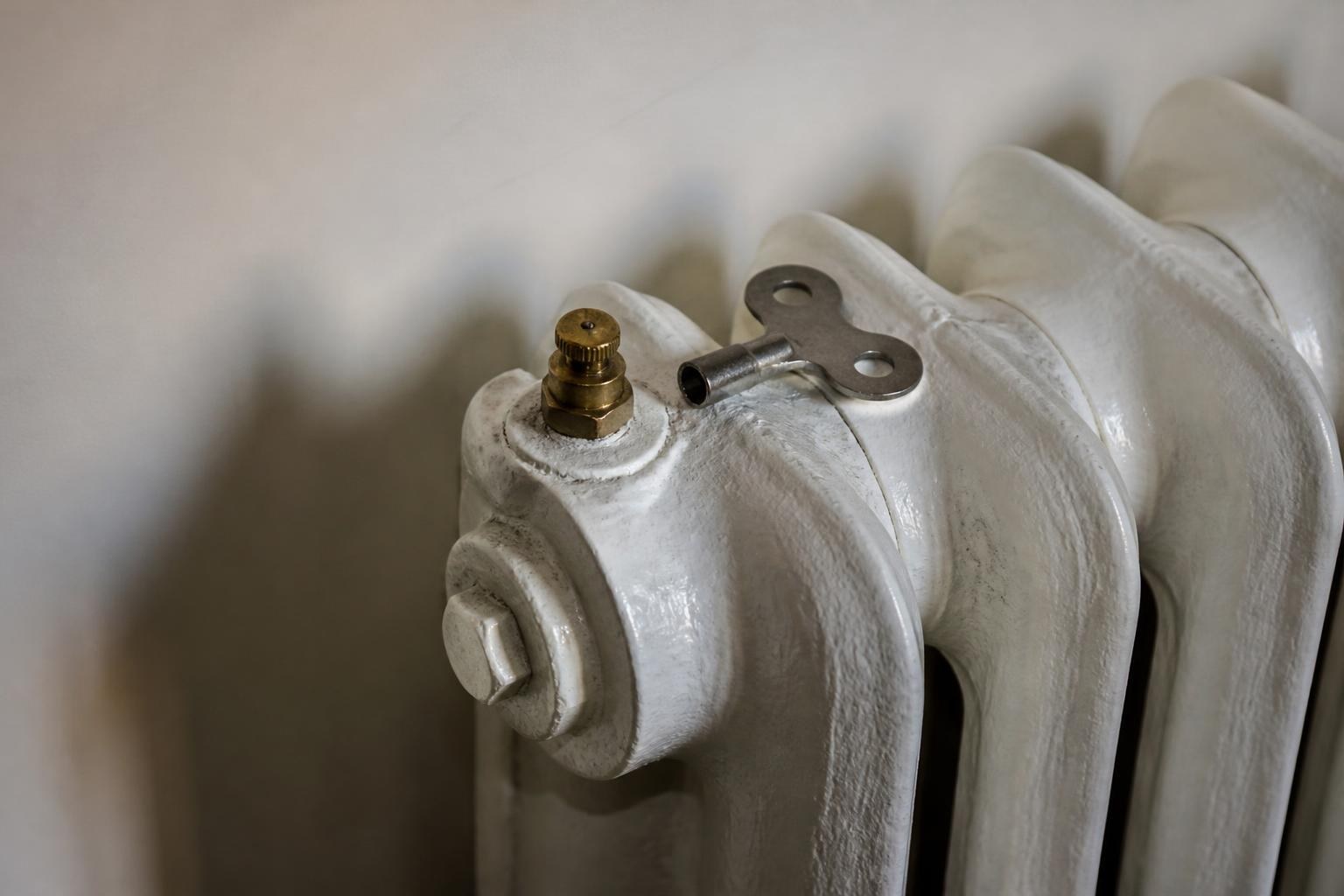
- A radiator key. This inexpensive tool fits the square stem of the bleed valve and is sold at most hardware stores. Some valves take a flat screwdriver instead.
- A thick cloth or old towel to catch drips.
- A small container or tray to hold under the valve and protect the floor.
- Your boiler manual, if you can find it, so you know the recommended pressure range for your system.
How to Bleed a Radiator, Step by Step
- Turn the heating off and let everything cool. Switch off the boiler at the thermostat and wait until the radiators are cool enough to touch comfortably. This keeps the pump from pushing more air around and lowers the risk of hot water spraying out.
- Start with the radiator closest to the boiler on the lowest floor, then work upward and outward. Air rises, so clearing the lower floors first helps.
- Find the bleed valve. It is a small fitting near the top corner on one side of the radiator.
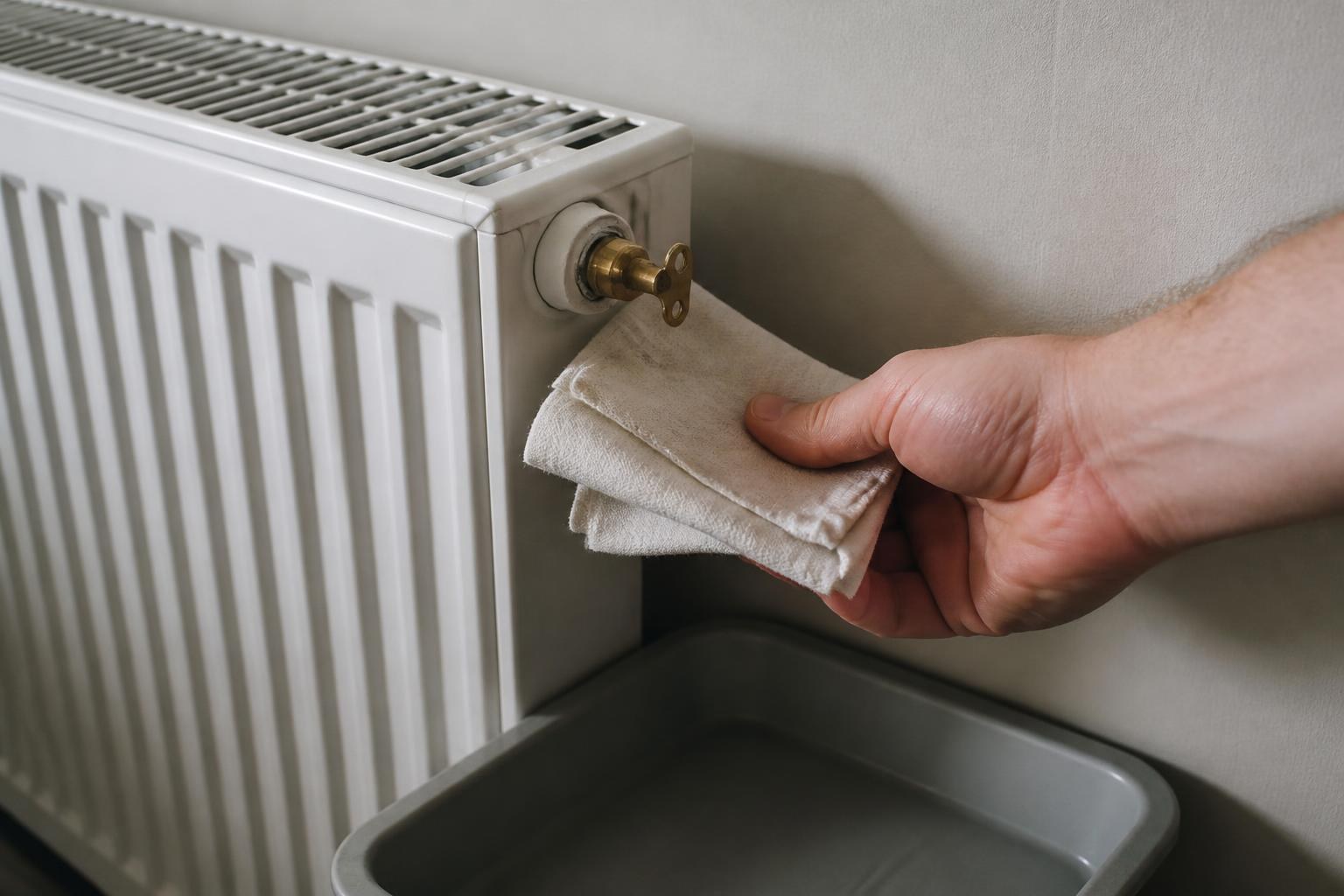
- Hold the cloth under the valve and place the tray below it.
- Turn the key slowly counter-clockwise, about a quarter turn. Do not remove the valve completely. You should hear a hiss as air escapes.
- Wait for water. When the hissing stops and a steady trickle of water appears, close the valve by turning the key clockwise. Snug is enough, so avoid forcing it.
- Wipe the valve dry and move on to the next radiator.
If a valve is stiff, or it will not close properly, stop and leave it alone. Forcing an old valve is a common way to turn a quick job into a leak.
Check Your Boiler Pressure Afterwards
Every time air leaves the system, the water pressure inside can drop slightly. Once you have finished bleeding, look at the pressure gauge on the boiler and compare it with the range in your manual or marked on the gauge. If it has fallen below that range, the radiators may not heat properly, and the boiler may shut itself off for safety.
If the pressure is below the range in your manual, only top it up if the manual describes how and you are comfortable doing it. Otherwise leave it to a technician, which is a perfectly reasonable choice. Never add water to a hot boiler. If you are unsure at any point, do not guess.
Next, turn the heating back on and let the system warm up. Feel each radiator after a while to confirm the heat is even from top to bottom. If the pressure keeps falling after a top-up, read our guide on why a boiler keeps losing pressure, because repeated drops usually mean water is escaping from somewhere.
When Not to DIY: Call a Professional
Bleeding a radiator is a reasonable homeowner task, but some situations call for a qualified technician. Please stop and get help if you notice any of these:
- Air returns again and again. If you have to bleed the same radiators every few days, air is getting in somewhere it should not.
- Leaks or stains. Damp patches, rust trails or drips around valves, pipes or the boiler.
- No heat at all. If no radiator warms up, the issue is likely the boiler, the pump or a zone valve rather than trapped air.
- Dark, sludgy water. If the water that comes out is black or gritty, the system probably contains sludge or internal corrosion that needs a proper flush and inspection.
- Pressure that keeps dropping. This points to a leak or a failing component in the system.
Boilers burn fuel, so safety comes first. If you ever smell gas, leave the house right away and call 911 or Enbridge Gas at 1-866-763-5427 from outside. If a carbon monoxide alarm sounds, get everyone into fresh air and call 911. Ontario’s fuel safety regulator, the Technical Standards and Safety Authority, recommends having fuel-burning appliances inspected every year by a TSSA-registered fuel contractor and keeping working, certified carbon monoxide alarms in the home.
When the cause goes beyond trapped air, our boiler repair and installation team can diagnose it and recommend the right fix.
How to Keep Air Out of Your Radiators
You cannot prevent air entirely, but a few habits reduce how often you need to bleed a radiator:
- Bleed once a year, ideally before the cold weather settles in, so the system runs well from the first chilly morning.
- Watch the pressure gauge now and then during the heating season.
- Schedule regular servicing. A technician can check the pressure, the expansion tank, the pump and the water quality in one visit. Our HVAC maintenance page explains what that looks like.
- Follow a seasonal checklist. Our boiler maintenance checklist walks through the items worth reviewing before winter.
Frequently Asked Questions
How often should I bleed my radiators?
Once a year, at the start of the heating season, is a common routine. Bleed sooner if you notice cold spots or gurgling noises.
Can I bleed a radiator while the heating is on?
We recommend turning the heating off and letting the radiators cool first. That is safer, and it prevents the pump from drawing in more air while the valve is open.
Why is my radiator still cold after bleeding it?
Air may not have been the problem. A closed or stuck valve, sludge in the radiator, low system pressure or a pump issue can all leave a radiator cold. If the first attempt does not help, it is time for a technician to take a look.
Do forced-air furnaces need bleeding too?
No. Bleeding applies only to hot-water radiator systems. A furnace moves warm air through ducts, so there is no water to bleed.
Need Help With a Cold Radiator?
If your radiators still will not heat evenly, or you would simply prefer that a professional handle it, we are glad to help homeowners in Toronto and across the GTA. Call us at (905) 564-5464 or reach out through our contact page, and we will talk through what you are seeing and the best next step. For urgent heating problems, see our emergency services page. With over 40 years serving Ontario homes, we would rather help you keep your heating simple and safe.