
A furnace breakdown in the middle of a Toronto winter forces a decision most homeowners would rather make on their own timeline: repair the unit you have, or replace it with something new. There is no single rule that applies to every situation, but there is a reliable framework technicians use every day to help homeowners make the call with confidence instead of guesswork. This guide walks through the factors that matter most, in the order we actually weigh them on a service call.
Start With the Age of the Furnace
Age is usually the first filter. Most gas furnaces are built to last somewhere between 15 and 20 years with regular maintenance, though the exact number depends on the model, install quality, and how consistently it has been serviced. A furnace under 10 years old that develops a problem is usually a strong repair candidate, since most of its expected service life is still ahead of it. A furnace past the 15-year mark presents a different calculation: even a successful repair only buys time on a unit that is statistically closer to the end of its life, and the next failure may come sooner than expected.
Compare the Repair Cost to the Value of the Furnace
A commonly used guideline is the “cost of repair times the age of the unit” rule: multiply the estimated repair cost by the furnace’s age in years, and if that number exceeds the rough cost of a new furnace, replacement usually makes more financial sense. It is a simplification, but it captures something real: an expensive repair on an older furnace is a poor investment compared with the same money put toward new equipment that comes with a fresh warranty and years of reliable service ahead of it.
Look at What Actually Failed
Not every furnace problem carries the same weight. Some components are inexpensive and routine to replace, and a failure there does not necessarily point toward the whole unit’s health:
- Minor components like an igniter, flame sensor, capacitor, or thermostat are common repairs on furnaces of almost any age and rarely justify replacement on their own
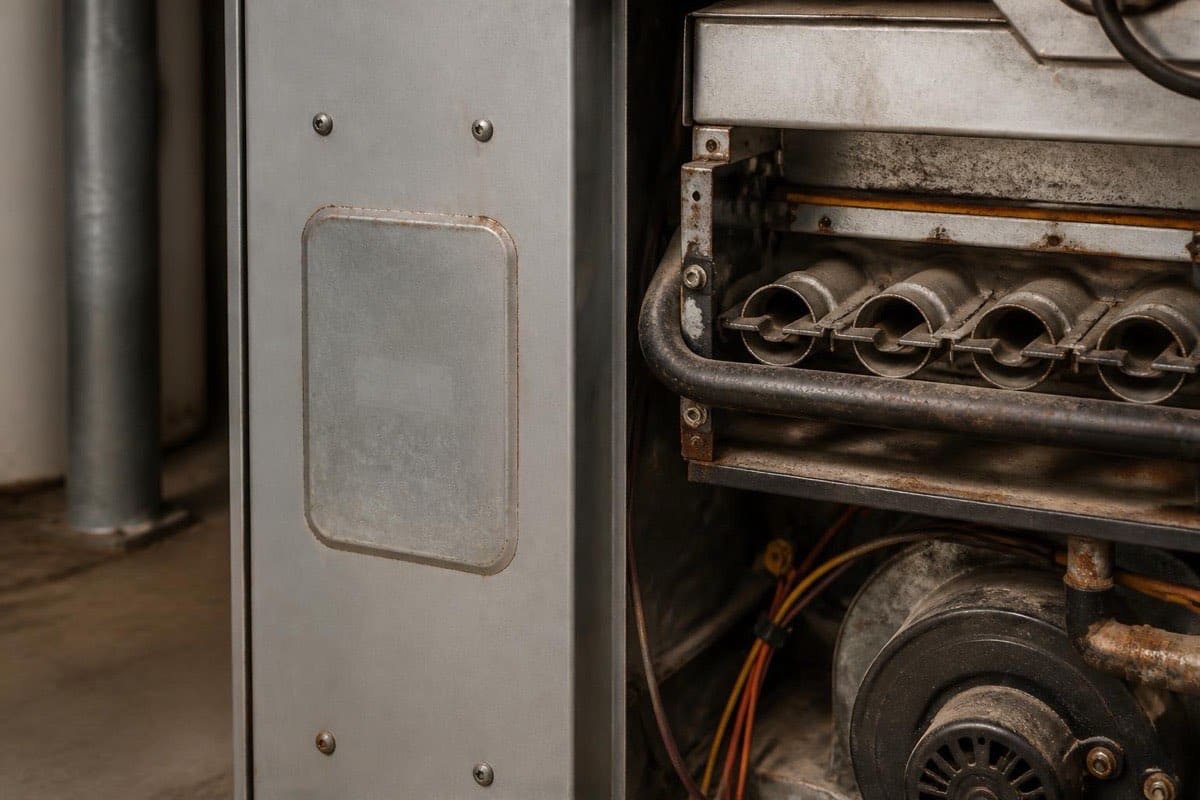
- Major components like a cracked heat exchanger, a failed blower motor, or extensive control board damage are a different story, especially on an older unit, since the repair cost climbs quickly and the failure often signals broader wear
A heat exchanger crack deserves particular attention. It is a safety issue as much as a mechanical one, since a compromised heat exchanger can allow combustion byproducts into the air supply, and on most furnaces over 10 to 12 years old, it is one of the clearest signals that replacement is the safer and more sensible path.
Factor In Efficiency and Ongoing Costs
An older furnace, even one still running, is often working harder than a modern unit to deliver the same heat. Furnace efficiency technology has improved substantially over the past two decades, and a mid-efficiency furnace installed in the early 2000s is a meaningfully less efficient piece of equipment than a modern high-efficiency model. If your current furnace is already near the end of its expected life and a repair is on the table, it is worth weighing the ongoing gas bill savings a new furnace could deliver against the up-front repair cost, since that gap adds up over a full Toronto heating season.
Consider How Often It Has Broken Down
A single repair rarely tells the whole story. A furnace that has needed a technician two or three times in the last couple of heating seasons is sending a signal, even if each individual repair was inexpensive. Frequent breakdowns often point to a system under broader strain, whether from age, an underlying design issue, or years of deferred maintenance, and at that point, continuing to repair piece by piece usually costs more over time than a single planned replacement.
Toronto-Specific Factors Worth Weighing
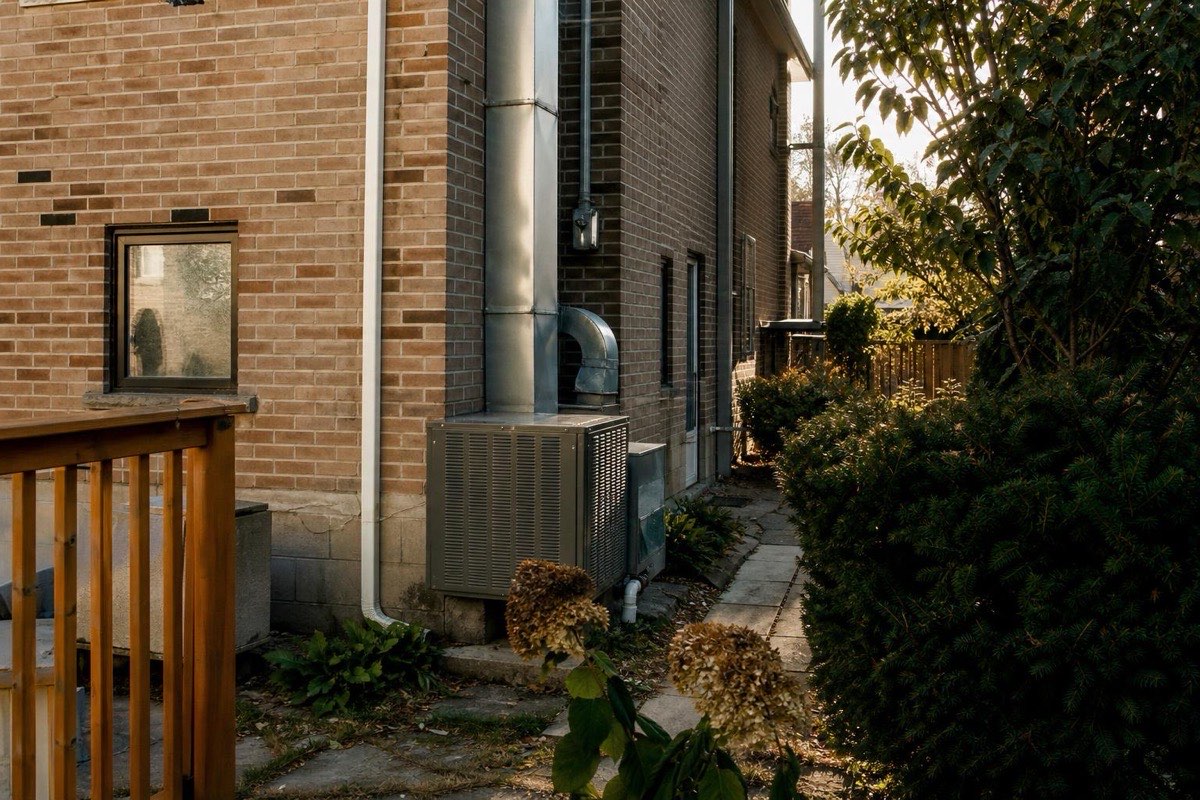
Toronto’s mix of century homes, mid-century bungalows, and newer builds adds a few local wrinkles to this decision. Older Toronto homes sometimes have furnaces sized or ducted for a house that has since been renovated or added onto, which can mean a straight like-for-like replacement is not actually the best option, and a proper load calculation at replacement time is worth doing rather than assumed. Homes in established Toronto neighbourhoods with narrow side yards or older venting configurations may also have installation considerations that affect both repair access and replacement cost, which is another reason an in-person assessment matters more than a phone estimate for this particular decision.
A Simple Way to Weigh the Decision
When we walk a Toronto homeowner through this decision on-site, we are generally weighing four things together rather than any single factor in isolation: the furnace’s age, the nature and cost of the current repair, its efficiency compared with new equipment, and its breakdown history. A young furnace with an inexpensive, minor repair is almost always worth fixing. An older furnace with a major component failure, declining efficiency, and a pattern of recent breakdowns is usually better replaced. Most real situations fall somewhere between those two extremes, which is exactly why an honest, in-person assessment matters more than a rule of thumb applied from a distance. Our furnace replacement and heating repair teams handle both sides of this decision every week across Toronto and the wider GTA.
What to Ask Before You Commit Either Way
Whichever direction the numbers point, a few questions help you commit with confidence. Ask what specifically failed and why, not just what it will cost to fix. Ask how old the furnace actually is, since the label inside the cabinet usually gives a manufacture date even when the homeowner is not sure. Ask what a comparable new furnace would cost installed, so you are comparing like-for-like numbers rather than a repair estimate against a vague replacement guess. And if a technician recommends replacement, ask what warranty coverage comes with the new equipment, since a strong parts and labour warranty is part of what you are actually paying for with a planned replacement.
Frequently Asked Questions
How old is too old for a furnace repair?
There is no single cutoff, but once a furnace passes about 15 years and needs a major repair, replacement is usually the more cost-effective choice over the following few years.
Is it ever worth replacing a furnace before it fails completely?
Yes, particularly if the furnace is old, inefficient, or has a recent pattern of breakdowns. Planning a replacement on your own schedule is almost always less stressful and often less expensive than an emergency replacement during a cold snap.
Will a new furnace fit my existing ductwork?
In most cases, yes, though a proper assessment checks duct sizing and airflow rather than assuming compatibility, especially in older Toronto homes that may have been renovated since the ductwork was originally installed.
How much does a furnace repair typically cost compared with replacement?
It varies widely depending on the specific component involved, which is why we recommend a diagnostic visit rather than guessing, so you can compare the actual repair estimate against a real replacement quote for your furnace’s size and home.
Can I get a second opinion before deciding?
Yes, and for a major repair-or-replace decision, a second opinion is a reasonable request. A trustworthy technician should be comfortable explaining their reasoning either way.
If your Toronto furnace needs a repair-or-replace decision, call Furnace King Home Services at (905) 564-5464 or request an on-site assessment through our service plans and contact page, and we will help you weigh the real numbers before you commit either way.