
When it’s time to replace a heating system, most Ontario homeowners start by searching brand names rather than model specifications. That approach can lead to a mismatch between what a furnace promises on paper and what it actually delivers through a Mississauga winter. Learning how to compare furnace brands as an Ontario shopper means looking past logos and into the engineering decisions that determine comfort, reliability, and long-term running costs. This overview walks through the technical and practical factors that matter most, so you can evaluate any model on its own merits rather than on marketing alone.
Reading Efficiency Ratings the Right Way
Annual Fuel Utilization Efficiency, or AFUE, is the starting point for an honest furnace comparison. The rating describes the share of fuel converted to usable heat under the applicable test method. Compare similar model classes using the published EnerGuide information, then consider how the efficiency difference fits your home’s heating load and expected ownership period.
The important nuance is that AFUE is a laboratory rating, not a guarantee of field performance. Two furnaces with identical AFUE numbers can behave very differently depending on how they modulate their output. A single-stage unit fires at full capacity every time it runs, which can cause temperature swings and short cycling. A two-stage or modulating furnace adjusts its heat output to match the actual load, running longer at lower capacity during mild weather and ramping up only when temperatures drop sharply.
Ontario heating loads vary over the season, so staged or modulating operation may produce steadier temperatures than single-stage equipment. When comparing models, look at the rated AFUE alongside the staging description. Two furnaces with the same efficiency rating can still differ substantially in how they deliver heat.
Natural Resources Canada’s EnerGuide furnace page provides a neutral, government-maintained basis for comparing model efficiency by AFUE, and it’s worth consulting before you finalize any shortlist.
Blower Motors, Controls, and Sound Levels
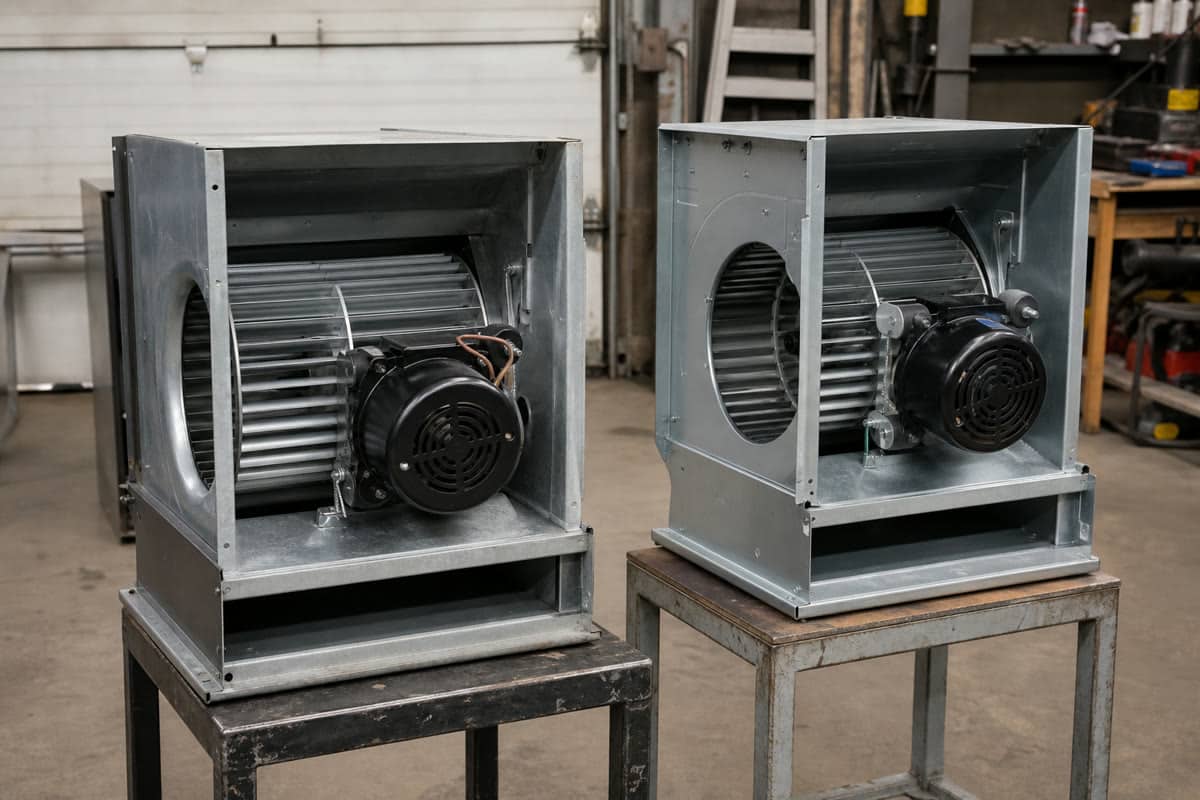
The blower motor is one of the more consequential components in any furnace, yet it rarely appears in headline specifications. There are three common types: single-speed PSC motors, multi-speed PSC motors, and electronically commutated motors, usually called ECM or variable-speed motors. ECM blowers can ramp up and down gradually, which may reduce the rush of cold air at startup, improve air distribution throughout the home, and use less electricity during long low-speed runs than older PSC designs.
What to Ask About Controls
- Does the furnace communicate with a smart or communicating thermostat, or does it rely on a standard 24-volt signal?
- Can the control board self-diagnose faults and report error codes that a technician can read without proprietary tools?
- Is the control board a proprietary design, or does it use components that independent suppliers stock?
Sound Considerations
Sound ratings are not always published, but you can ask your installer about the decibel range for any model under consideration. Variable-speed blowers are generally quieter during low-fire operation because they move air more slowly. Two-stage furnace operation can also reduce abrupt full-output cycling compared with a single-stage system. If the furnace is located near a bedroom or living area, this factor deserves serious weight.
Controls and blower design together determine how well a furnace integrates with the rest of your home heating system, so treat them as a package rather than separate line items.
Parts Availability and Warranty Fine Print
A furnace that performs well for the first few years but becomes difficult to service is a liability, not an asset. Parts availability is a practical concern that brand comparisons often overlook. When evaluating models, ask your installer how readily heat exchangers, control boards, inducer motors, and ignitors are stocked locally. A brand with strong Canadian distribution tends to mean shorter waits when a component fails mid-winter.
Warranty terms deserve equally careful reading. Heat exchanger coverage, parts coverage, labour coverage, registration deadlines, transfer rules, and maintenance requirements can vary considerably by manufacturer and model.
| Warranty Element | What to Verify |
|---|---|
| Heat exchanger coverage | Is it transferable to a new owner? Does it require annual maintenance records? |
| Parts warranty duration | Does registration extend the term, and what is the registration deadline? |
| Labour coverage | Is labour included, or does the warranty cover parts only? |
| Voiding conditions | Does improper installation or missed maintenance void coverage? |
The voiding conditions column matters most. A warranty that requires annual professional maintenance to remain valid is not a weakness, but you need to know about it before you buy. Scheduling regular HVAC maintenance can help protect the equipment and support the documentation needed for warranty coverage.
Installer Quality and Commissioning Standards
Installation quality is one of the biggest factors in how any furnace performs. A well-engineered furnace installed incorrectly can underperform, cycle erratically, and wear out sooner than expected. Conversely, a solid mid-range unit installed with care and properly commissioned may perform better than a premium model that was rushed into service.
When Ontario homeowners compare furnace brands, they should also compare the installers who carry them. Ask each contractor the following before signing anything.
Questions for Your Installer
- Will you perform a heat loss calculation for my home before sizing the equipment?
- What does your commissioning process include, and will I receive written documentation?
- How do you handle venting design for a high-efficiency unit, particularly in an older home?
- Who handles warranty service if a component fails within the first year?
Written commissioning documentation is a practical benchmark. It should confirm that the gas pressure, temperature rise, airflow, and controls were all verified against the manufacturer’s specifications after installation. Without that record, you have no baseline if performance problems emerge later.
Homeowners in Mississauga and the Greater Toronto Area benefit from working with contractors who are familiar with local building stock, including older homes with existing ductwork that may need adjustment to suit a new, higher-efficiency system. Duct sizing and static pressure affect how well any furnace performs, regardless of brand. Visit our Mississauga service page to learn more about what local installation involves.
Frequently Asked Questions
Is a higher AFUE rating always worth the extra cost in Ontario?
Not automatically. The value of a higher AFUE depends on the home’s heating load, operating pattern, fuel cost, and the installed price difference between models. In a well-insulated home with moderate heating needs, a premium efficiency tier may take longer to recover. A heat-loss calculation gives you a more useful answer than a general rule.
What does “modulating” mean compared to “two-stage”?
A two-stage furnace operates at two defined output levels. A modulating furnace can adjust output across a broader range. That flexibility may support steadier temperatures and quieter operation during milder weather, but it can also bring more complex controls and a higher equipment cost. Compare the actual model specifications, not the category label alone.
How do I know if a furnace brand has good parts support in the GTA?
Ask your installer directly which distributors stock parts for the models they’re recommending and how quickly common components like control boards and inducer motors can be sourced. A contractor who installs a brand regularly will know its supply chain. You can also ask how long they’ve been servicing that brand and whether they carry common parts on their service vehicles.
Does the brand of furnace affect my home’s resale value?
Brand recognition can influence a buyer’s perception, but the age, condition, and maintenance history of the equipment typically matter more to a home inspector and a prospective buyer than the nameplate. A well-maintained mid-tier furnace with documented service records is generally viewed more favourably than a premium brand with no maintenance history.
Furnace King Home Services provides heating services for homeowners in Mississauga and the Greater Toronto Area. Call (905) 564-5464 to discuss your home’s heating needs, or visit our contact page to get in touch.