
Choosing the right tank size is one of the most practical decisions a homeowner can make before replacing a water heater. Get it wrong in either direction and you pay for it daily: either in cold showers during busy mornings or in standby heat loss from a tank that is far larger than your household needs. To properly size a storage tank water heater, look beyond the number of people living in your home and consider peak demand, fuel type, recovery speed, incoming water temperature, and the physical constraints of your mechanical room. This overview covers each factor so you can have a more informed conversation with a qualified technician before installation day.
Capacity, First-Hour Rating, and Peak Demand
Tank capacity — measured in litres or gallons — tells you how much hot water is stored at any given moment. It does not tell you how much hot water the unit can actually deliver during a busy hour. That figure is the first-hour rating (FHR), and it is the number that matters most for sizing decisions.
The FHR combines the water already heated in the tank with the additional water the heater can bring up to temperature during that same sixty-minute window. A tank with a high recovery rate can have a first-hour rating noticeably larger than its nominal capacity. Conversely, a large tank with a slow burner may disappoint a family that showers, runs the dishwasher, and does laundry in the same morning rush.
Estimating your peak hour
- Identify the one hour of the day when hot water use is highest in your home.
- Count every simultaneous draw: showers, faucets, appliances, and laundry.
- Add the estimated litres per use for each activity to get a rough peak-hour demand figure.
Matching your peak-hour demand to a unit’s first-hour rating — rather than simply picking a tank by bedroom count — is the foundation of an accurate sizing calculation. Household-size rules of thumb exist because they are convenient, not because they are precise. Families with different schedules, appliance loads, and habits can have dramatically different peak demands even at the same household size.
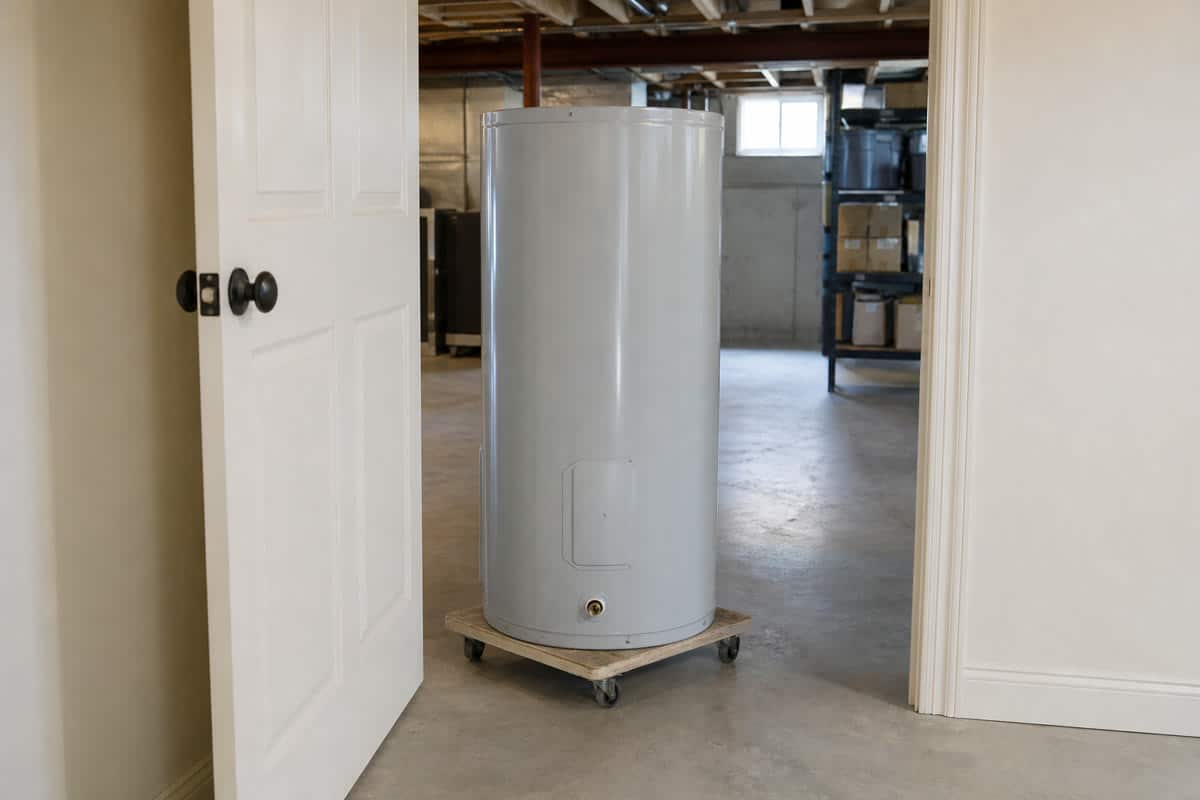
Fuel Type, Recovery Rate, and Incoming Water Temperature
The fuel source your home uses shapes recovery speed more than almost any other variable. Natural gas and propane burners typically recover a tank much faster than standard electric resistance elements, which means a gas unit can often meet peak demand with a smaller nominal capacity than an equivalent electric model. If your Mississauga or Greater Toronto Area home runs on electricity and you are replacing a gas unit, you may need to move up a tank size to maintain similar first-hour delivery.
Why incoming water temperature matters
Ontario’s cold-water supply temperature drops significantly in winter. The colder the incoming water, the more energy the heater must apply to reach the set-point temperature, and the longer each recovery cycle takes. A sizing calculation done without accounting for seasonal ground-water temperature can leave a household short of hot water on the coldest days of the year — exactly when long, warm showers feel most necessary.
Fuel comparison at a glance
| Fuel Type | Typical Recovery Speed | Sizing Implication |
|---|---|---|
| Natural gas | Fast | Smaller nominal tank may still meet demand because of higher FHR |
| Propane | Fast | Similar to natural gas |
| Electric (standard) | Slower | Larger tank often needed for same demand |
| Electric heat pump | Moderate | High efficiency; space and ambient temp requirements apply |
Natural Resources Canada’s EnerGuide resource for storage-tank water heaters explains how capacity classes are defined and how to compare efficiency ratings across fuel types — a useful reference when evaluating models side by side.
Physical Space, Venting, and Installation Constraints
Even if a larger tank would serve your household’s demand perfectly, it has to fit. Mechanical rooms in many Mississauga and Greater Toronto Area homes — particularly older semi-detached and townhouse builds — have limited floor space and ceiling height. A tank that is taller or wider than the existing unit may require repositioning the unit, rerouting supply lines, or modifying the drain pan arrangement.
Venting is equally important. Atmospheric gas water heaters rely on a flue that must be properly sized for the appliance’s BTU input. Moving to a higher-input burner to improve recovery speed can mean the existing flue is undersized for the new unit. Power-vent and direct-vent models offer more flexibility in placement but require their own clearances and termination points.
Space and venting checklist
- Measure the available floor footprint and ceiling clearance before selecting a model.
- Note the existing flue diameter and material if replacing a gas unit.
- Confirm whether the space is conditioned or unconditioned — relevant for heat-pump water heaters, which need adequate ambient air volume.
- Check that the cold-water supply, hot-water outlet, and pressure-relief valve discharge can be connected without major re-piping.
If you are considering a switch from a storage tank to a tankless water heater, the venting and gas-line requirements can change substantially, so that comparison deserves its own assessment rather than a simple swap.
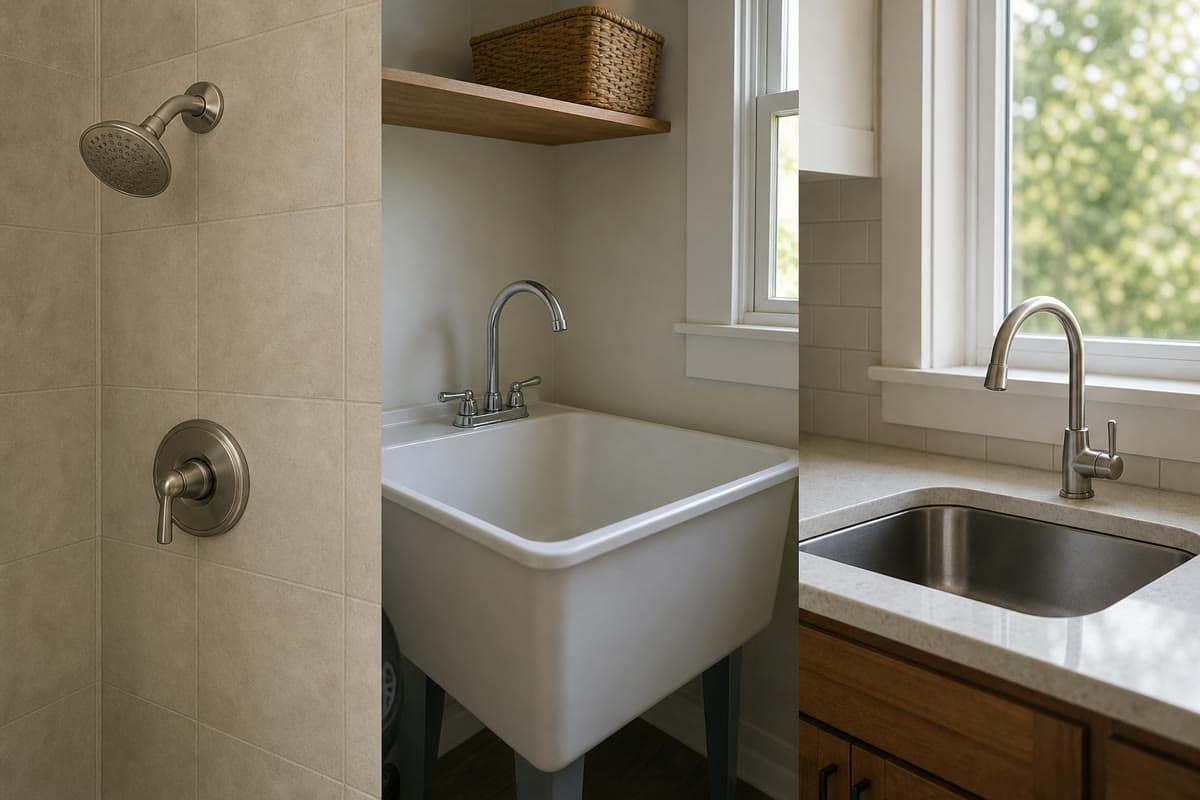
Why a Professional Calculation Beats Guesswork
Online sizing charts and manufacturer guides are starting points, not final answers. A qualified technician accounts for variables that a chart cannot: the actual cold-water inlet temperature at your address, the condition and diameter of your existing gas line or electrical service, simultaneous fixture counts based on your home’s layout, and any local installation requirements that affect which models can be installed in your specific space.
Undersizing a tank creates the obvious problem of running out of hot water during peak periods. Oversizing is less obvious but can still increase standby loss because a larger volume of stored water must be kept hot even when the household does not need it. Neither outcome serves the homeowner well.
What a proper assessment covers
- Peak-hour demand calculation based on actual household habits
- First-hour rating comparison across candidate models
- Fuel type and recovery rate analysis
- Physical fit, venting compatibility, and connection review
- Efficiency rating review using tools like the EnerGuide label
A plumbing professional can work through these factors before recommending a unit, so the installed tank matches your home’s real demand rather than a generic household-size assumption. If you want to explore how your current setup compares to available options, contact Furnace King Home Services to discuss your water-heater needs.
Frequently Asked Questions
Can household size alone determine the right tank?
No. Household size is only a starting clue. Peak-hour demand, fuel type, recovery performance, fixture flow, and whether showers or appliances run together all affect the result. Calculating the home’s busiest hot-water period and comparing it with the model’s first-hour rating is more reliable than choosing from a family-size chart.
How does Ontario’s cold winter water supply affect sizing?
Ground-water temperatures in Ontario drop in winter, meaning the heater must work harder to reach the set-point. This extends recovery time and can reduce effective first-hour delivery on the coldest days. A sizing calculation that accounts for seasonal inlet temperature — rather than assuming a fixed incoming temperature — produces a more accurate result for year-round performance.
Can I simply replace my old tank with the same size?
You can, but it is worth confirming the existing size was correct in the first place. Household demand often changes over time as families grow, appliances are added, or schedules shift. A replacement is a good opportunity to reassess whether the current capacity still matches your peak-hour needs, and whether a different fuel type or model would serve you better.
What is the difference between tank capacity and first-hour rating?
Tank capacity is the volume of water stored. First-hour rating is the total hot water the unit can deliver in one hour, combining stored water and what the burner or element can heat during that period. For sizing purposes, first-hour rating is the more useful figure because it reflects real-world performance during your busiest demand period.
For help reviewing water-heater options for your Mississauga or Greater Toronto Area home, contact Furnace King Home Services. Call (905) 564-5464 or visit the contact page to get in touch.