
Finding water around your water heater is stressful, especially when it is a weeknight and the basement is the last place you wanted a surprise. If you are dealing with a water heater leaking in Oakville, this guide walks through what to do first, what the leak location usually tells you, and when it is time to stop and call a professional.
Start With Safety Before You Look for the Cause
Water and electricity do not mix, so the first question is whether anything electrical is wet. If the floor around the heater is flooded, or water is dripping onto a panel, outlet or the heater’s wiring, do not walk through the water or touch the unit. Shut off power at your main electrical panel only if you can reach it while standing on dry ground. If you cannot, call 911 or an electrician rather than taking a chance.
If your heater runs on natural gas and you smell gas (a rotten-egg odour), do not turn switches on or off or use a phone inside. Leave the home immediately, then call Enbridge Gas at 1-866-763-5427 or 911 from outside. A water leak can wait. A gas smell cannot.
Turn Off the Energy and the Water Supply
Once the area is safe, take these steps in order:
- Turn off the power or gas. For an electric heater, switch off its breaker. For a gas-fired heater, turn the gas control to the off or pilot position, or close the gas shut-off valve on the supply line to the unit. Do not relight the pilot or turn the gas back on until the leak has been repaired and the unit checked.
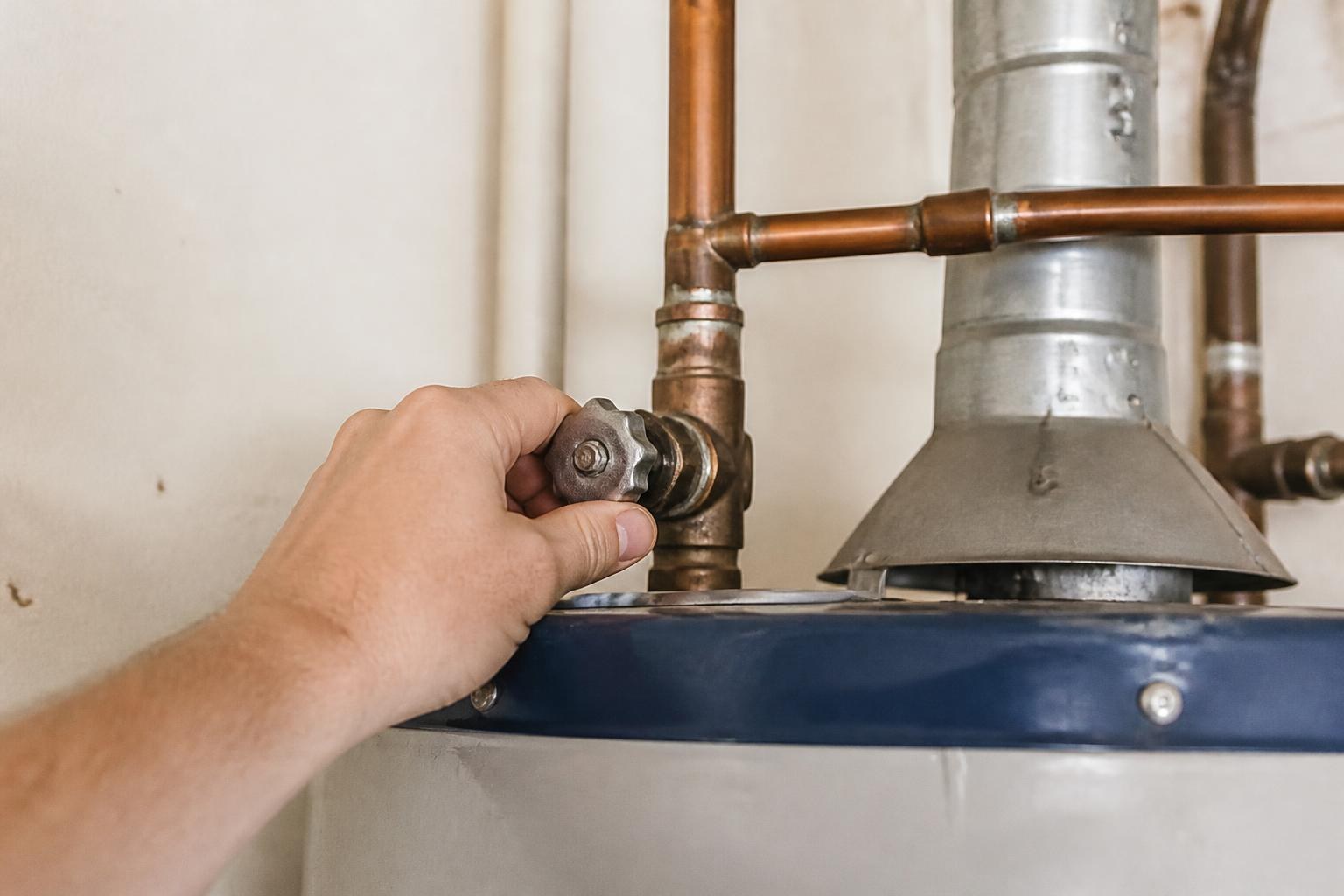
- Close the cold-water inlet valve. It sits on the pipe feeding the top of the tank. Turn it clockwise until it stops. This stops new water from entering the tank and feeding the leak.
- If the inlet valve will not close, shut off the main supply to the house instead.
Everyone in the household should know where the main shut-off is. If you are not sure, our guide to shutting off the main water valve in an emergency shows how to find it and what to expect when you close it.
Work Out Where the Water Is Really Coming From
Dry the area with a towel, then watch for where fresh water appears. The usual places are:
- the tank body or base
- the temperature and pressure (T&P) relief valve and its discharge pipe
- the cold and hot water pipe connections at the top
- the drain valve near the bottom
- condensation on the tank or pipes, which can look like a leak but is not one
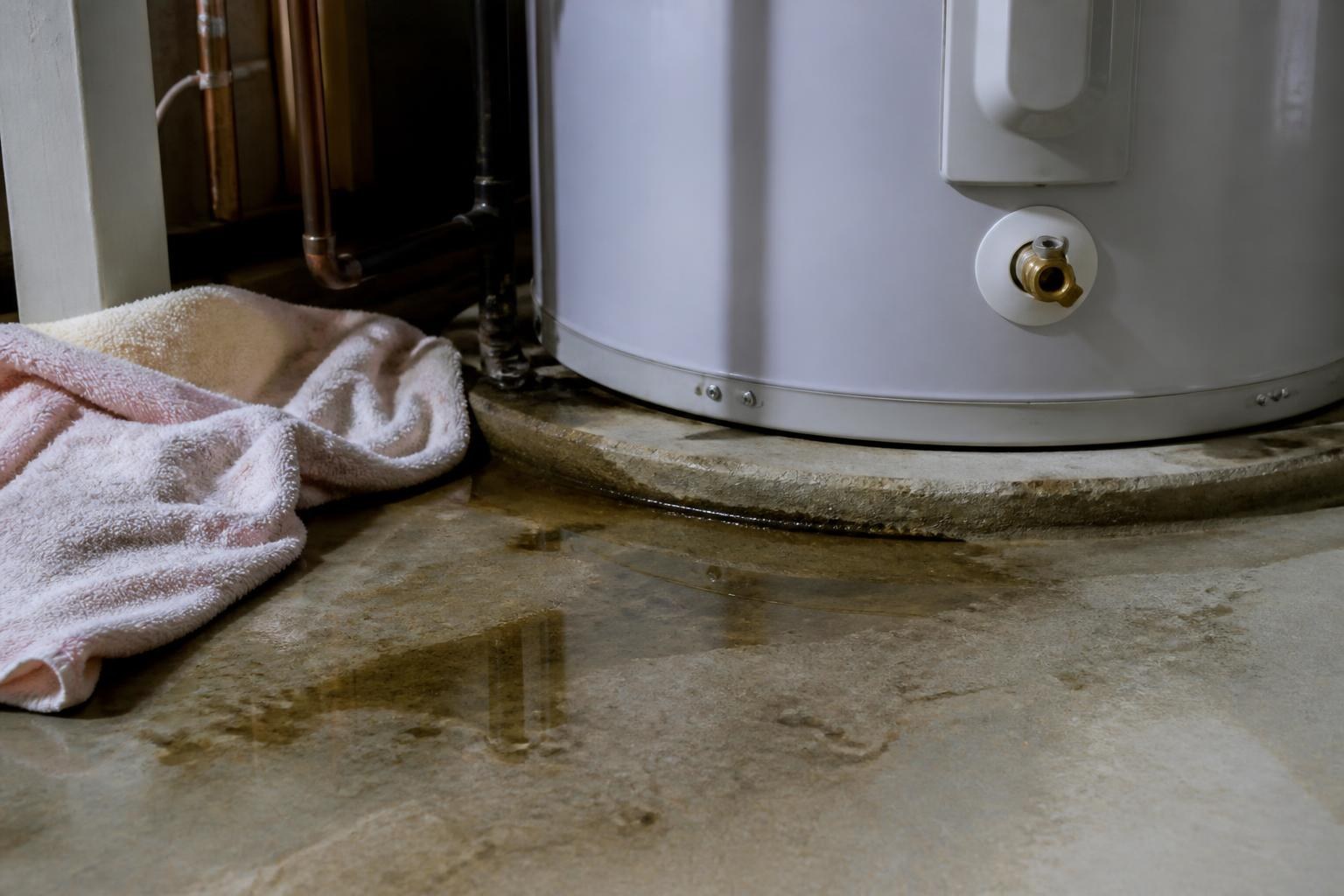
What Different Leak Locations Usually Mean
Every home is different, but these patterns are common.
Water at the top, around the pipe connections. This is often a loose or worn fitting. It is the most hopeful result, because a fitting can usually be corrected without replacing the tank.
Water from the relief valve or its discharge pipe. The T&P valve is a safety device that opens when pressure or temperature gets too high. A steady drip may point to excess pressure in the system, a thermostat set too high, or a worn valve. Do not cap or plug the valve or its pipe, because it exists to protect the tank. Have a plumber look at it.
Water at the drain valve. A slow drip is often a worn valve. It can sometimes be fixed, but leave it to a professional if it does not tighten easily.
Water pooling under the tank or running from the tank body. This is the one most homeowners dread. Tank steel wears over the years, and once water is escaping through the tank wall itself, it generally cannot be patched.
What You Can Safely Do and When to Stop
You can safely shut off the energy source, close the inlet valve, mop up and move belongings out of the way.
Stop when the next step involves gas lines, wiring, soldering, the relief valve, or removing the tank. Those jobs carry real risks of fire, scalding, carbon monoxide or flooding. In Ontario, work on gas-burning appliances is regulated. TSSA, the province’s fuel safety regulator, states that registered fuels contractors are the only businesses that can legally do fuels-related work in Ontario, so it is worth confirming that anyone you hire for a gas-fired unit is registered.
Why a Leaking Tank Usually Means Replacement
When the leak comes from the tank itself, replacement is generally the sensible answer rather than repair. The tank holds water under pressure inside a steel shell, and a leak through that shell means the shell has worn through. Sealants and patches are not a dependable fix, and a small leak can grow without warning. We cannot say for certain without seeing your unit, but if the water is coming from the tank body, planning for a new heater is usually realistic.
If your heater was already showing the signs we describe in water heater warning signs before it began to leak, that supports the case for replacing rather than repairing it.
How to Limit Water Damage While You Wait
With the supply off, the goal is to keep water from spreading and soaking into anything it should not.
- Move boxes, stored items and anything cardboard off the floor.
- Soak up standing water with towels, or a wet/dry vacuum if the outlet is dry and away from the water.
- Open a window or run a fan to help the area dry, which reduces the chance of mould developing.
- Take photos of the damage before you clean up, in case you need them for your insurer.
What to Tell the Plumber When You Call
A clear description helps the right person arrive with the right information. Be ready to share:
- where the water is coming from, and whether it is a drip, a trickle or a steady flow
- whether the heater is gas or electric, and roughly how old it is
- whether you have shut off the power or gas and the water supply
- whether there is any water near electrical components or any gas odour
If the situation cannot wait until morning, our emergency services page explains how to reach us, and our plumbing services cover the wider plumbing questions that come up with a leak.
Your Options When It Is Time to Replace
Once the immediate problem is handled, you have a decision to make. You can replace the unit with another storage tank, or move to a tankless system that heats water on demand and takes up less space on the wall.
We install tankless water heaters, and you can read about how that works and what to consider on our tankless water heater page. For a replacement tank, we will tell you plainly whether we are the right contractor for that part of the job.
Frequently Asked Questions
Is it safe to keep using a leaking water heater?
We would not. Even a small leak can worsen suddenly, and moisture near electrical parts or gas controls is a hazard. Turn off the power or gas and the cold-water inlet until it has been checked.
Can a leaking water heater be repaired?
It depends on the source. A loose fitting or worn drain valve can often be corrected. A leak through the tank wall generally cannot, and replacement is the usual path.
Why is my relief valve dripping?
The valve opens when pressure or temperature gets too high, or it can wear out and weep. Do not plug it. Have a plumber check the pressure, the thermostat setting and the valve itself.
Should I drain the tank myself?
We would leave draining to a professional if the tank is leaking. The water can scald, and a leaking tank may have sediment or corrosion at the drain.
Water Heater Trouble in Oakville? Call Us
We can help you work out the next step calmly. Call us at (905) 564-5464 or contact us online, and tell us what you are seeing. We will talk through your options, including tankless water heater installation.