
When a drain backs up, the instinct is to reach for whatever clears it fastest. But choosing between hydro jetting vs drain snaking is not simply a matter of speed — it depends on the type of blockage, the age and condition of your pipes, and whether the problem is a one-time obstruction or recurring buildup. Homeowners in Mississauga and the Greater Toronto Area deal with a wide range of drain issues, from grease-coated kitchen lines to root intrusion in older clay sewer laterals. Understanding how each method actually works helps you have a more informed conversation with your plumber and avoid spending money on a fix that only lasts a few weeks.
How Drain Snaking Opens a Blocked Line
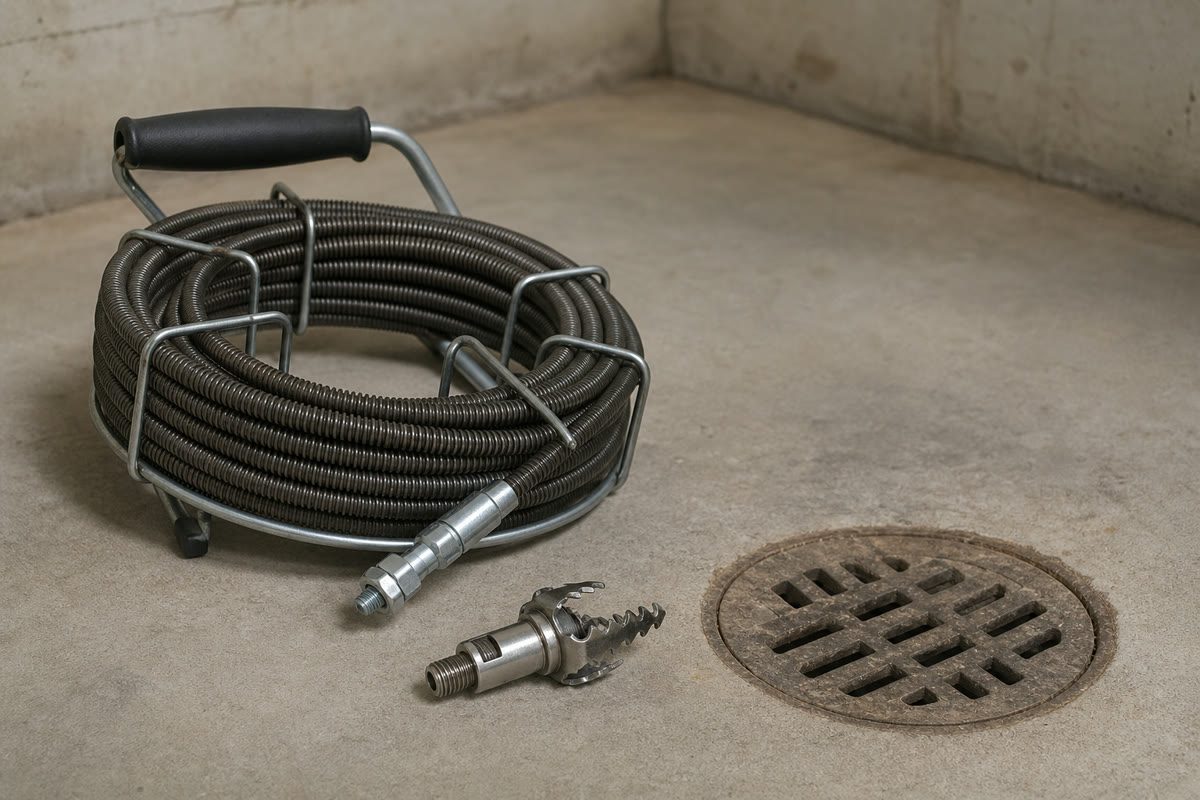
A drain snake — also called a cable auger — is a flexible, coiled steel cable that a technician feeds into the drain opening. As the cable advances, a rotating cutting head at the tip either breaks through the obstruction or hooks into it so it can be pulled back out. Electric-powered drum machines extend reach considerably compared to hand-crank models, making them practical for main sewer lines as well as branch drains.
Snaking is often well-suited to discrete, solid blockages. A wad of hair and soap scum in a bathroom drain, a small grease plug in a kitchen line, or a foreign object lodged near a trap are all situations where a cable auger may resolve the problem with less force than high-pressure cleaning, depending on pipe condition.
Practical strengths of snaking
- Often lower mechanical stress than high-pressure methods when used appropriately
- Effective on soft, concentrated clogs
- Faster setup time for straightforward blockages
- Suitable when pipe condition is uncertain and high pressure is not advisable
The limitation is that a cable auger often opens a path through the clog rather than removing all material coating the pipe walls. Grease, mineral scale, and biofilm that have built up over months or years may remain after snaking, which is why some drains slow down again within weeks of being cleared. Snaking is a targeted tool — precise and generally gentler than high-pressure cleaning, but not the same as a full pipe-wall cleaning.
How Hydro Jetting Clears and Cleans Pipe Walls
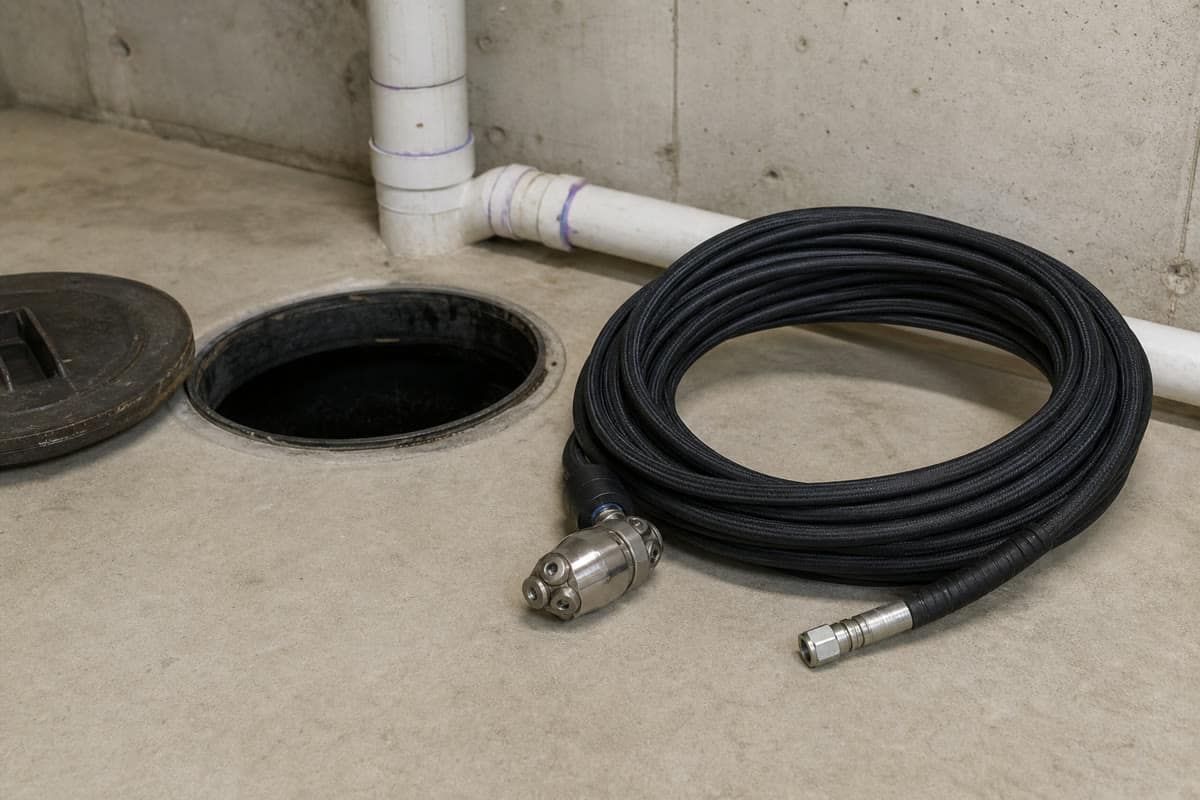
Hydro jetting uses a specialized nozzle connected to a high-pressure water pump. The nozzle is inserted into the drain line and propelled forward by rear-facing jets while forward-facing jets help dislodge debris, grease, scale, and biofilm from the interior pipe walls. Unlike snaking, which opens or displaces a clog, hydro jetting is intended to flush loosened material downstream when the line condition and blockage type make that approach appropriate.
This method can be useful on lines with heavy grease coating — a common issue in kitchen drains — and on sewer laterals where sediment or fine root intrusion has narrowed the flow path. Because hydro jetting addresses more of the pipe interior than a simple centre opening, it can improve flow when the pipe is structurally sound and the blockage type is suitable.
When hydro jetting makes the most sense
- Recurring slow drains that return shortly after snaking
- Grease-heavy kitchen drain lines
- Main sewer lines with sediment or fine root intrusion
- Lines that need a more thorough clean after inspection confirms jetting is suitable
The important caveat is that pressurized water is not appropriate for every pipe. Older cast-iron lines with significant corrosion, clay tile with deteriorated joints, or any pipe already showing structural weakness can be damaged by jetting. That is why a camera inspection is strongly advisable before hydro jetting when pipe condition is unknown, the line is older or damaged, or blockages keep returning. Skipping that inspection to save time can turn a cleaning job into a repair job.
Camera Inspection and Pipe Condition: Why They Shape the Decision
A drain camera is a small waterproof unit mounted on a flexible cable that transmits live video to a monitor above ground. It lets a plumber see exactly what is inside the pipe: the nature of the blockage, the pipe material, joint condition, root intrusion patterns, and any cracks or offsets that could complicate clearing work.
Across Mississauga and the Greater Toronto Area, pipe materials and conditions can vary significantly from one property to another. A method that is suitable for one home may be inappropriate for another if the line is corroded, cracked, offset, or otherwise weakened.
What a camera inspection can reveal
- Pipe material and approximate condition
- Location and nature of the blockage (grease, roots, foreign object, collapse)
- Joint integrity and any offset sections
- Whether a repair is needed before or instead of cleaning
If a camera shows a pipe in good structural condition with heavy grease or scale buildup, hydro jetting may be a logical next step. If it reveals significant corrosion or cracked joints, snaking — or pipe repair — may be the safer path. Inspection data reduces guesswork and helps prevent unexpected complications. For anything beyond a routine slow drain, requesting a camera inspection before committing to a clearing method is a sound approach. You can learn more about Furnace King Home Services’ plumbing services on the plumbing services page.
Warning Signs, Chemical Drain Cleaners, and What to Keep Out of Drains
Some drain problems signal that a simple clearing job will not be enough. Gurgling sounds from multiple fixtures at once, sewage odours inside the home, water backing up into a floor drain when another fixture is used, or a drain that clogs repeatedly within a short period all suggest a systemic issue rather than a single isolated blockage. These patterns warrant a professional assessment rather than repeated DIY attempts.
Chemical drain cleaners are a common first response, but they carry real risks. Health Canada’s household chemical safety guidance warns that drain-cleaning products can be hazardous if handled unsafely, including risks from contact with skin or eyes and exposure during use. Strong chemical cleaners also may not fully dissolve the blockage, leaving residue in the line that a technician must account for during mechanical work.
Common contributors to recurring drain problems
- Fats, oils, and grease — these solidify as they cool and coat pipe walls progressively
- Wipes and paper products labelled “flushable” — they do not break down reliably in drain lines
- Coffee grounds and food scraps — even with a garburator, these can accumulate in traps and bends
- Hair and personal-care product residue — a common contributor to bathroom drain blockages
Addressing what goes into the drain is as important as how the drain is cleared. If a household consistently disposes of grease down the kitchen sink, even thorough professional cleaning may only delay the next buildup. Combining professional clearing with better disposal habits can help extend the time between service calls. If a drain problem feels urgent or could cause property damage, contact Furnace King Home Services to ask about available plumbing service options.
Frequently Asked Questions
Can hydro jetting damage my pipes?
It can, if used on pipes that are already structurally compromised. Corroded cast iron, cracked clay tile, or shifted joints may be vulnerable to pressurized water. A camera inspection before jetting helps identify these conditions so the plumber can choose a safer method or recommend repair first. When the pipe is confirmed to be in sound condition and the equipment is used appropriately, hydro jetting may be a suitable option.
How do I know if snaking will be enough or if I need jetting?
If the drain clears after snaking but slows again within a few weeks, that pattern may point to material remaining on the pipe walls rather than a discrete clog. Recurring blockages in the same line, especially in kitchen drains or main sewer laterals, may warrant a more thorough evaluation. A camera inspection can confirm which situation you are dealing with.
Is it safe to use store-bought drain cleaners before calling a plumber?
Chemical cleaners carry handling hazards and can leave residue in the line that a technician must account for during mechanical work. For occasional minor clogs, a drain strainer and hot water flush are lower-risk first steps. For persistent or severe blockages, avoid adding more chemicals and contact a plumber for an assessment.
Do I need a camera inspection every time my drain is cleared?
Not necessarily for every routine service call. However, if you are experiencing recurring blockages, unusual odours, multiple slow fixtures, or if the drain has not been inspected in many years, a camera inspection provides information that meaningfully improves the outcome. It is particularly valuable before hydro jetting or when a drain problem may involve the main sewer lateral.
For plumbing concerns in Mississauga and the Greater Toronto Area, call Furnace King Home Services at (905) 564-5464 or visit the contact page to request service.