
Buying a home in Brampton means a long list of inspections, and the furnace is easy to treat as a line item on someone else’s checklist. It shouldn’t be. A furnace is one of the most expensive systems in the house to replace, and it is also a safety device, because it burns fuel and moves exhaust out of your living space. We put this guide together so you know what a furnace inspection covers, who does what, and how to use the findings before closing.
Why the Furnace Deserves a Closer Look Before You Buy
Brampton winters are long, and a furnace that struggles in January becomes your problem the day you take possession. Heating equipment also fails quietly. A unit can run well enough on a showing day in October and still have a worn part, a partly blocked vent or an aging component that shows up under a cold-weather load.
A furnace inspection gives you a clearer picture of three things: whether the system is safe, how much working life is likely left, and what you should budget for. That information helps you decide on an offer, plan your first year of ownership and avoid surprises in the first cold snap.
What a General Home Inspector Checks and What a Heating Technician Checks
A general home inspector looks at the whole house. For the furnace, that usually means a visual review: the unit’s location, its general condition, signs of rust or moisture, the age shown on the data plate, whether it turns on and heats, the filter and the visible venting. It is a helpful snapshot, and it is not a deep mechanical review.
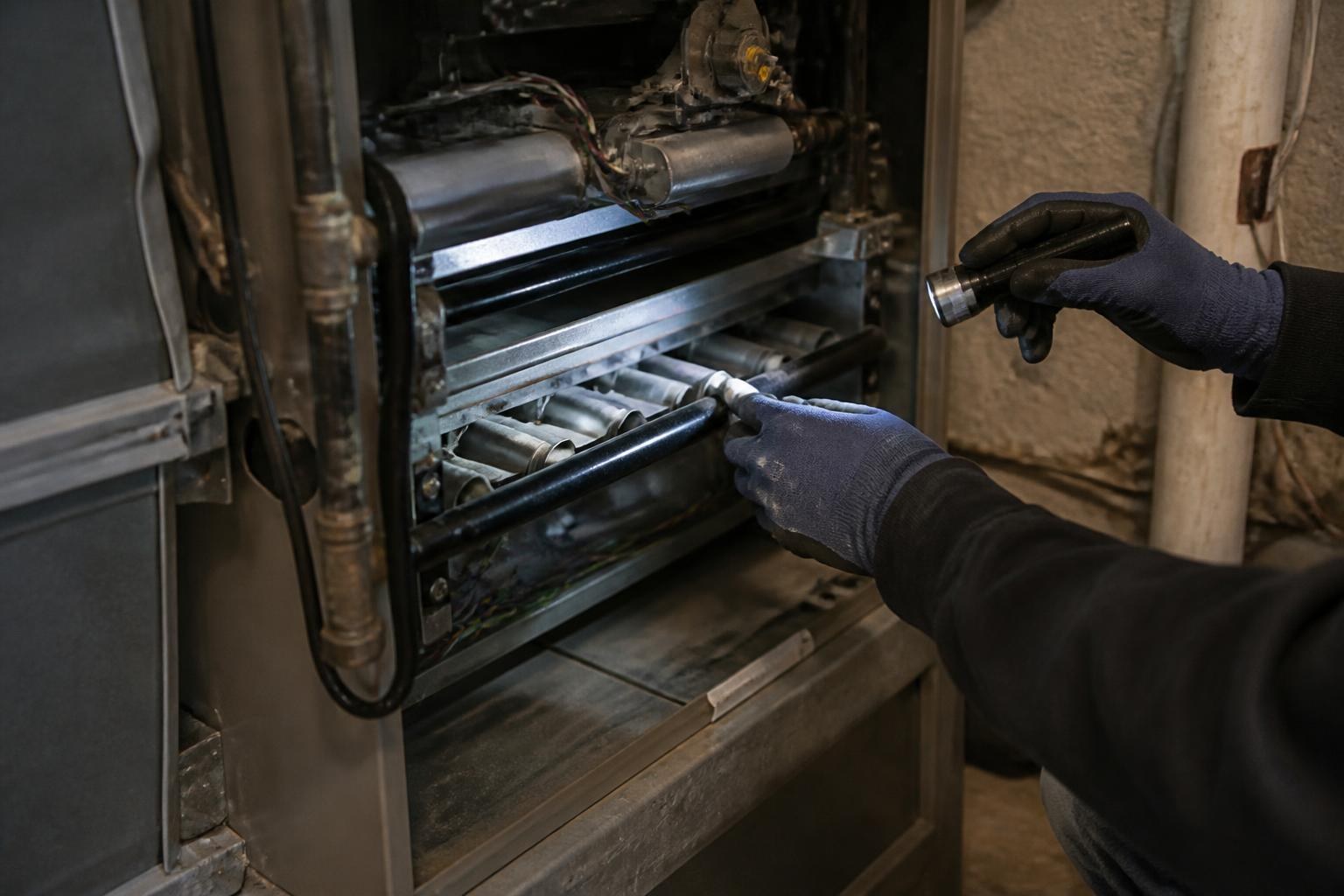
A licensed heating technician goes further because the work is hands-on and specific to combustion equipment. A technician can remove panels, look at burners and the ignition system, test safety controls, check the flue and venting in detail and assess components the general inspector will not open. If your home inspection report says “recommend further evaluation by a heating contractor,” that is the moment to bring in a technician.
The two do not compete. The home inspector tells you what to look at, and the technician tells you what you are looking at.
What a Furnace Inspection Looks At
Every technician has a routine, but a thorough furnace inspection generally covers these areas:
- Visible condition: rust, scorch marks, water staining, unusual residue or signs of past repairs around the cabinet.
- Age and data plate: the make, model and manufacture date, which tell you where the unit sits in its life.
- Heat exchanger: where it can be seen, a look for cracks, corrosion or damage. A full view is not always possible, which is worth knowing. Our guide to cracked heat exchanger warning signs explains why this part matters so much.
- Burners and ignition: whether the flame looks steady and the furnace lights reliably.
- Flue and venting: that exhaust has a clear, sound path outdoors, with no disconnected, corroded or blocked sections.
- Filter and blower: a clogged filter or a noisy, dirty blower points to neglected upkeep.
- Thermostat and controls: that the furnace responds properly and the safety controls shut it down when they should.
- Carbon monoxide: a check that the home has working alarms and that nothing suggests combustion gases are escaping.
Reading the Data Plate: Age and Remaining Life
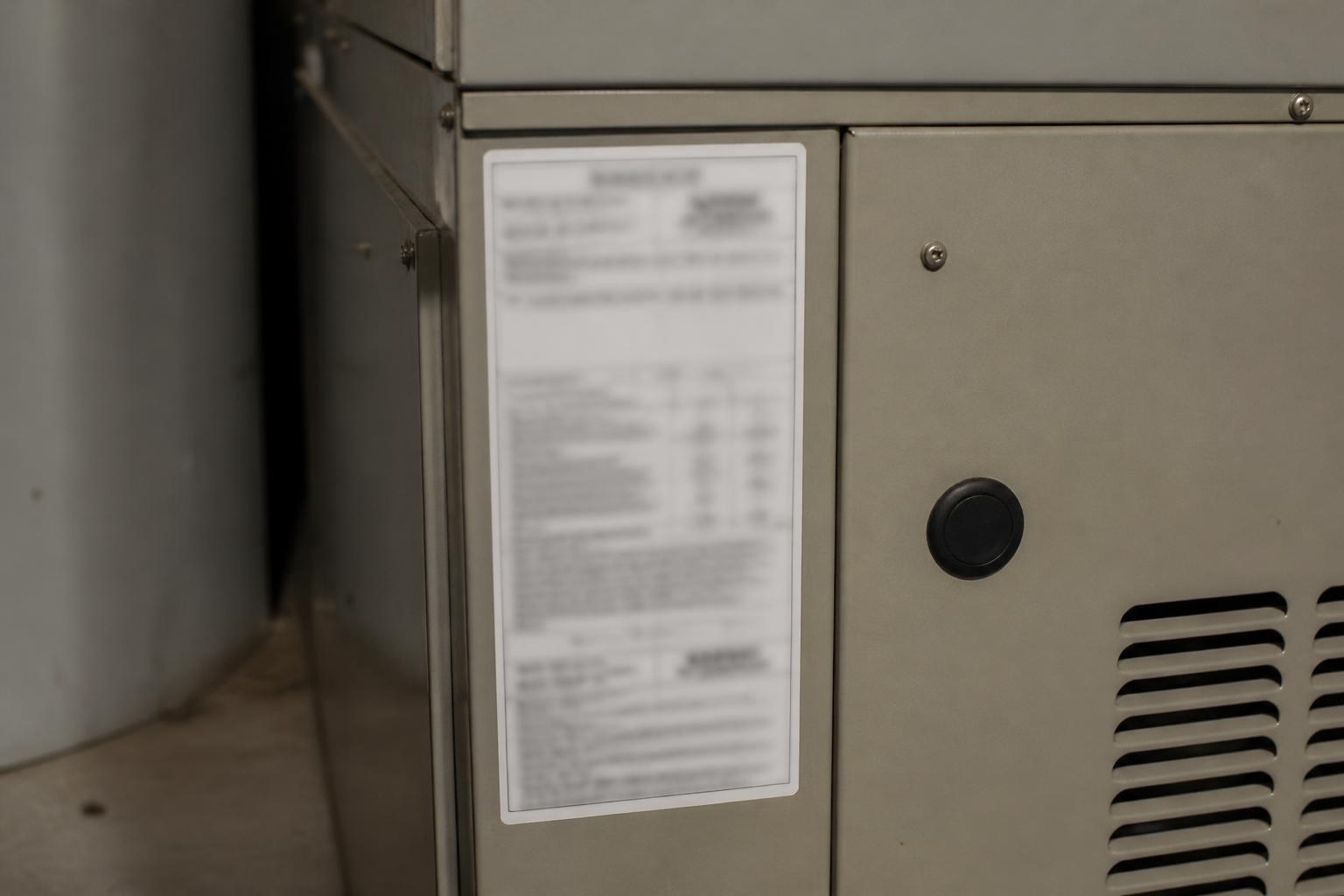
The data plate, usually a label on the inside of the furnace cabinet, shows the manufacturer, model and serial number, and the serial number often encodes the build date. Manufacturers format these differently, so a technician can help you decode it if it is not obvious.
Age matters because furnaces wear with years of cycling, but it is not the whole story. A well-maintained unit can outlast a neglected one that is younger. We cover typical timelines in how long a furnace lasts, and the short version is that a furnace in its later years is not an automatic problem. It simply means you should plan for replacement rather than be surprised by it.
Questions to Ask the Seller
A few direct questions can tell you a lot before the inspection even starts:
- How old is the furnace, and was it installed by a heating company?
- When was it last serviced, and are the records available?
- Has it needed repairs, and what were they?
- Are there rooms that never seem to heat evenly?
- Is the furnace owned outright, or is it a rental or financed unit that transfers with the sale?
- Are there carbon monoxide alarms on each level, and when were they last tested?
The rental question is an important one. Some homes carry an equipment contract that the buyer inherits, and you want to know before you sign.
Reading the Report: Urgent, Monitor or Normal Wear
An inspection report can read as a long list of concerns, so it helps to sort the findings into three groups.
- Urgent: anything that touches safety, such as a suspected heat exchanger crack, a blocked or damaged vent, signs of exhaust leaking into the home or a safety control that does not work. These need attention before you take on the house.
- Monitor: items that work today but show wear, such as an aging blower motor, a furnace near the end of its typical life or an igniter that is slow to light. These go on your maintenance and budget plan.
- Normal wear: a dirty filter, light surface rust or dust. These are easy to fix and usually come down to routine upkeep.
Ask the technician to put findings in plain language and to tell you which group each one belongs to. A clear explanation is more useful than a long list.
What to Do When the Inspection Finds Problems
A problem on the report is information, not a reason to panic. Your options usually look like this:
- Negotiate: use the findings to ask the seller for repairs or a price adjustment, with your agent and lawyer guiding the process.
- Get a technician’s assessment: a written explanation of what is wrong and what the fix involves gives you something concrete to bring to the table.
- Plan the next step: if the furnace is near the end of its life, learn what repair versus replacement looks like so you can decide with a clear head, and see our new and replacement furnace options to understand what is available.
- Budget ahead: even if you proceed as is, knowing a replacement may be coming lets you set money aside instead of facing it all at once.
Timing the Inspection Before Closing
Book the furnace assessment as early in your conditional period as you can, since technician schedules fill up in the colder months, and a late report leaves you little room to negotiate. If the home is vacant or the heat has been off, let the technician know so they can plan for a cold start.
Sellers can benefit from the same approach. Having the furnace looked at before listing lets you fix small items, gather service records and answer buyer questions with confidence.
Frequently Asked Questions
Does a home inspector check the furnace?
Yes, usually at a visual and functional level. They note its age, condition and whether it heats. A heating technician goes deeper into burners, venting, safety controls and other parts the home inspector does not open.
Can a technician see inside the heat exchanger?
Only partly in many furnaces, because of how the unit is built. A technician checks what is accessible and uses other signs of its condition to form an opinion. If anything looks doubtful, a closer evaluation is the safe route.
How often should a furnace be inspected?
Health Canada advises having a professional inspect fuel-burning appliances at least once a year or according to the manufacturer’s instructions. See our fall furnace tune-up guide for what a yearly visit includes.
Is an old furnace a reason not to buy a house?
Not by itself. It is a reason to plan. If the furnace is old but safe and running well, you can factor a future replacement into your budget and move forward.
For more on carbon monoxide safety at home, see Health Canada’s page on preventing carbon monoxide exposure.
Questions About a Furnace Before You Buy in Brampton?
If you are buying or selling in Brampton and want a heating technician’s plain-language opinion on the furnace, we are glad to help. Call us at (905) 564-5464 or reach out through our contact page.