
You hear the furnace start up, the fan hums for a moment, and then everything goes quiet without a single puff of warm air. That pattern is one of the most common reasons a furnace refuses to heat, and a faulty pressure switch is often involved. This guide for Mississauga homeowners explains what the pressure switch does, the signs that it may be failing, what you can safely check yourself, and why a pressure switch should never be bypassed.
What a Furnace Pressure Switch Does
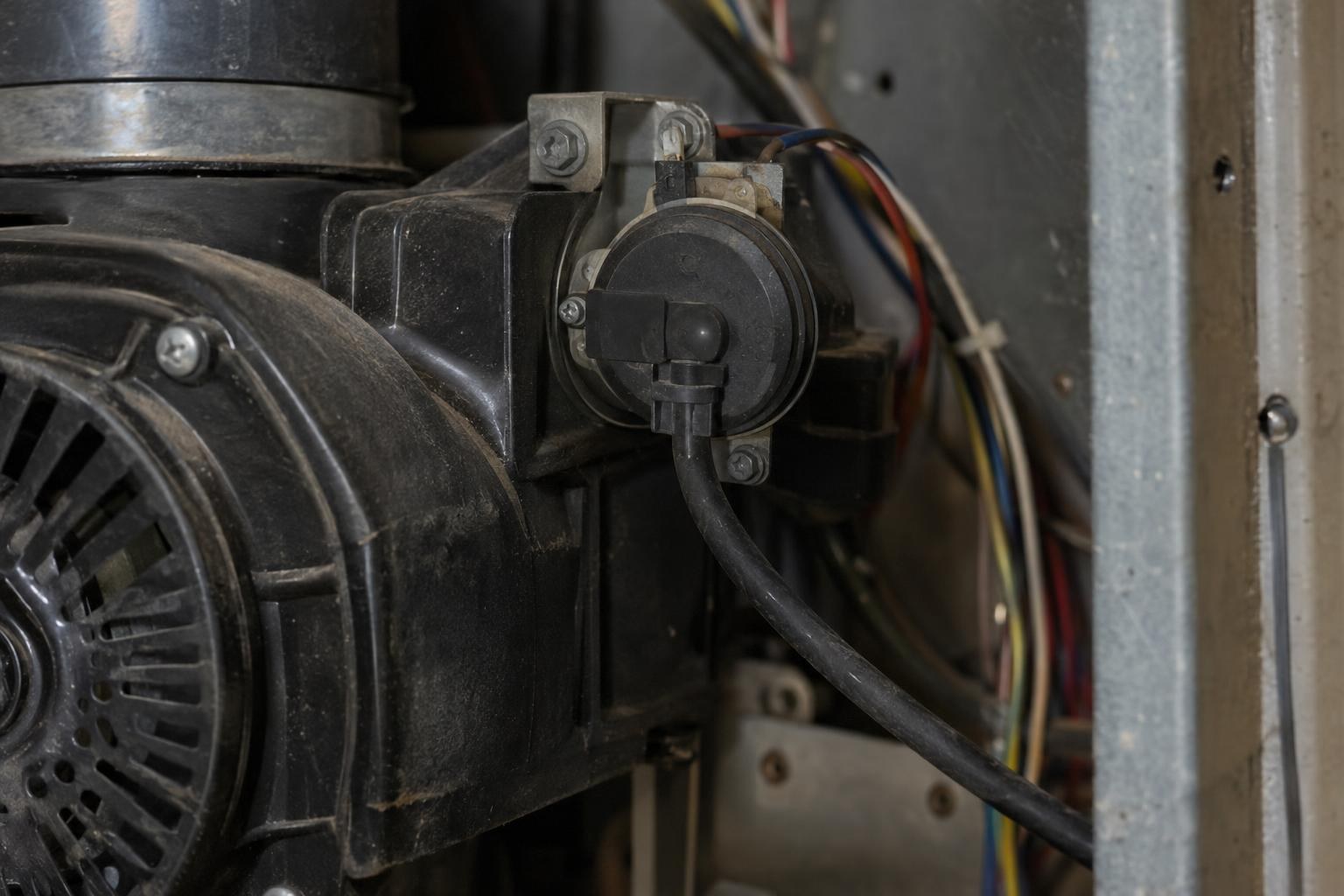
A modern gas furnace does not simply light a flame when the thermostat calls for heat. It first runs a safety sequence. The inducer motor starts and pulls air through the heat exchanger and out through the vent pipe. The pressure switch is a small sensor, usually mounted near the inducer, that confirms the motor is creating the right draft. Only when the switch closes does the control board allow the gas valve to open and the burners to light.
The idea is simple and important. If the vent is blocked or the inducer is weak, combustion gases could stay in the furnace instead of leaving the house. The pressure switch is the part that stops the furnace from lighting in that situation. When it does its job, a furnace that will not start may actually be protecting your family.
Signs the Pressure Switch May Be the Problem
Because the switch sits in the middle of the start-up sequence, its failure shows up in a recognizable way. Common signs include:
- The inducer fan runs but the burners never light. You hear the motor start, then nothing follows.
- The furnace starts and then shuts down after a short time. The switch may open again once the furnace is running.
- Repeated start attempts with no heat. The furnace tries, stops, waits and tries again.
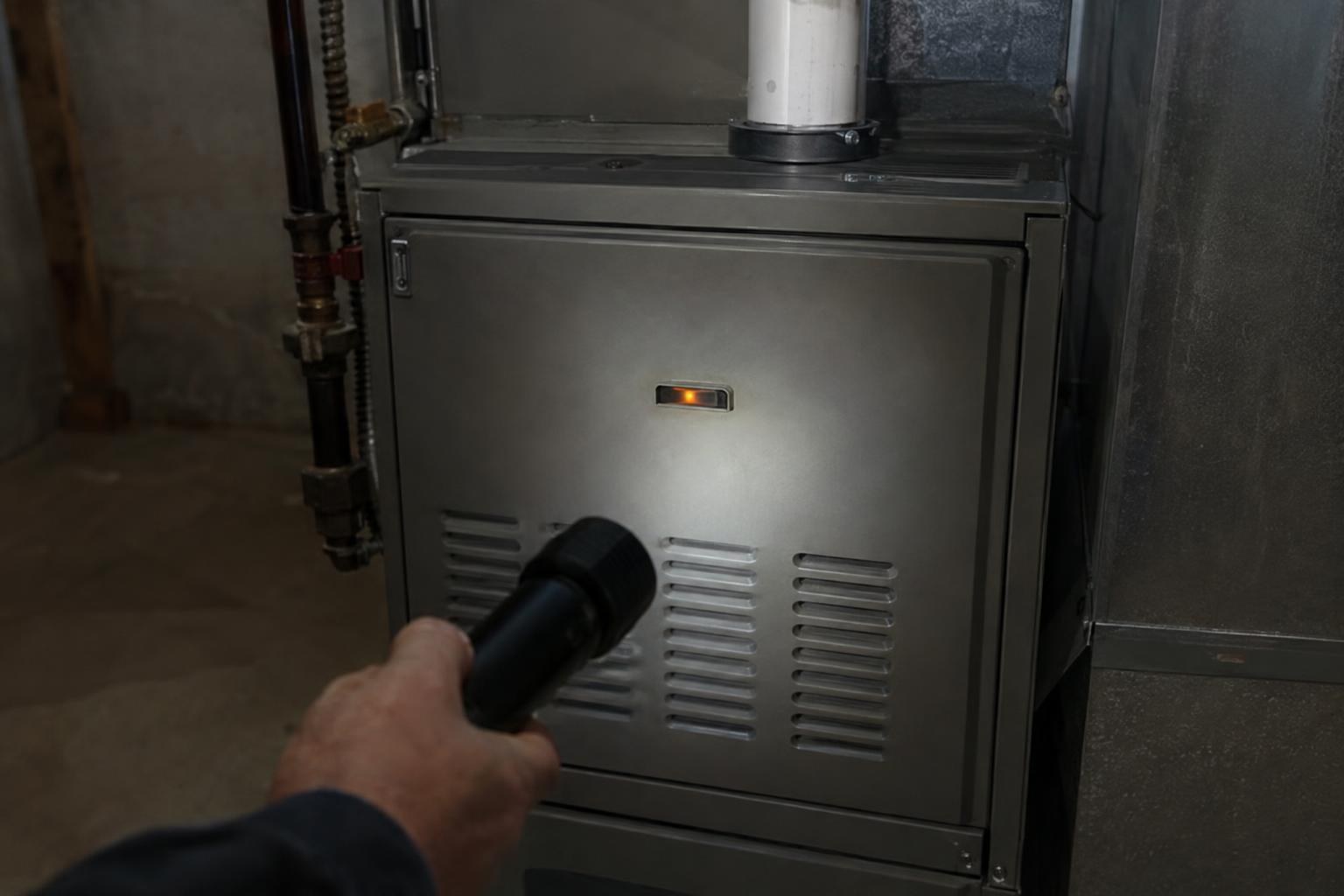
- A flashing light on the control board. Most furnaces have a small window or LED that flashes a code. Many manufacturers use a specific pattern for a pressure switch fault, but the pattern differs by brand and model, so check the label inside the door or your owner’s manual.
- A clicking sound at the switch. Some switches click when they try to close and cannot.
These symptoms overlap with other problems, which is why a good diagnosis matters. Our guide to a furnace that will not turn on covers the broader checklist.
Common Causes of Pressure Switch Trouble
The switch itself can fail, but it is often reacting to something else. A technician will look at the whole chain rather than just replacing the part. Typical causes include:
- A blocked or kinked rubber hose. A small tube connects the switch to the inducer housing. If it cracks, loosens or fills with moisture, the switch cannot read the pressure properly.
- A worn diaphragm inside the switch. Over years of heating and cooling cycles, the internal membrane can stiffen or crack and stop responding.
- A weakening inducer motor. If the motor does not spin fast enough, it cannot pull enough draft to close the switch.
- A blocked vent or air intake. Snow, ice, leaves, a bird nest or a collapsed pipe can restrict airflow outside the house.
- Condensate problems in a high-efficiency furnace. These furnaces produce water as they run. If the drain backs up, water can reach the switch or its hose.
- Corroded or loose wiring. A poor electrical connection can make a working switch behave as if it had failed.
Because several of these causes affect safety, it is worth taking the problem seriously even when the furnace seems to start once or twice before quitting.
Safe Checks You Can Do Yourself
Before you call for service, a few simple, low-risk checks can rule out easy causes. Do not remove the furnace panels beyond what the owner’s manual describes, and never touch gas lines or wiring.
- Check the thermostat. Confirm it is set to heat, the temperature is above the room reading, and the batteries are fresh if it uses them.
- Look at the filter. A badly clogged filter restricts airflow and causes a range of heating faults. Our filter replacement guide explains how often to change it.
- Inspect the outdoor vent and intake pipes. Find where the white plastic pipes leave your house. Gently clear snow, ice or debris from around the openings without poking anything into the pipe.
- Check the furnace switch and breaker. Make sure the furnace power switch near the unit is on and the breaker has not tripped.
- Read the control board light. If the window shows a flash pattern, note it and match it against the chart on the furnace door. Writing it down helps the technician.
- Reset once, not repeatedly. Turn the thermostat off and back on after a minute. If the furnace fails again, stop trying.
Why You Should Never Bypass a Pressure Switch
You may come across videos or forum posts suggesting that a stuck pressure switch can be “jumped” or taped shut so the furnace runs. Please do not do this. Bypassing the switch removes a safety check that prevents the furnace from firing when it cannot vent properly. The result can be carbon monoxide entering the home, which is colourless and odourless.
Ontario’s fuel safety regulator, the Technical Standards and Safety Authority, recommends having fuel-burning appliances inspected annually by a TSSA-registered fuel contractor and keeping working, certified carbon monoxide alarms in the home. If an alarm sounds, get everyone into fresh air and call 911. If you ever smell gas, leave the house and call 911 or Enbridge Gas at 1-866-763-5427 from outside.
What a Professional Repair Visit Involves
When you call a licensed technician about a suspected pressure switch fault, the visit usually follows a logical order. The technician reads the control board code, watches the start-up sequence, and checks the hose for cracks or moisture. They then test the switch with a gauge to see whether it closes at the correct pressure, and inspect the inducer motor, the vent and intake runs, and the condensate drain on a high-efficiency model.
Sometimes the fix is as small as replacing a cracked hose. In other cases the switch or inducer needs to be replaced. A good technician will explain which part failed and why before any work begins. If a furnace is old and has several failing components, it can also be worth discussing whether repair or replacement makes more sense, and our article on furnace repair versus replacement lays out the factors.
Keeping the Switch and Vent System Healthy
You cannot prevent every failure, but a few habits reduce the odds of a no-heat call in the middle of winter:
- Book an annual tune-up before the cold arrives. A technician can inspect the hose, vent, drain and inducer during a routine visit. See our HVAC maintenance page for what that includes.
- Keep outdoor vent terminations clear. After a snowfall or freezing rain, take a moment to check them.
- Change the filter on schedule. It keeps the system breathing freely.
- Respond early to warning signs. A furnace that struggles to start is telling you something.
Frequently Asked Questions
Can a furnace run without a pressure switch?
A furnace should never be operated with the pressure switch removed or bypassed. It is a required safety control, and running without it puts your household at risk.
How do I know whether it is the switch or the inducer motor?
You usually cannot tell by listening. A technician tests the switch’s response and measures whether the inducer creates enough draft. Both parts can produce similar symptoms.
Why does my furnace work sometimes and fail at other times?
A hose that is partly blocked by moisture, a vent that freezes overnight, or a worn diaphragm can all cause on-and-off behaviour. Intermittent faults still deserve attention because they tend to get worse.
Is a flashing light on the furnace always a pressure switch fault?
No. Flash codes cover many conditions, and each brand uses its own patterns. Use the chart on your furnace door and share the code with your technician.
Need Help With a Furnace That Starts and Stops?
If your furnace runs the fan but never lights, or keeps shutting down after a few seconds, Furnace King can find the cause and explain your options. Homeowners in Mississauga and across the GTA can call us at (905) 564-5464 or use our contact page. For a heating problem that cannot wait, visit our emergency services page. With over 40 years serving Ontario homes, we are here to get your heat back safely.