
If you’ve noticed your shower has turned into a trickle or your kitchen faucet just doesn’t fill a pot the way it used to, you’re not imagining things. Low water pressure is one of the most common plumbing complaints we hear from homeowners across Burlington, and while it’s often just an annoyance, it can also be an early warning sign of a bigger issue hiding behind your walls. The good news is that most causes fall into a handful of predictable categories, and once you know what to look for, you can usually figure out whether you’re dealing with a simple fix or something that needs a professional look.
In this guide, we’ll walk through how to tell if your low pressure is a whole-house problem or isolated to a single fixture, the most common culprits behind each, and how to safely narrow things down before you pick up the phone. Whether the issue turns out to be as simple as a clogged aerator or as involved as aging pipe throughout your home, understanding the basics will help you have a much more productive conversation with whoever ends up fixing it.
Step One: Is It the Whole House or Just One Fixture?
Before you can figure out what’s causing your low water pressure, you need to determine how widespread the problem actually is. This single diagnostic step will save you a lot of guesswork, because whole-house issues and single-fixture issues have almost entirely different causes.
Turn on a few different faucets around your home — the kitchen sink, a bathroom sink, and a shower or tub — one at a time and pay attention to the flow. If every fixture in the house seems weak, you’re likely dealing with something upstream in your main water line or your home’s internal plumbing. If only one fixture is affected while everything else runs normally, the problem is almost certainly local to that fixture or the line feeding it. Keep a mental note (or better yet, a quick written one) of which fixtures are affected and how severe the drop feels, since that information is genuinely useful if you end up needing to describe the issue to a plumber.
Whole-House Cause: Municipal Supply Issues
Sometimes the problem isn’t in your home at all. Water main repairs, hydrant flushing, high-demand periods, or general fluctuations in the municipal supply can all cause a temporary, whole-house drop in pressure. This is especially common in Burlington neighborhoods during peak usage times or after nearby construction work. If your neighbors are also experiencing low pressure, or if the issue appeared suddenly and resolves on its own within a day or two, a supply-side issue is a reasonable first suspect. A quick call to Halton Region’s emergency water services or a check of local service alerts can often confirm whether work is happening in your area.
Whole-House Cause: A Partially Closed Main Shutoff Valve
Every home has a main shutoff valve where the water line enters the house, and if that valve isn’t fully open, every fixture in your home will feel the effects. This can happen after plumbing repairs, a home inspection, renovation work, or even an accidental bump if the valve is in a high-traffic area like a basement or utility closet. It’s a surprisingly common and easy-to-overlook cause of gradual or sudden whole-house pressure loss, and it’s one of the first things worth checking before assuming something more serious is wrong.
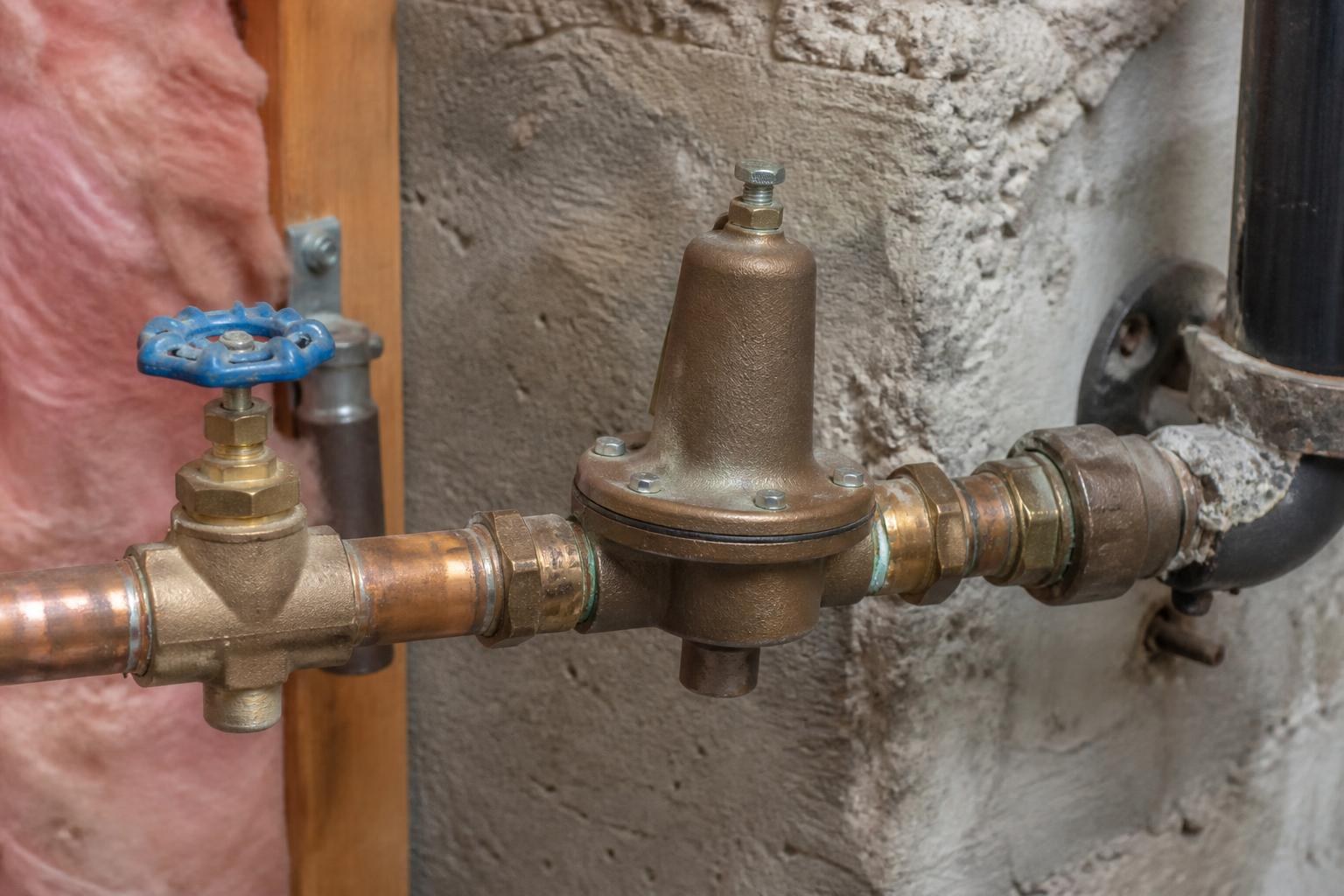
Whole-House Cause: A Failing Pressure-Reducing Valve
Many homes, particularly those on municipal systems with higher incoming pressure, have a pressure-reducing valve (PRV) installed near the main shutoff. This valve regulates incoming water pressure down to a level that’s typically expected for household plumbing and fixtures. When a PRV starts to fail — often due to age, mineral buildup, or a worn internal diaphragm — it can either restrict flow too much or lose its ability to regulate pressure consistently. A PRV that’s slowly degrading tends to produce a gradual, whole-house pressure decline rather than a sudden one, which can make it easy to miss until the difference becomes pretty noticeable.
Whole-House Cause: Clogged or Corroded Galvanized Pipes
If your Burlington home was built several decades ago and still has some or all of its original galvanized steel piping, internal corrosion is a very common source of chronic low pressure. Over time, the interior of galvanized pipe naturally narrows as mineral deposits and rust scale build up along the pipe walls, effectively shrinking the usable diameter of the line. This kind of restriction tends to worsen slowly over months or years rather than appearing overnight, and it typically affects the whole house since the corrosion is happening in the shared supply lines rather than at an individual fixture. Homes with a mix of older and newer plumbing may also notice pressure differences between rooms depending on which sections still run through the original pipe.
Whole-House Cause: Sediment Buildup
Sediment — sand, rust particles, and mineral debris — can accumulate inside supply lines, valves, and water heater tanks over time, gradually restricting flow throughout the home. This is more common in areas with harder water or older infrastructure, and it often shows up alongside other symptoms like sputtering faucets, cloudy water when a tap is first turned on, or reduced hot water pressure specifically if the sediment has settled inside the water heater. Sediment-related pressure loss tends to be gradual, which is part of why it’s easy for homeowners to not notice until the difference has become significant.
Single-Fixture Causes: When Only One Faucet or Shower Is Affected
If your diagnostic check showed that only one fixture is struggling while the rest of the house runs fine, the good news is that these issues are usually simpler and less costly to resolve. The most common culprit is a clogged aerator or showerhead — the small mesh screen at the tip of a faucet or the nozzle plate on a showerhead can fill with mineral deposits and debris over time, restricting flow even though plenty of pressure is available behind it. A failing cartridge or valve inside the faucet itself is another frequent cause, particularly in faucets that are several years old, since internal components can wear down or become partially blocked. Finally, a clogged or kinked supply line running specifically to that fixture can restrict flow even when the rest of your plumbing system is working normally.
How to Narrow Down the Cause Yourself
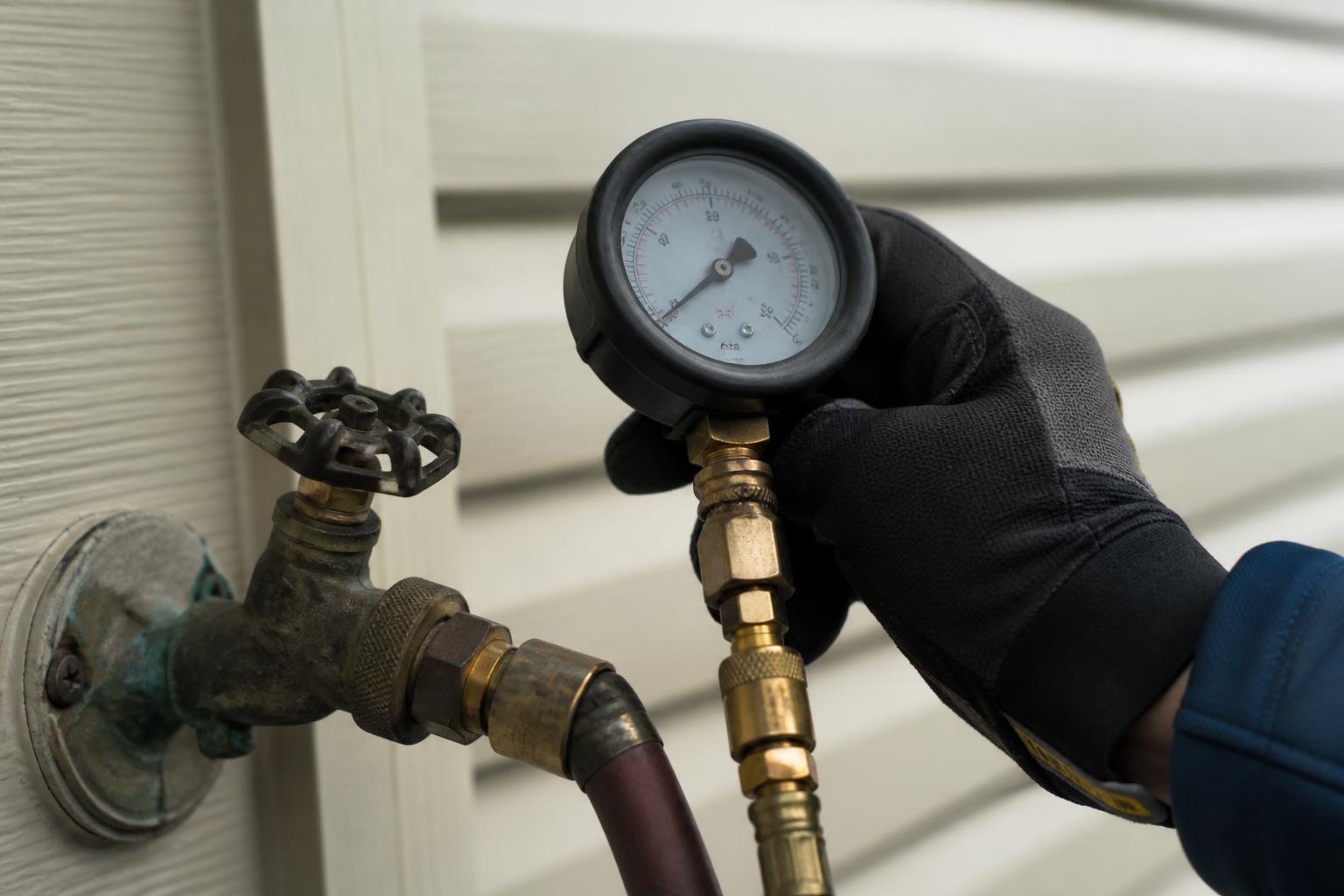
Before deciding whether you need professional help, there are a few safe steps most homeowners can take to get a clearer picture of what’s going on. Start by checking pressure at multiple fixtures throughout the house, including at least one on each floor if your home has more than one level, to confirm whether the issue is isolated or widespread. If you have access to your main shutoff valve, visually confirm it’s fully open — the valve handle should be turned all the way and, on a ball valve, aligned with the direction of the pipe. If your home has a visible pressure-reducing valve with a gauge, you can often get a general sense of whether the reading looks unusually low compared to what you’d expect. For a single affected fixture, unscrewing the aerator or showerhead and giving it a good soak and cleaning is a simple, low-risk first step that resolves the issue more often than you might expect. Our plumbing services page has more detail on the kinds of issues our team helps Burlington homeowners work through if you’d rather have a professional take a look from the start.
Signs It’s Time to Call a Plumber
While some low-pressure issues are easy enough to diagnose and resolve on your own, others are signals that something more significant is happening behind the scenes. A sudden, unexplained drop in pressure with no obvious cause — no recent repairs, no city notices, no visible valve issue — deserves a closer look, since it can sometimes point to a hidden leak or a developing pipe failure. If your entire home consistently runs low despite checking the shutoff valve and PRV, and your home is older with galvanized plumbing, internal pipe corrosion is a strong possibility that usually requires professional inspection to confirm and address properly. Any signs of an actual leak — unexplained damp spots, higher-than-usual water bills, or the sound of running water when nothing is turned on — should be treated as a priority rather than something to keep troubleshooting on your own. And if a whole-house pressure drop shows up alongside discolored or rusty-looking water, that combination often points to pipe corrosion or sediment disturbance that’s worth having a professional evaluate before it progresses further. If you’re dealing with a sudden pressure loss paired with signs of active leaking, our emergency services team is available to respond quickly and help prevent further damage to your home.
Frequently Asked Questions
Why did my water pressure suddenly drop overnight?
A sudden, whole-house drop is often linked to a partially closed shutoff valve, a municipal supply issue, or in some cases a developing leak somewhere in the system. Checking your main valve and confirming whether neighbors are experiencing the same thing are good first steps before assuming a bigger problem.
Can low water pressure be a sign of a leak?
Yes. When water escapes through a leak before it reaches your fixtures, the remaining flow can feel noticeably weaker, especially if the leak is on the main line or a larger supply pipe. Pairing low pressure with other signs, like unexplained damp areas or a rising water bill, is a good reason to have it checked promptly.
Is low water pressure in an older Burlington home always due to galvanized pipes?
Not always, but it’s one of the more common explanations in homes that still have some of their original plumbing. Corrosion inside galvanized pipe builds up gradually, so a slow, long-term decline in pressure throughout an older home is a reasonable indicator worth investigating.
Should I try to adjust my pressure-reducing valve myself?
We’d recommend against adjusting a PRV without professional guidance, since setting it incorrectly can create new problems, including pressure that’s too high for your fixtures and appliances. If you suspect your PRV is failing, it’s best to have it evaluated rather than experimenting with the settings on your own.
Low water pressure can have a lot of different explanations, and while some are simple do-it-yourself fixes, others point to issues that are best left to an experienced eye. If you’ve worked through the steps above and still aren’t sure what’s going on, or you’d simply rather have a professional handle the diagnosis from the start, we’re happy to help. Contact our team through our contact page to schedule a visit, and we’ll get your Burlington home’s water pressure back to where it should be.