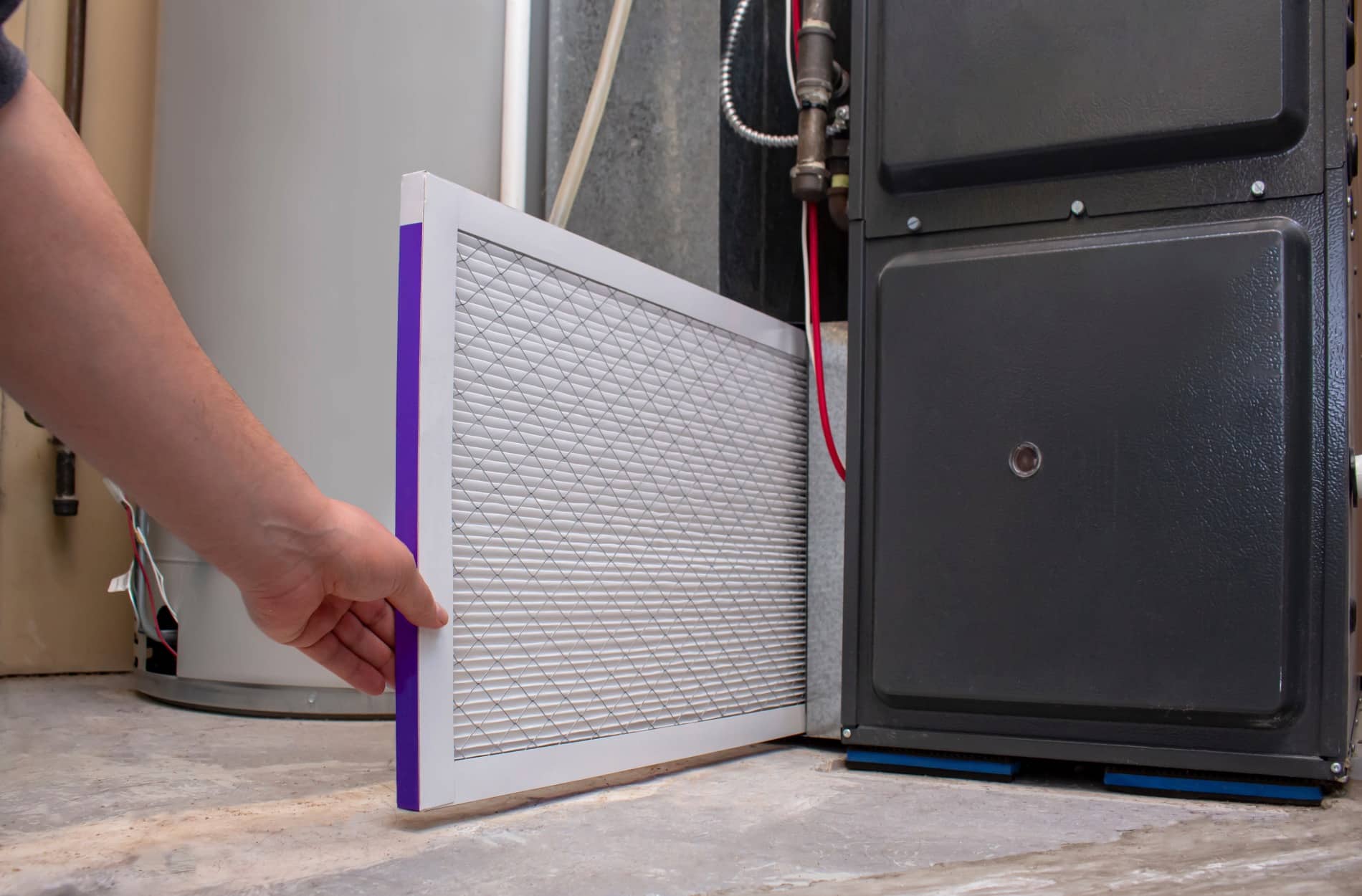
Choosing the Right Furnace Filter: A MERV Rating Guide for Homeowners
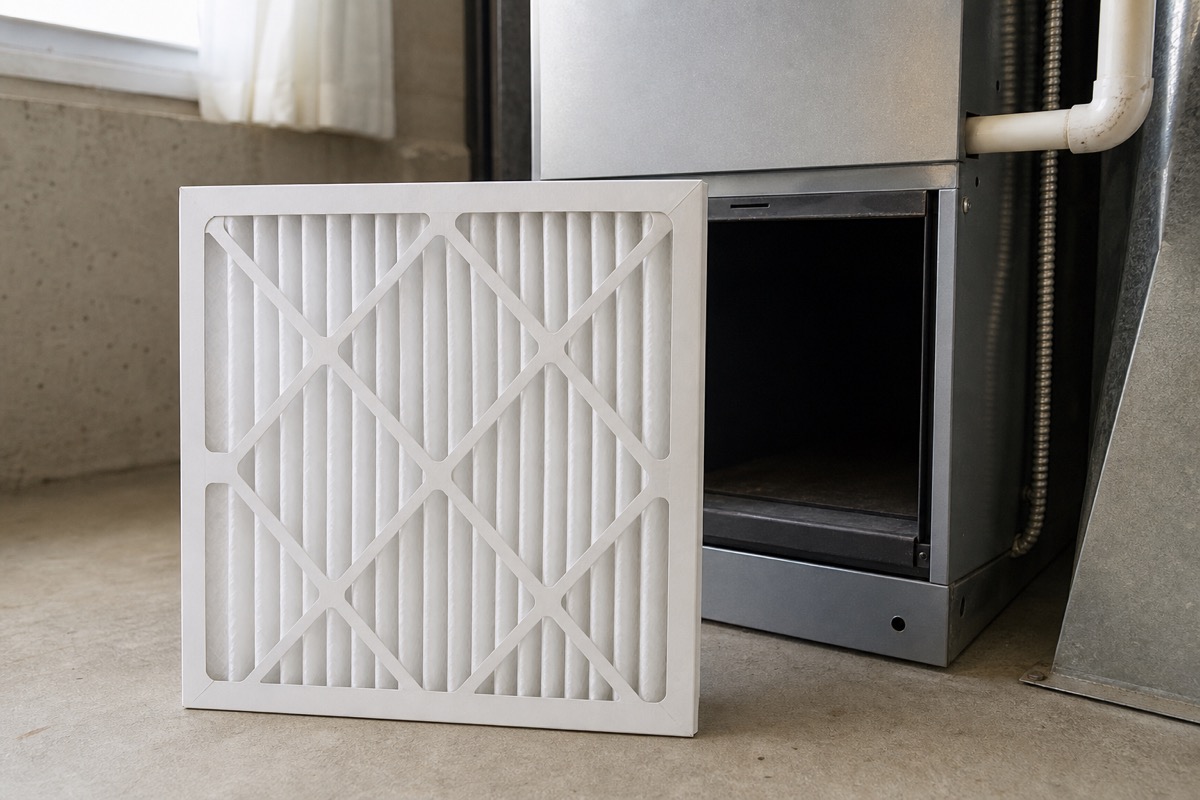
Clean pleated furnace filter in front of a furnace filter slot

Standing in the hardware aisle staring at a wall of furnace filters is one of the most common points of confusion we hear about from homeowners across Mississauga and the GTA. The packaging throws around numbers, colours, and marketing claims, and it is genuinely hard to tell which one belongs in your system. The single most useful piece of information on that packaging is the furnace filter MERV rating, and once you understand what it measures, choosing the right filter becomes a straightforward decision rather than a guess.

At Furnace King Home Services, we install and service heating and cooling equipment every day, and we see firsthand what happens when the wrong filter goes into a system. A filter that is too restrictive can quietly strain your furnace and reduce airflow, while a filter that is too basic lets dust and allergens circulate freely. Our goal with this guide is to explain the MERV scale plainly, walk through the real tradeoffs, and help you pick a filter that keeps your air clean without choking your equipment.

What the furnace filter MERV rating actually measures
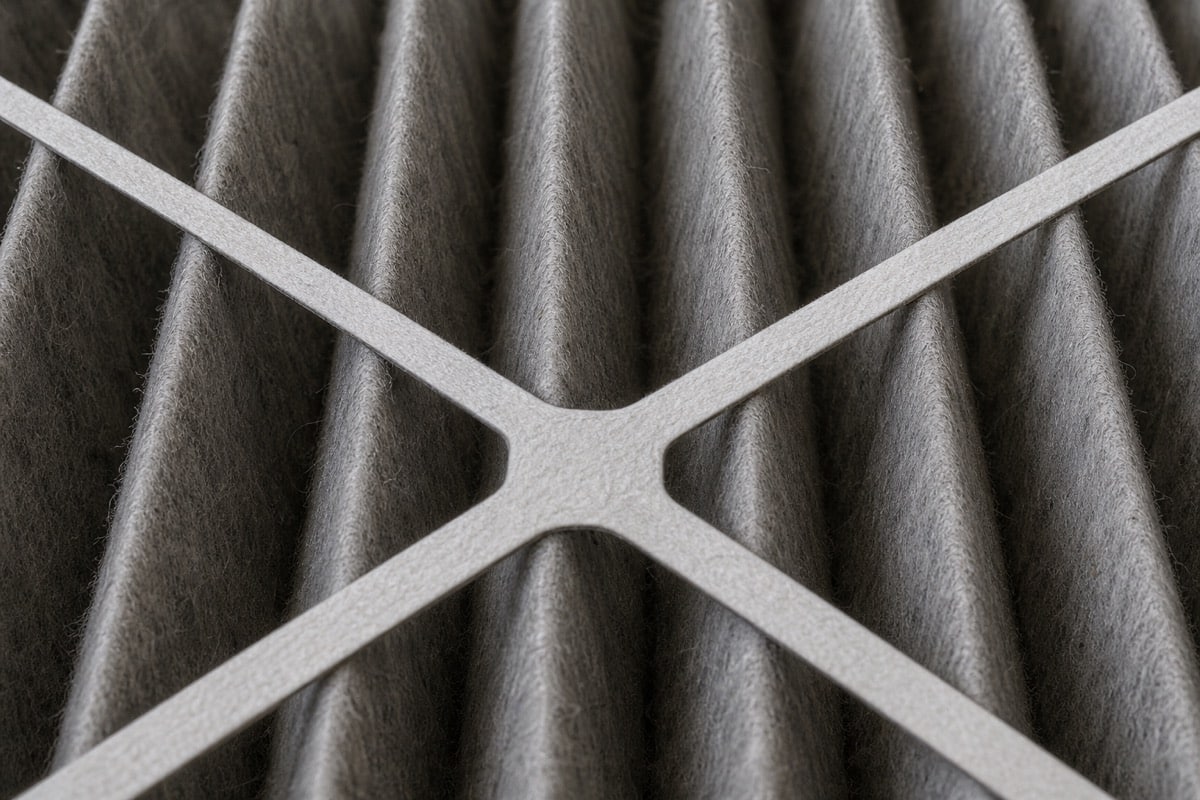
Close-up of the pleats of an HVAC furnace filter

MERV stands for Minimum Efficiency Reporting Value. It is a standardized rating that tells you how effectively a filter captures airborne particles as air passes through it. The higher the number, the smaller the particles the filter can trap, and the greater the percentage it removes on each pass. For residential furnaces, the practical range you will encounter runs from about MERV 1 to MERV 16, though the vast majority of homes are well served somewhere in the middle of that scale.

Here is a rough picture of what the different ranges capture:

  • MERV 1 to 4: Basic fibreglass filters. These mainly protect the equipment from large debris like lint and dust bunnies. They do very little for air quality.
  • MERV 5 to 8: Pleated filters that capture dust, pollen, mould spores, and pet dander reasonably well. This is the everyday range for many homes.
  • MERV 9 to 12: Higher-efficiency pleated filters that also trap finer particles, including some smoke and fine dust. A strong choice for households sensitive to allergens.
  • MERV 13 to 16: Capture very fine particles, including some bacteria-sized particles. Excellent filtration, but they demand more from your blower.

It is worth noting that a related rating called MPR and another called FPR appear on some retail brands. These are manufacturer-specific scales rather than the industry-standard MERV. When you can, compare filters by their furnace filter MERV rating so you are comparing like with like.

The tradeoff between filtration and airflow

This is the part most homeowners are never told, and it is the single most important thing to understand. A higher MERV filter has a denser web of fibres, which is exactly what lets it catch smaller particles. That same density also makes it harder for air to pass through. On a residential furnace that was not designed for high-resistance filtration, dropping in the highest MERV filter you can find can actually work against you.

When airflow is restricted, a few things can happen:

  • The blower motor has to work harder to move the same volume of air, which can increase wear over time.
  • Reduced airflow can lower heating and cooling efficiency, so rooms take longer to reach temperature.
  • In more serious cases, restricted airflow can contribute to the system overheating in heating mode or the coil freezing in cooling mode.

The takeaway is simple: the highest MERV number is not automatically the best choice. The best filter is the one with the strongest filtration your specific system can handle without straining. That is a balance, and it is exactly the balance our team weighs when we recommend a filter during a service visit.

Which MERV range suits your home
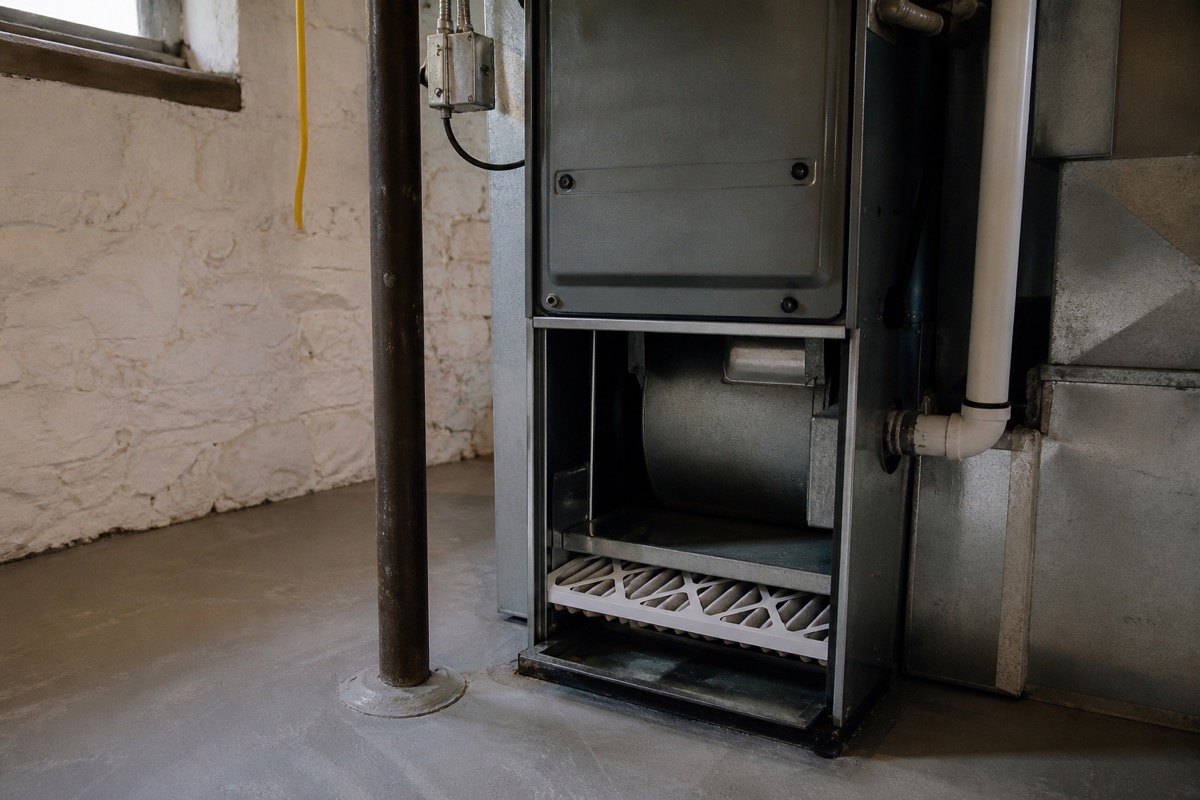
Residential furnace with an open filter compartment

There is no universal answer, because the right filter depends on who lives in your home and what your system is rated to handle. That said, here is the practical guidance we give most homeowners.

A typical household

For a home without specific air-quality concerns, a filter in the MERV 8 to 11 range is usually the sweet spot. It captures everyday dust, pollen, and pet dander while still allowing healthy airflow through a standard residential furnace. Many homeowners over-buy here, reaching for a MERV 13 when a MERV 8 or 11 would serve them just as well with less strain on the equipment.

Allergy sufferers and pet owners

If someone in your home deals with allergies, asthma, or heightened sensitivity to airborne particles, or if you have multiple pets, moving up toward MERV 11 to 13 is often worthwhile. These filters capture a meaningfully higher share of the fine particles that trigger symptoms. Before jumping to the top of that range, though, it is worth confirming your furnace and ductwork can move air efficiently against the added resistance. This is a good moment to have a conversation about your overall indoor air quality rather than treating the filter as the only lever.

Filter thickness and how often to replace

MERV is only half the conversation. The physical thickness of the filter matters just as much for both performance and maintenance.

One-inch filters versus media filters

Most furnaces ship with a slot for a standard one-inch filter. These are inexpensive and easy to find, but because they have less surface area, a high-MERV one-inch filter can restrict airflow more noticeably and clog faster. Thicker media filters, typically four to five inches, use a deeply pleated design with far more surface area. That extra area lets them deliver strong filtration with less airflow resistance and a much longer service life. If your equipment can accommodate a media cabinet, it is often the better long-term setup.

Replacement timing

How often you swap a filter depends on thickness, MERV, and household conditions:

  • One-inch filters: Check monthly and typically replace every one to three months. Homes with pets, smokers, or heavy dust need the shorter interval.
  • Four to five-inch media filters: Generally last six to twelve months, depending on the manufacturer and your household.

A filter that looks grey and packed with debris is past due. A clogged filter is one of the most common airflow problems we find, and it undoes the benefit of choosing a good MERV rating in the first place. Building filter changes into your routine, alongside regular HVAC maintenance, keeps the whole system breathing the way it should.

When whole-home HEPA or media filtration makes sense

For some households, a standard furnace filter simply cannot deliver the level of air cleaning they want. True HEPA filtration captures an extremely high percentage of very fine particles, but a genuine HEPA filter is far too restrictive to drop into a normal furnace slot. Instead, it belongs in a dedicated whole-home system engineered to handle that resistance with the right blower and bypass design.

We generally suggest looking at a whole-home solution when:

  • Household members have significant respiratory conditions or severe allergies.
  • You want consistent, high-level filtration without pushing a standard filter beyond what your furnace can handle.
  • You are already upgrading equipment and can integrate advanced filtration into the design.

When a home is a good fit, a properly matched HEPA filtration system delivers cleaner air than any off-the-shelf furnace filter while protecting the equipment from strain. The key word is matched. Advanced filtration only works well when it is sized and installed for your specific system, which is where a professional assessment pays off.

How our team recommends the right filter

When we are at your home, we do not just hand you a MERV number. We look at your furnace model and its airflow specifications, the condition of your ductwork, the filter slot dimensions, and who lives in the home. From there we recommend the highest practical MERV rating your system can handle comfortably, and we confirm the fit and thickness so you are not fighting airflow problems down the road. That way you get cleaner air and equipment that runs the way it was built to.

Frequently Asked Questions

Is a higher MERV rating always better?

No. A higher furnace filter MERV rating captures smaller particles, but it also restricts airflow more. On a residential system not built for high-resistance filtration, an overly dense filter can strain the blower and reduce efficiency. The best choice is the highest rating your specific furnace can handle without airflow problems, which for many homes lands in the MERV 8 to 11 range.

What MERV rating is best if I have pets or allergies?

Households with pets or allergy sufferers often benefit from moving up toward MERV 11 to 13, since those filters capture a higher share of fine allergens and dander. Before going to the top of that range, it is worth confirming your furnace can move air efficiently against the added resistance, or considering a thicker media filter or a dedicated filtration system for stronger performance without the strain.

How often should I change my furnace filter?

Standard one-inch filters should be checked monthly and replaced every one to three months, with the shorter interval for homes that have pets, smokers, or high dust levels. Thicker four to five-inch media filters typically last six to twelve months. If a filter looks grey and loaded with debris, replace it, since a clogged filter restricts airflow and cancels out the benefit of a good MERV rating.

Not sure which filter your system can handle, or whether a whole-home upgrade makes sense for your household? Our team at Furnace King Home Services is happy to assess your furnace, ductwork, and air-quality needs and recommend the right filter without choking your airflow. Call us at (905) 564-5464 or reach out through our HVAC maintenance page, and we will help you get cleaner air and a system that runs the way it should.
Right-Sizing a Central Air Conditioner: Why BTUs and Tonnage Matter

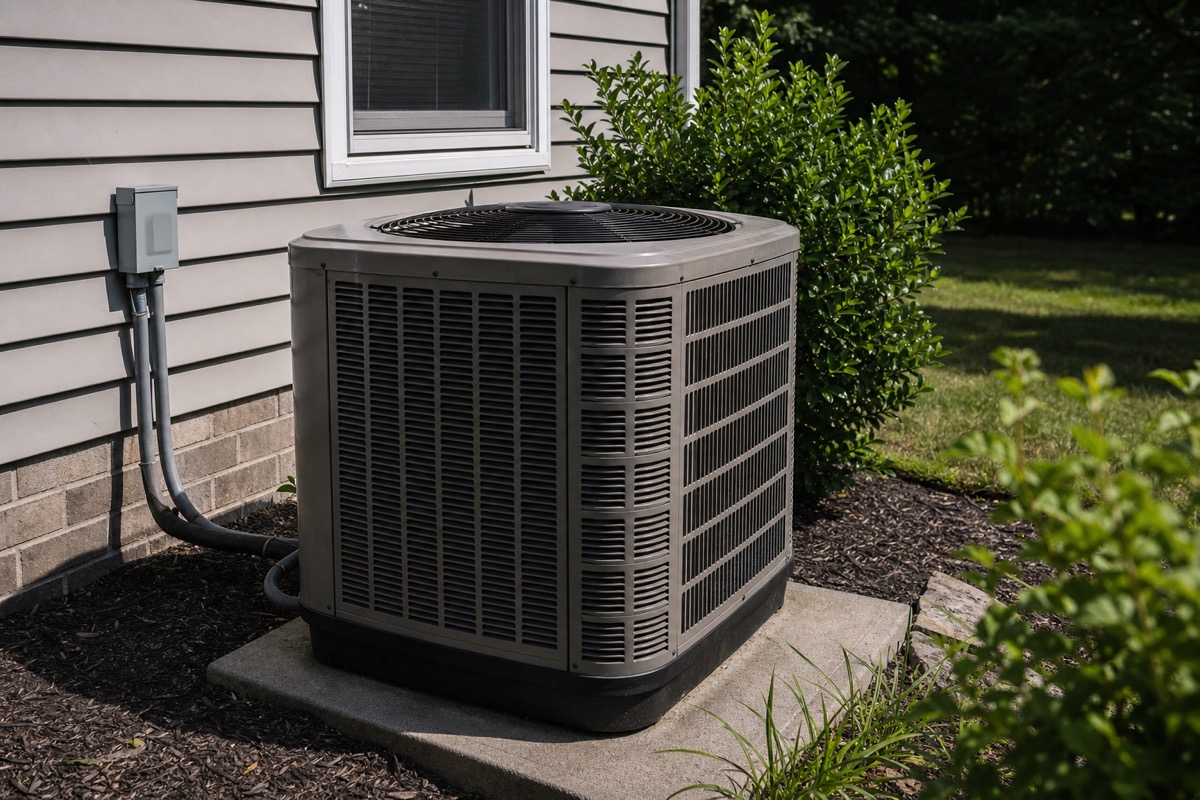
Central air conditioner condenser beside a suburban house

When homeowners across Mississauga and the GTA call us about a new central air conditioner, the first question is almost always about price or brand. The question that actually matters more is one most people never ask: is the system the right size for the home? Getting central air conditioner sizing right is the single biggest factor in whether your new system keeps you comfortable, runs efficiently, and lasts as long as it should. A unit that is too big or too small can undermine even the most reputable equipment, no matter how much you spend on it.

At Furnace King Home Services, we have seen the fallout from guesswork sizing many times, and it is almost always avoidable. In this guide, our team walks through what BTUs and tonnage really mean, why an oversized or undersized unit causes problems, how a proper load calculation works, and why the square-footage shortcuts you find online rarely tell the full story in Ontario’s climate.

What BTUs and Tonnage Actually Measure

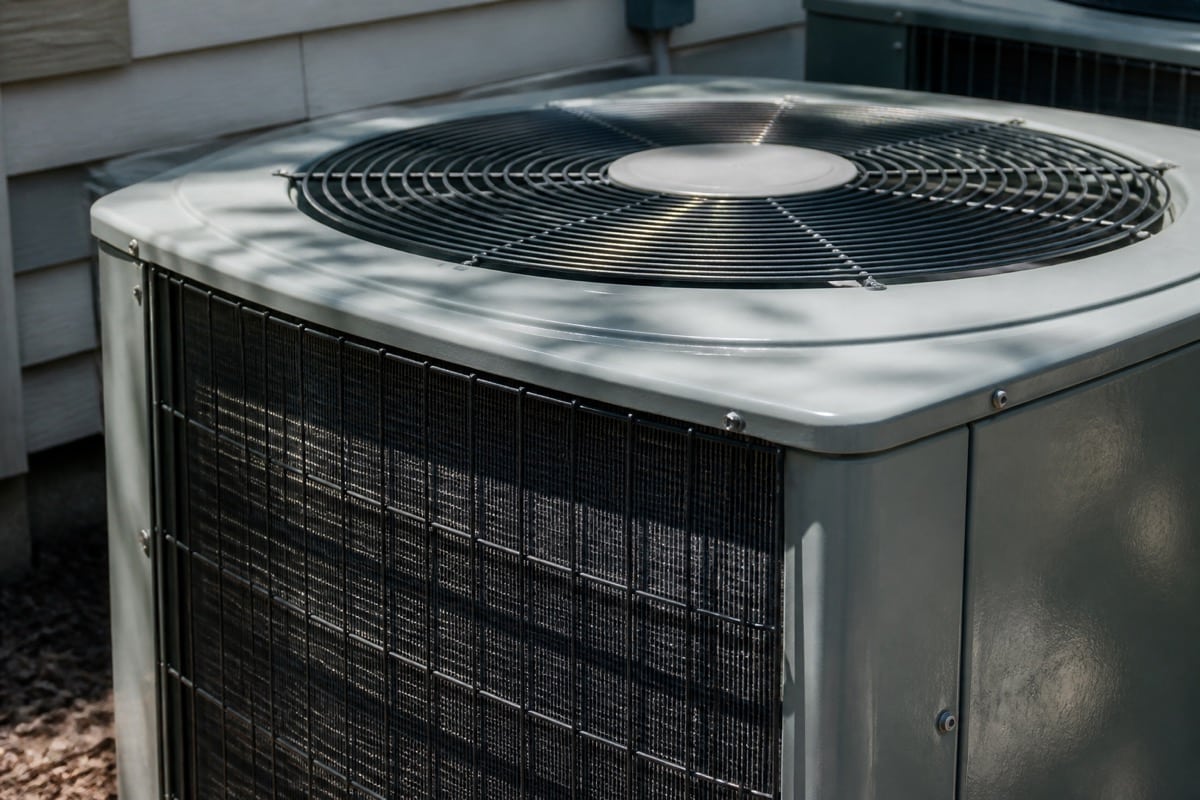
Close-up of a central air conditioner condenser fan and coil fins

Air conditioners are rated by cooling capacity, and that capacity is expressed two ways that describe the same thing. A BTU, or British Thermal Unit, is the amount of energy needed to change the temperature of water by a small, fixed amount. When we talk about air conditioning, BTUs describe how much heat the system can remove from your home in an hour. Tonnage is simply a larger unit built on the same idea: one ton of cooling equals 12,000 BTUs per hour.

So a two-ton system removes roughly 24,000 BTUs of heat per hour, and a three-ton system removes about 36,000. Residential central air conditioners in our area typically fall between about one-and-a-half and five tons. The goal is not to install the biggest number you can afford. It is to match the cooling capacity to how much heat your home actually gains on a hot, humid Mississauga afternoon.

Why an Oversized Air Conditioner Is a Real Problem

It seems logical that a bigger air conditioner would cool a home better. In practice, an oversized unit creates a string of headaches that homeowners often blame on the equipment or the installer.

  • Short cycling: An oversized system cools the air to the thermostat setting so quickly that it shuts off after only a few minutes, then kicks back on soon after. These frequent starts and stops are the hardest thing a system does.
  • Poor dehumidification: Removing humidity takes sustained runtime. Because an oversized unit finishes cooling before it has run long enough to pull moisture out of the air, your home can feel cold and clammy at the same time. In our humid summers, that matters a great deal for comfort.
  • Accelerated wear: Every start puts stress on the compressor, the most expensive component in the system. Short cycling shortens the lifespan of that compressor and can lead to earlier repairs or replacement.
  • Uneven temperatures: Rooms farther from the unit may never get comfortable because the system never runs long enough to move conditioned air evenly.

An oversized unit also usually costs more up front, so homeowners end up paying extra for equipment that performs worse. That is the opposite of what anyone wants.

Why an Undersized Air Conditioner Is Just as Bad

Indoor HVAC air handler connected to ductwork in a utility room

Going too small brings its own set of problems, and they tend to show up on the hottest days of the year, which is exactly when you need reliable cooling most.

  • Constant running: An undersized unit runs almost non-stop trying to reach the thermostat setting, and on a peak-heat day it may never get there.
  • Higher energy bills: A system that rarely shuts off draws power hour after hour, which drives up your summer hydro costs even though the home never feels quite cool enough.
  • Comfort that falls short: When outdoor temperatures spike, an undersized system simply cannot keep pace, leaving indoor spaces warmer and stuffier than you set them to be.
  • Extra strain: Just like a small engine hauling too heavy a load, a system running continuously at its limit wears out faster than one sized with a bit of appropriate headroom.

The takeaway is that correct central air conditioner sizing lives in a fairly narrow band. Both directions away from that band cost you comfort, money, or equipment life, and often all three.

The Manual J Load Calculation: How Sizing Is Done Right

The professional standard for sizing residential cooling is a Manual J load calculation. Rather than guessing from floor area alone, a Manual J calculation estimates how much heat your home actually gains and loses, then sizes the equipment to match that real load. It is a detailed, room-by-room assessment, and it accounts for the many factors that a simple square-footage estimate ignores.

What a Load Calculation Takes Into Account

  • Square footage and layout: Total conditioned area is the starting point, but how that space is divided and used matters too.
  • Insulation levels: A well-insulated home holds conditioned air far better than a drafty one, which changes the required capacity significantly.
  • Windows: The number, size, type, and orientation of windows all affect heat gain. Large west-facing glass, for example, adds substantial afternoon load.
  • Ceiling height: A home with high or vaulted ceilings has more air volume to condition than the floor area alone suggests.
  • Sun exposure and shading: A home baking in full sun gains more heat than one shaded by mature trees or neighbouring buildings.
  • Local climate: Sizing has to reflect Ontario’s design conditions, including our hot, humid summer peaks, so the system is matched to the weather it will actually face here in the GTA.
  • Air sealing and ductwork: Leaky ducts and gaps in the building envelope change how much cooling reaches the living space.

Because all of these variables interact, two homes with identical floor plans on the same street can genuinely need different equipment. That is why we never size a system by a rule of thumb alone.

Why Square-Footage Rules of Thumb Fall Short

You will find plenty of online charts that promise a tidy answer, telling you a home of a certain size needs a certain tonnage. Those shortcuts can be off by a full ton in either direction because they treat every home as if insulation, windows, ceiling height, and sun exposure did not exist. A tightly sealed, well-insulated, shaded home and a leaky, sun-drenched one of the same size have very different cooling needs.

A professional load calculation is worth the effort precisely because it replaces those assumptions with measurements specific to your home. The result is a system that runs in longer, gentler cycles, controls humidity properly, keeps temperatures even from room to room, and does not wear itself out with constant starting and stopping. When you are budgeting a project, our HVAC cost estimator can give you a helpful starting range, and you can explore the full scope of what we offer on our air conditioning services page.

How Our Team Sizes a System

When you invite us out to quote a new central air conditioner, we do not walk in with a preset answer. We measure your living space, look at insulation and windows, note ceiling heights and how the sun hits the home through the day, and factor in your ductwork and any comfort complaints you have had with the current setup. We run those inputs through a proper load calculation, then recommend the capacity that fits your home, not the one that is easiest to sell. If your ductwork or insulation is affecting the outcome, we tell you, because those details influence what size will actually perform well.

Frequently Asked Questions

Can I just match the size of my old air conditioner?

Not reliably. Your old unit may have been sized incorrectly in the first place, and homes change over time. New windows, added insulation, a finished basement, or a home addition can all shift your cooling load. We treat a replacement as a fresh calculation rather than assuming the previous size was ever right.

Is a bigger air conditioner always better for a hot summer?

No. An oversized unit cools the air quickly but shuts off before it removes enough humidity, so your home can feel cold and damp while the compressor wears out from short cycling. A correctly sized system that runs in longer cycles handles our humid GTA summers far more comfortably than an oversized one.

How long does a proper sizing assessment take?

A thorough in-home assessment does not take long, and it is time well spent given that the system will serve you for many years. We would rather measure and calculate carefully up front than have you live with a unit that never quite fits the home.

If you are planning a new or replacement central air conditioner anywhere in Mississauga or the GTA, let our team at Furnace King Home Services size it properly from the start. Call us at (905) 564-5464 or reach out through our contact page, and we will make sure your system is matched to your home for years of reliable, efficient comfort.

Beating Summer Humidity: Keeping Your Mississauga Home Comfortable

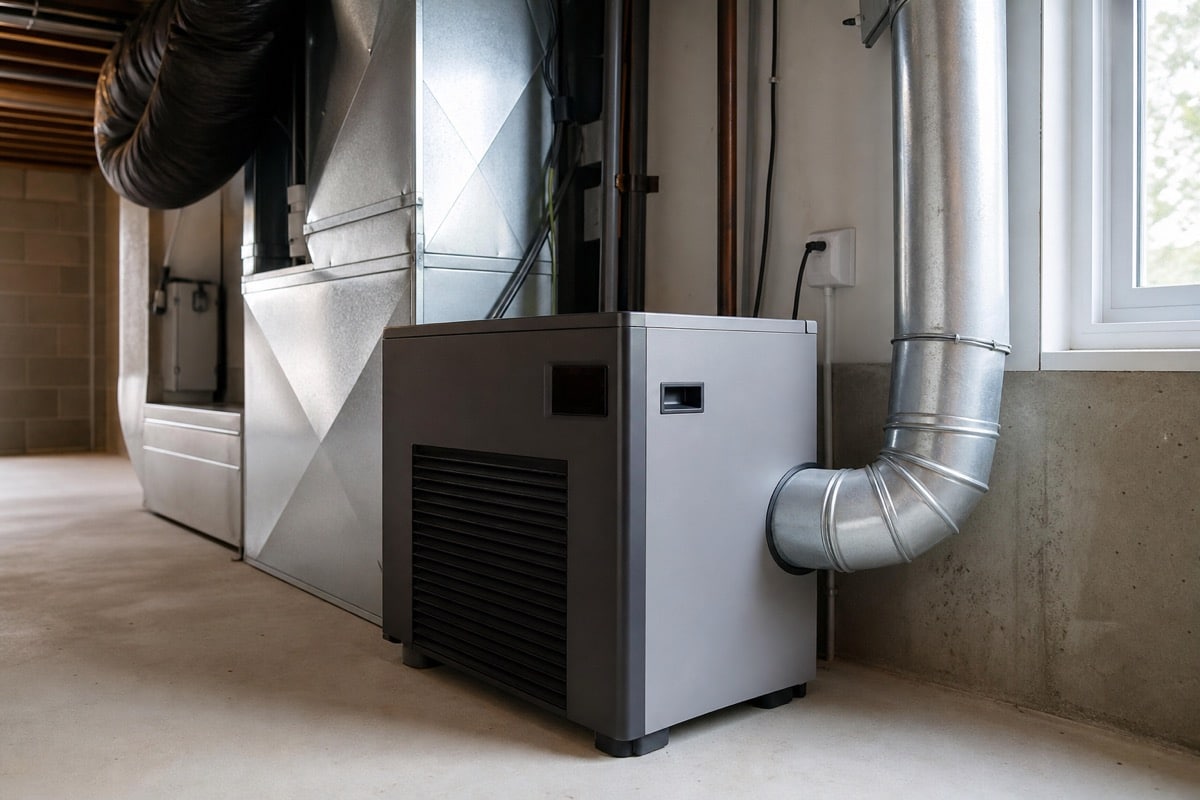
Whole-home dehumidifier connected to HVAC ductwork in a basement

When July and August roll around in Mississauga, the heat is only half the story. The other half is the moisture hanging in the air. Ontario summers are notoriously muggy, and once indoor humidity climbs, your home can feel sticky and stuffy even when the thermostat says the temperature is reasonable. If you have ever wondered how to reduce humidity in your home during these damp months, you are asking the right question, because indoor moisture affects both your comfort and the long-term health of your house.

At Furnace King Home Services, we help homeowners across Mississauga and the wider GTA keep their indoor air comfortable all summer long. In this guide, our team walks through why humidity rises, why damp air feels so much hotter than it should, and the practical steps you can take, from running your central air conditioner correctly to adding dehumidification and better ventilation.

Why Indoor Humidity Climbs in Ontario Summers

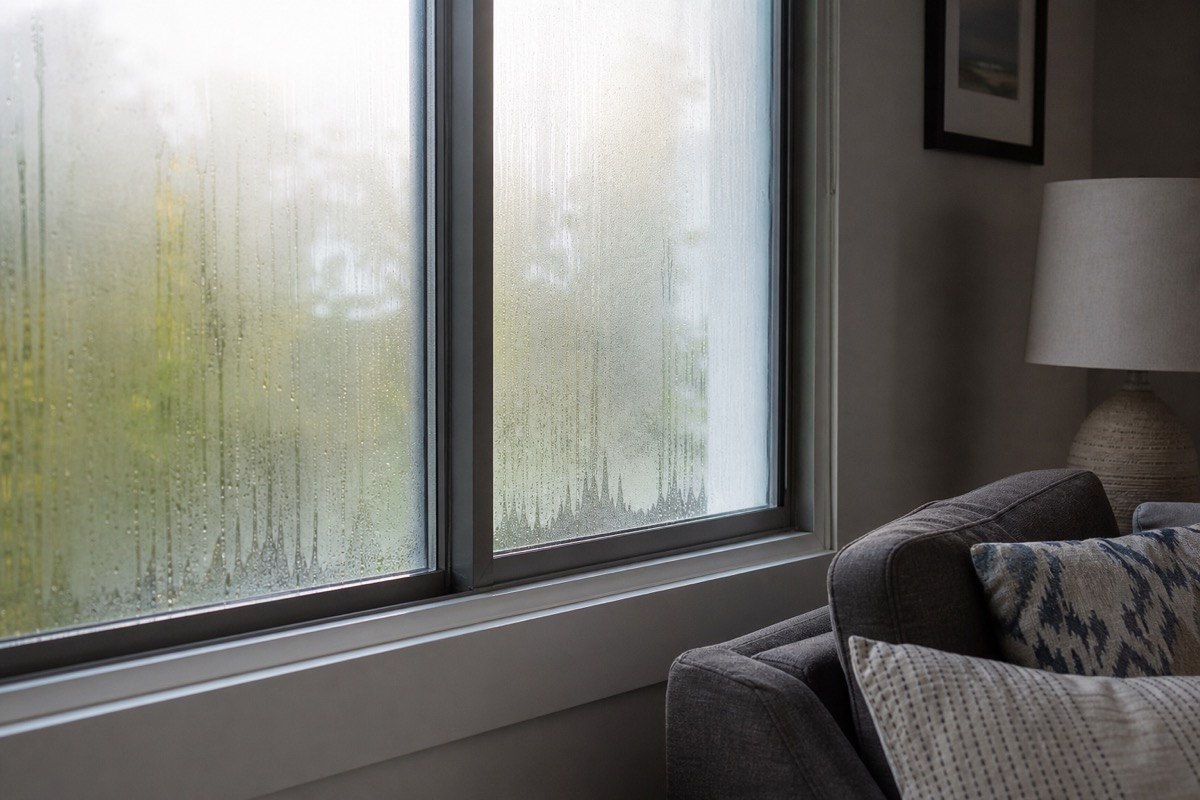
Condensation on the inside of a home window on a humid day

Southern Ontario sits close to the Great Lakes, so warm, moisture-laden air is a regular summer visitor. When that humid outdoor air seeps into your home through open doors, windows, and small gaps, it brings its moisture along with it. Everyday living adds even more: cooking, showering, running the dishwasher, doing laundry, and even breathing all release water vapour into your indoor air.

The trouble is that warm air holds far more moisture than cool air, so on a hot, sticky day your home can accumulate a surprising amount of water vapour. Basements are especially prone to feeling damp because cool foundation walls meet warmer, humid air and moisture condenses on the surfaces. Understanding these sources is the first step in learning how to reduce humidity in your home rather than just masking the symptoms.

Why Humid Air Feels Hotter

Your body cools itself by sweating, and that sweat has to evaporate to carry heat away from your skin. When the air is already saturated with moisture, evaporation slows to a crawl, so you feel hotter and clammier even though the temperature has not changed. This is why a warm day at high humidity feels far more oppressive than the same temperature in dry air. Lowering the moisture in your home does not just protect the building, it makes every room feel noticeably cooler.

How a Properly Running Central AC Removes Moisture

Many homeowners think of their central air conditioner purely as a cooling machine, but it is also a powerful dehumidifier. As warm, humid indoor air passes over the cold evaporator coil, water vapour condenses, drips into the drain pan, and is carried out of the home. A healthy, well-maintained system removes a meaningful amount of moisture every time it runs.

The catch is that your AC only dehumidifies well when it is running correctly and sized appropriately. An oversized system cools the air so quickly that it shuts off before it has wrung much moisture out, leaving you with a cold but clammy house, while an undersized or poorly maintained system struggles to keep up at all. To get the moisture-removing benefit you are paying for, a few things need to be in good shape:

  • A clean air filter, so airflow across the coil stays strong
  • A clean evaporator coil that can actually condense moisture from the air
  • A clear condensate drain line that carries collected water safely away
  • Proper refrigerant charge, so the coil gets cold enough to pull moisture out
  • A correctly sized system matched to the square footage and layout of your home

If your AC is cooling but your home still feels damp, that often signals something in this chain needs attention. Our team can inspect your equipment through our air conditioning services and make sure your system is both cooling and dehumidifying the way it should.

Whole-Home Versus Portable Dehumidifiers

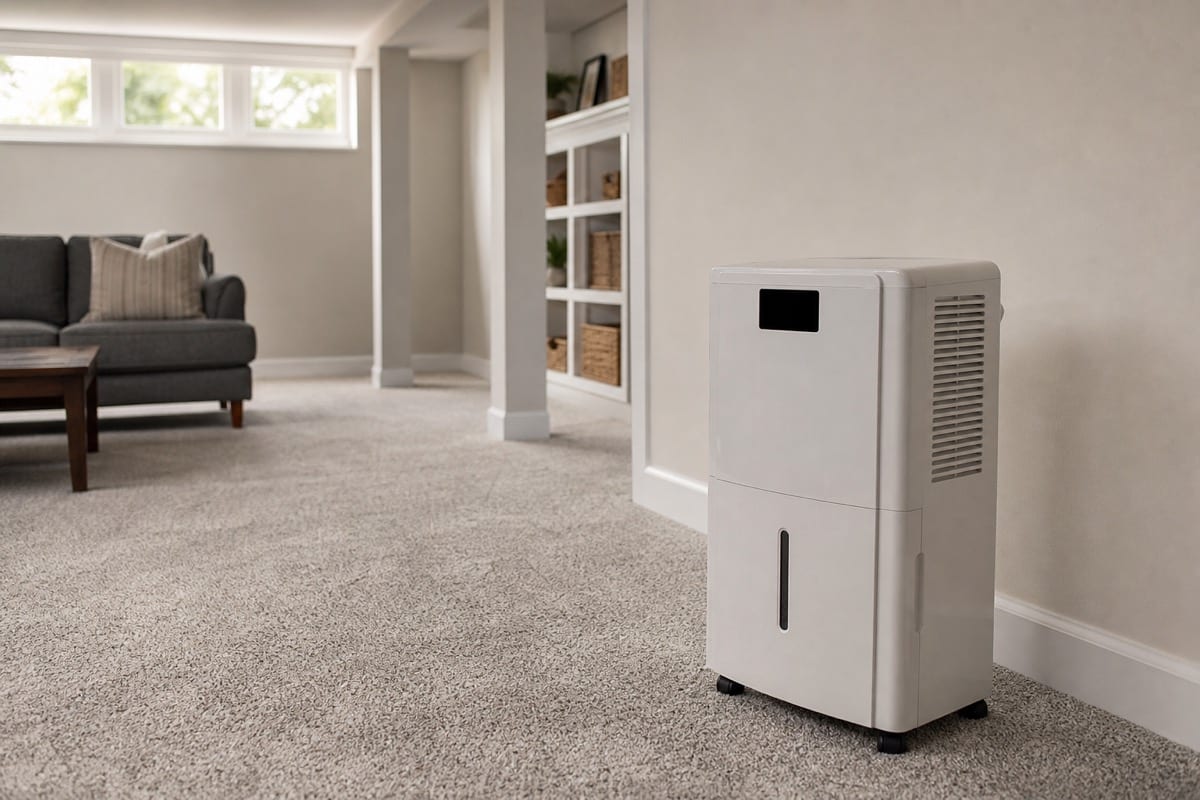
Portable dehumidifier running in a finished basement

Even a well-tuned air conditioner sometimes needs a hand, especially in a damp basement or during a stretch of extreme humidity. That is where dedicated dehumidification comes in, and there are two main routes.

Portable Dehumidifiers

A portable unit is a good fit when the problem is limited to one area, such as a finished basement, a laundry room, or a single stuffy bedroom. They are affordable, easy to move, and simple to set up yourself. The trade-offs are that they only treat the room they sit in, they need the tank emptied regularly unless you add a drain hose, and they put a bit of noise and heat into the space.

Whole-Home Dehumidifiers

When damp air is a problem throughout the house, a whole-home dehumidifier integrated with your ductwork is a more complete solution. It manages moisture across every room, runs quietly, drains automatically, and works hand in hand with your central air conditioning. For homes that feel muggy year after year, this is often the more effective long-term answer, and our team can help you weigh whether a portable unit or an integrated system is the smarter investment.

Ventilation and Exhaust Fans

Some of the most effective humidity control costs very little, because it is simply about moving moist air out of the house before it builds up. Bathroom and kitchen exhaust fans are your front line, pulling steam and cooking moisture straight outside instead of letting it drift through your home.

  • Run the bathroom exhaust fan during every shower and for 15 to 20 minutes afterward
  • Use your range hood or kitchen fan whenever you cook, especially when boiling water
  • Make sure exhaust fans vent to the outdoors, not into an attic or crawl space
  • Keep vents and fan covers clean so they can move air at full capacity
  • Be thoughtful about opening windows on very humid days, since that can invite more moisture in than it lets out

Good ventilation is a core part of healthy indoor air, and it works best alongside your cooling and dehumidification equipment. For a broader look at how the air in your home is managed, our indoor air quality services take ventilation, filtration, and moisture control into account together.

Signs of Excess Humidity and When to Call a Pro

Your home usually tells you when moisture levels are too high, if you know what to watch for. Catching these signs early helps you avoid the more serious problems of prolonged dampness, such as mould growth and damage to wood, drywall, and finishes.

  • Condensation forming on windows, mirrors, or the outside of cold water pipes
  • A persistent musty or damp smell, particularly in the basement
  • Clammy air that feels heavy even when the AC is running
  • Visible mould or mildew spots on walls, ceilings, or around windows
  • Peeling paint, warping wood, or a general feeling of stickiness in the house

Small adjustments like running exhaust fans and adding a portable dehumidifier can handle mild cases. But when the dampness lingers, when you spot mould, or when your air conditioner runs constantly and still leaves the house muggy, it is worth bringing in a professional. Ongoing humidity often points to an underlying issue, such as an improperly sized AC, a coil or drainage problem, or ventilation that is not keeping pace, and those are exactly the things our team is equipped to diagnose and fix.

Frequently Asked Questions

What indoor humidity level should I aim for in summer?

For summer comfort in the GTA, most homes feel best with indoor relative humidity in the range of 40 to 50 percent. Above that, the air starts to feel sticky and you raise the risk of condensation and mould. An inexpensive hygrometer lets you monitor the level, and if you consistently read higher numbers even with your AC running, that is a good signal your moisture control needs a closer look.

Can my air conditioner alone control humidity, or do I need a dehumidifier?

A properly sized and well-maintained central air conditioner removes a significant amount of moisture on its own, and for many Mississauga homes that is enough. However, damp basements, very humid stretches, or an oversized AC that cycles off too quickly can leave you needing extra help. In those cases, pairing your system with a portable or whole-home dehumidifier gives you the control your AC cannot manage alone.

Is summer humidity control the same as running a humidifier?

No, and this is an important distinction. Humidifiers add moisture and are used in winter, when heating dries out your home. In summer the goal is the opposite: you want to reduce and control moisture, not add it. That means relying on your air conditioner, dehumidifiers, and ventilation to pull excess water vapour out of the air rather than putting more in.

If your Mississauga home feels muggy no matter what you try this summer, our team at Furnace King Home Services is here to help. We can assess your air conditioning, check whether dehumidification makes sense, and make sure your ventilation is doing its job. Call us at (905) 564-5464 or reach out through our contact page to book a visit, and we will help you take control of the moisture in your home.

How a Smart Thermostat Lowers Cooling Costs in Mississauga Homes

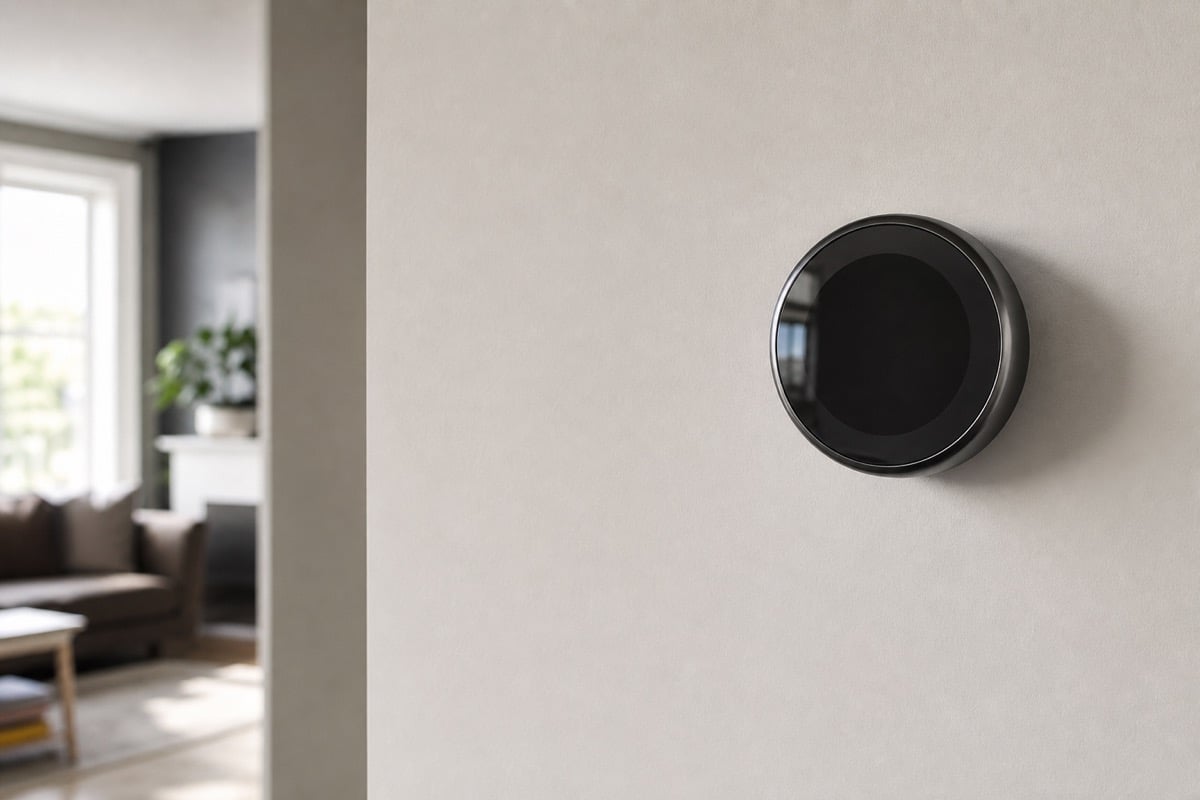
Modern smart thermostat mounted on a living room wall

Summers in Mississauga and across the GTA have a way of pushing your air conditioner to work overtime, and when the humidity climbs, so does your hydro bill. At Furnace King Home Services, one of the most common questions we hear from homeowners is a practical one: how can I keep the house comfortable without watching my cooling costs run away every July and August? A smart thermostat is often the simplest, most affordable upgrade we can recommend, because it goes to work the moment it is installed and keeps saving quietly in the background all season long.

In this guide, our team walks through exactly how a smart or programmable thermostat trims your summer cooling costs, what features actually matter, and how we help you choose and set up the right model for your home and your existing equipment. We will keep the savings talk honest and realistic, because your results depend on your home, your schedule, and how your system is set up. What we can promise is a clear, no-hype look at whether this upgrade is worth it for you.

How a Smart Thermostat Lowers Your Summer Cooling Costs

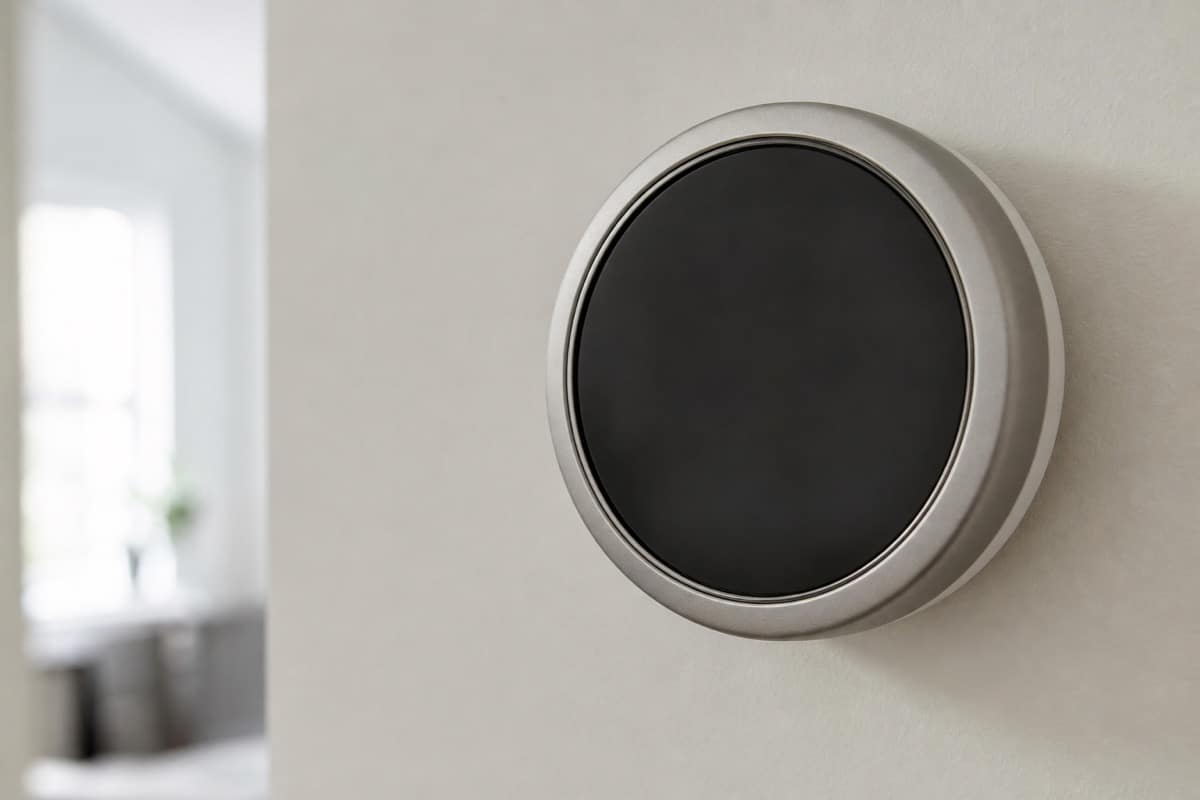
Close-up of a smart thermostat with a blank display

The core idea is simple: your air conditioner only needs to work hard when you are home and awake. A basic wall dial keeps running the same way whether the house is full or empty, but a smart thermostat makes decisions for you and stops cooling space that nobody is using. Over a long Ontario cooling season, those small, automatic adjustments add up. Here are the features that do the heavy lifting:

  • Scheduling. You set the temperature to ease back while you are at work or asleep and return to comfort before you notice. The system does the rest, every single day, without you touching it.
  • Geofencing and away modes. Using your phone’s location, the thermostat can sense when the last person leaves and automatically let the house drift a few degrees warmer, then start cooling again as you head home.
  • Learning algorithms. Some models study your habits over the first few weeks and build a schedule around your real routine, adjusting on their own as the seasons change.
  • Remote app control. Forgot to raise the temperature before a weekend away? Open the app and fix it from anywhere, so you are never paying to cool an empty house.
  • Usage reports. Monthly energy summaries show when your AC ran the hardest, helping you and our team spot easy wins.
  • Eco settings. A single tap sets an energy-saving temperature band that trims runtime during peak afternoon heat without leaving you uncomfortable.

A Realistic Look at the Savings

We think it is important to be straight with homeowners here. A smart thermostat is not magic, and we will never quote you an exact percentage or dollar figure, because no honest contractor can promise that. Your savings depend on how your home holds heat, how many hours it sits empty, how well your ductwork and insulation perform, and how aggressively you are willing to let temperatures shift while you are out.

What we can say with confidence is that a thermostat that stops cooling an empty house, avoids unnecessary overnight runtime, and smooths out the peaks of a hot afternoon will almost always use less energy than a system left to run on a fixed setting. The comfort side matters too: coming home to a house that is already cooling down, instead of a sweltering front hall, is a real quality-of-life upgrade. For many Mississauga homes, the device pays for itself over a season or two through reduced runtime alone, and it keeps working for years after that.

Will It Work With My Existing AC and Furnace?

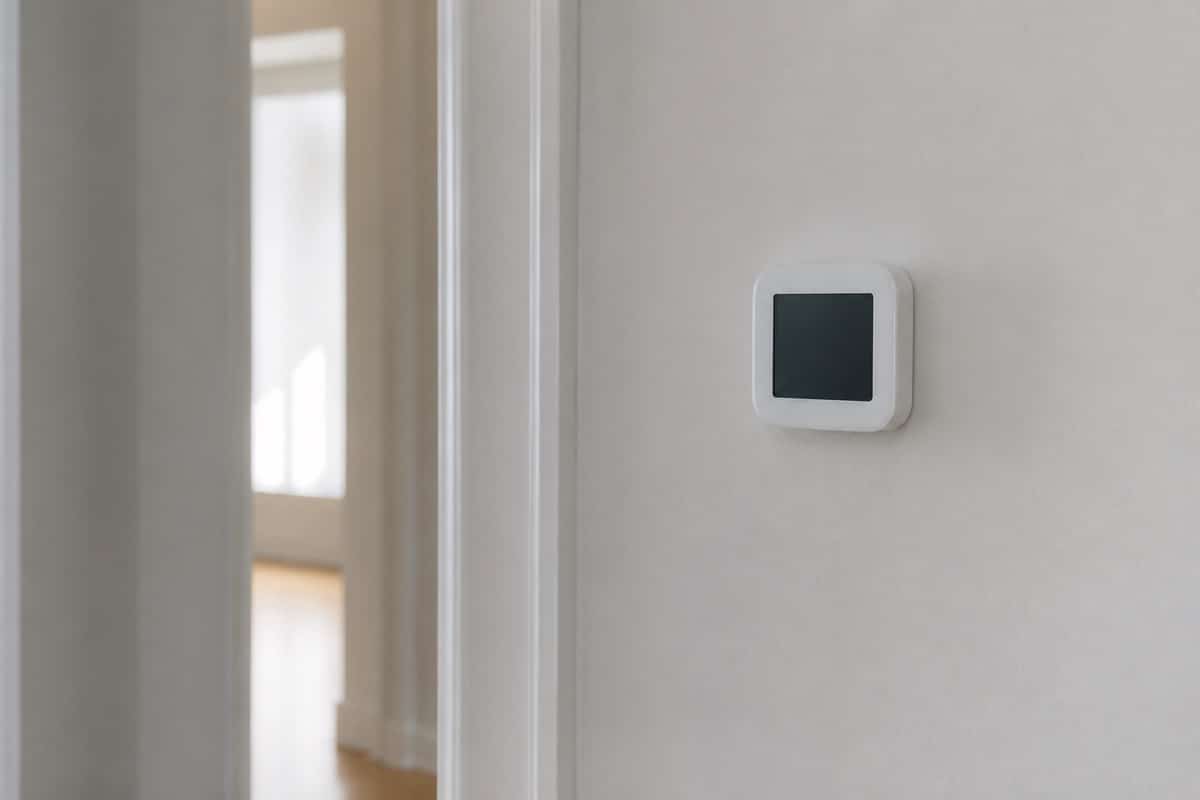
Wall thermostat beside a hallway doorway

This is usually the first thing our team checks before recommending anything. Most homes in the GTA can support a smart thermostat, but compatibility is not automatic, and getting it wrong can leave you with a device that misbehaves or does not power on at all.

What We Verify First

  • Wiring, including the C-wire. Many smart thermostats need a common (C) wire for steady power. Older homes often do not have one, and we can add it or fit a model designed to work without it.
  • System type. We confirm your setup, whether it is a standard central AC paired with a gas furnace, a heat pump, or a multi-stage system, so the thermostat controls every stage correctly.
  • Compatibility with your equipment. We match the thermostat to your specific AC and furnace so you get the full benefit of features like variable-speed control rather than a stripped-down experience.

Because your cooling and heating equipment work as a pair, a thermostat that is set up properly protects both. If your system has been struggling this summer, a thermostat upgrade also pairs well with a tune-up, and you can learn more about our seasonal air conditioning services to make sure the whole system is ready for the heat.

Professional Installation and Setup Make the Difference

A smart thermostat is only as good as its installation and configuration. We have seen plenty of well-meaning DIY setups that never delivered the savings because the schedule was left on defaults, the away mode was switched off, or the wiring was not quite right. When our team handles the job, we take care of the details that turn a gadget into genuine savings:

  • Safely disconnect power, remove the old thermostat, and confirm or add the correct wiring.
  • Mount and connect the new unit, then test every heating and cooling stage to be sure it responds correctly.
  • Connect it to your home Wi-Fi and walk you through the app so remote control and geofencing actually work.
  • Build a realistic schedule around your household’s routine so the energy savings start immediately.
  • Set sensible eco and away temperatures that save energy without sacrificing comfort.

We also fold thermostat checks into our ongoing HVAC maintenance visits, so as your schedule or your family changes, the settings keep pace and your system keeps running efficiently year after year.

Rebates and Choosing the Right Model

Here is a bonus worth knowing about: certain smart thermostat models qualify for utility and energy-efficiency rebates in Ontario, which can offset part of the upfront cost. Programs and eligible models change from time to time, so we help you check what is currently available and make sure the model we recommend is one that qualifies where possible. We never assume a rebate applies until we confirm it.

When it comes to picking a model, our team does not push the most expensive unit on the shelf. We match the thermostat to how you actually live. A busy family that is in and out all day benefits from strong geofencing and learning features, while a household with a steady routine may do just as well with a straightforward programmable model. We factor in your equipment, your budget, and the features you will really use, then handle the setup so you get the value you paid for.

Frequently Asked Questions

How much can a smart thermostat really save me on cooling?

It depends on your home, your schedule, and how your system is configured, so we will not throw out a guaranteed number. What we can tell you is that a thermostat which stops cooling an empty house and trims peak-afternoon and overnight runtime almost always uses less energy than a fixed setting. For many Mississauga homes, it pays for itself over a season or two through reduced runtime.

Do I need a C-wire, and what if my house doesn’t have one?

Many smart thermostats run best with a common (C) wire for steady power, and plenty of older GTA homes do not have one. That is not a dealbreaker. Our team can add a C-wire during installation or recommend a model designed to operate reliably without one, so you still get the full range of features.

Can I keep controlling the temperature the old-fashioned way?

Absolutely. A smart thermostat still has an on-unit display and buttons, so you can adjust it by hand any time. The scheduling, app control, and away modes simply handle the routine adjustments for you in the background, and you can override them whenever you like.

Ready to cut your summer cooling costs with the right smart thermostat, professionally installed and set up? Our team at Furnace King Home Services is happy to assess your system, check compatibility and available rebates, and recommend a model that fits your home. Call us at (905) 564-5464 or reach out through our contact page to book your consultation.

Tankless vs. Tank Water Heaters: Which Is Right for Your Mississauga Home?

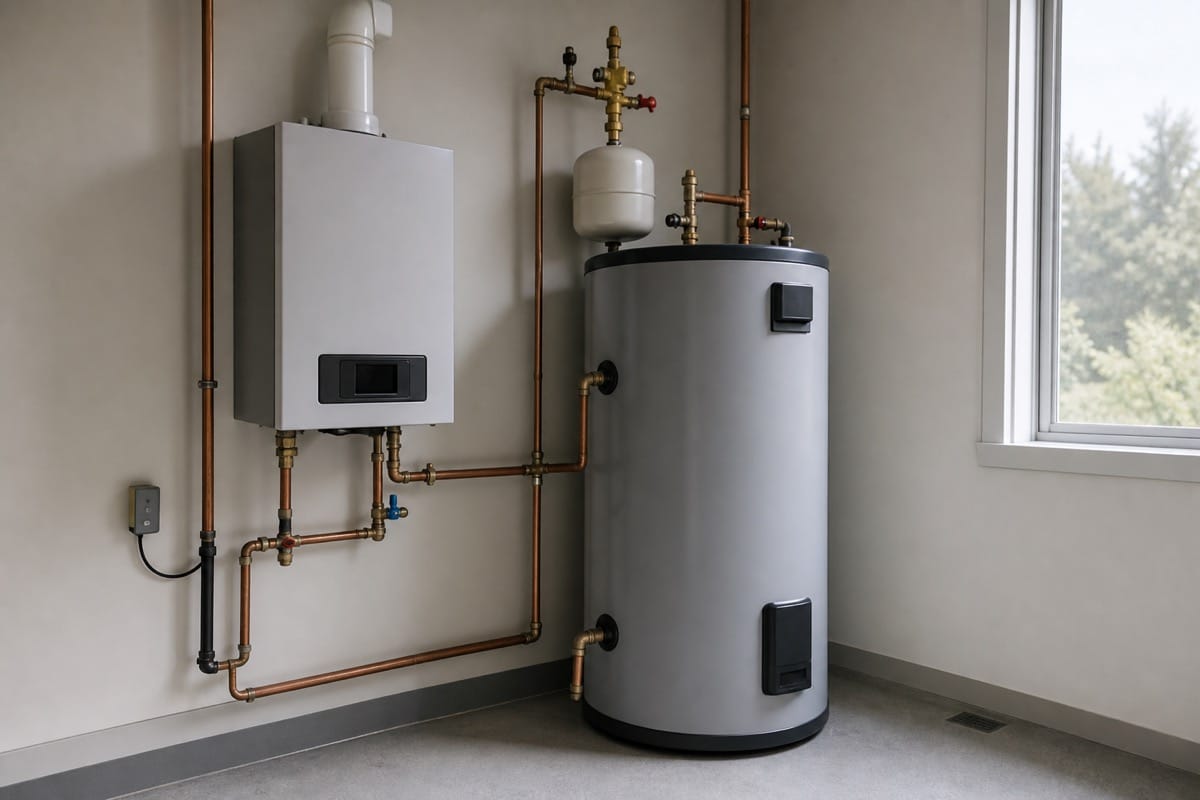
Tankless water heater and storage-tank water heater side by side in a utility room

Choosing a new water heater quietly shapes your daily comfort for the next decade or more. Whether you are replacing a unit that has finally given out or planning ahead before it does, the question we hear most often from homeowners here in Mississauga comes down to tankless vs tank water heater: which one actually makes sense for your house, your family, and your budget? It is a fair question, and the honest answer is that it depends on your home. Both options heat water reliably; they simply go about it in very different ways.

At Furnace King Home Services, we install and service both styles across Mississauga and the wider GTA, and we have learned that the right choice has as much to do with your home’s age, layout, and gas supply as it does with the equipment itself. In this guide, our team walks you through the real trade-offs — upfront cost, energy efficiency, lifespan, hot water supply, footprint, and the retrofit realities of older Mississauga homes — so you can make a confident, informed decision.

Tankless vs Tank Water Heater: How Each One Works

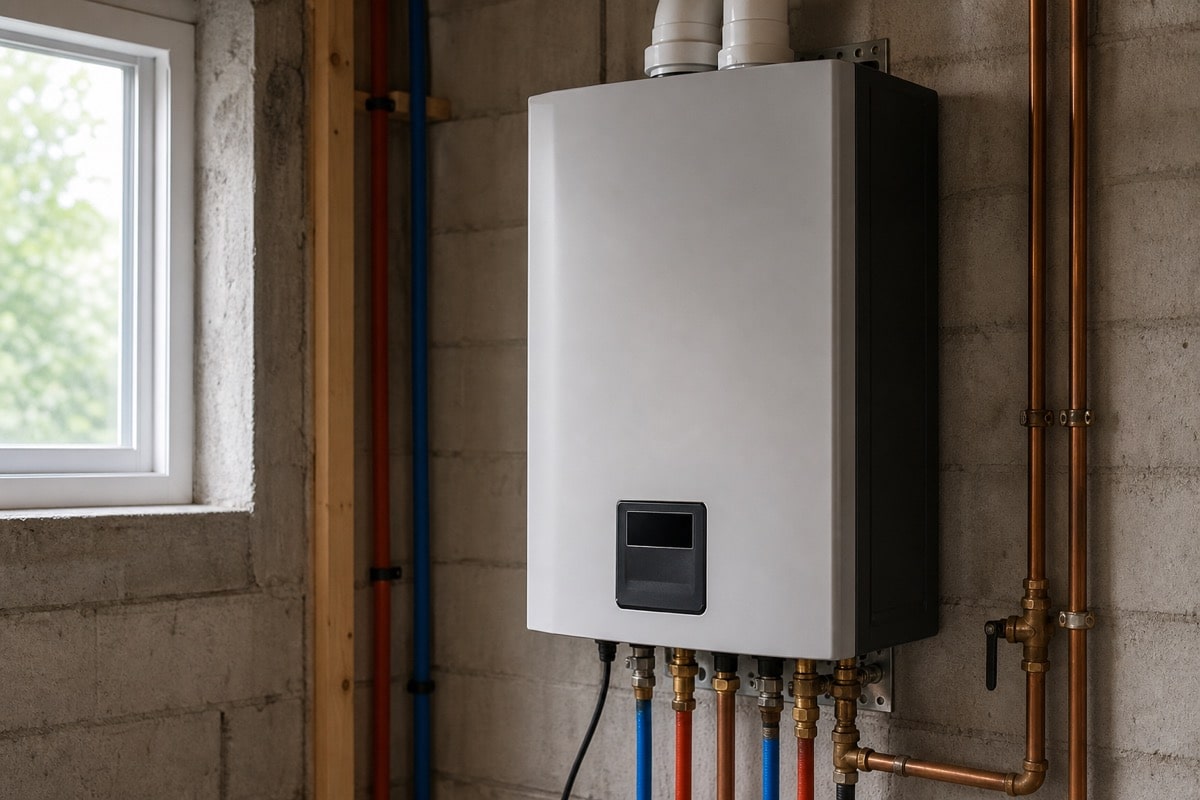
Compact tankless water heater mounted on a basement wall

Before weighing the pros and cons, it helps to understand the basic difference. A traditional tank water heater stores a set volume of hot water and keeps it heated and ready around the clock, so when you turn on a tap, hot water flows straight from the tank. A tankless water heater holds no reservoir. It heats water on demand as it passes through the unit, firing up only when you call for hot water and shutting off when you are done.

That single design difference drives almost everything else in the tankless vs tank water heater comparison — from how much space the unit takes up, to how it is vented, to how it behaves when three people want hot water at once. Neither approach is universally better. What matters is how each one lines up with the way your household actually uses hot water.

Upfront Cost, Energy Efficiency, and Lifespan

These three factors tend to sit at the centre of most decisions.

Upfront cost

A conventional tank unit is generally less expensive to purchase and install, which makes it appealing when you need a straightforward replacement without changing much else in your mechanical room. A tankless system typically carries a higher upfront investment, both for the equipment and for the installation, especially if your home needs upgrades to accommodate it. We will always give you a clear, itemized quote so you can see exactly what is driving the number for your specific situation.

Energy efficiency

Because a tankless unit only heats water when you need it, it avoids the standby energy loss that comes with keeping a full tank hot day and night. A tank unit is continuously working to maintain temperature, even overnight or while you are at work. If lowering ongoing energy use is a priority for you, tankless is worth a serious look.

Lifespan

Tankless units generally last longer than tank units, and many are designed so key components can be serviced rather than requiring a full swap. A tank unit has a shorter typical service life, in part because it constantly holds heated water. Longevity matters when you weigh the higher upfront cost of tankless against the years of service you get in return.

Hot Water Supply, Space, and Larger Families

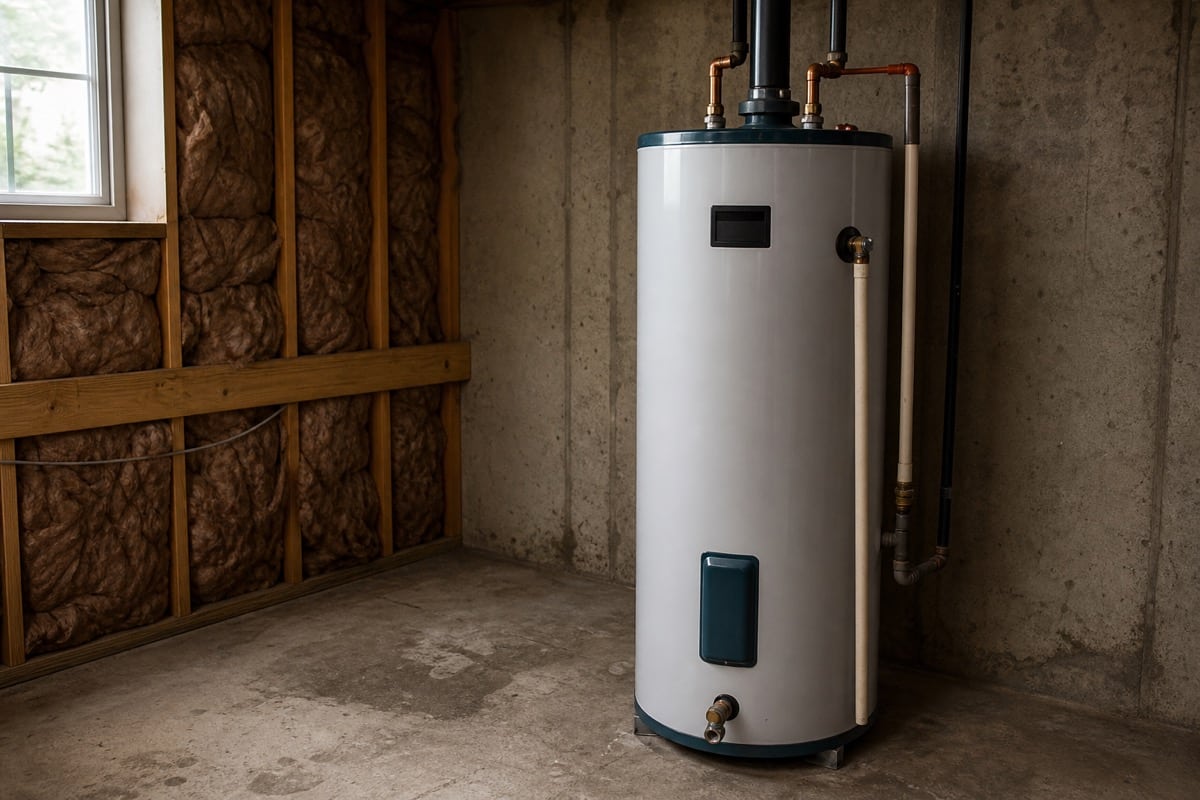
Traditional storage-tank water heater in a basement mechanical room

How your household uses hot water is often the deciding factor, and this is where the two systems feel most different.

  • Endless vs limited hot water: A tankless unit delivers a continuous supply, so you are far less likely to run out mid-shower after the dishwasher and laundry have already run. A tank unit provides only as much hot water as it holds; once it is drained, you wait for it to reheat.
  • Space and footprint: Tankless units are compact and typically mount on a wall, freeing up floor space in a utility room, basement, or closet. A tank unit is considerably larger and needs a dedicated spot. In tighter Mississauga homes and condos, that reclaimed space can genuinely matter.
  • Capacity for larger families: Busy households with several bathrooms and simultaneous demand — morning showers overlapping with laundry — often benefit from a tankless system’s on-demand supply, or from a properly sized tank unit. Sizing is everything here, and it is exactly the kind of thing our team assesses before recommending anything.

The goal is a unit matched to how your household actually lives, which is why we start every recommendation with a look at your home rather than a generic chart.

Installation Considerations in Older Mississauga Homes

Mississauga has a wonderful mix of housing, from established mid-century neighbourhoods to newer developments, and the age of your home plays a real role in this decision. Older homes in particular can introduce a few wrinkles worth knowing about.

  • Venting: Tankless units often require different venting than the tank unit they replace. In an older home, that can mean new venting runs to the exterior, which our team evaluates as part of the assessment.
  • Gas line and capacity: Some tankless models call for a gas supply sized to their demand. If your existing line was set up for a tank unit, it may need to be reviewed to confirm it can support the switch. We check this before proposing a tankless upgrade so there are no surprises.
  • Retrofit realities: Swapping from tank to tankless is more involved than a like-for-like tank replacement. Older mechanical rooms sometimes need adjustments to mounting, water lines, or connections. None of this is a dealbreaker — it simply needs to be planned properly, which is our job, not yours.
  • Straightforward tank replacements: If you are replacing an aging tank with another tank, the work is usually more direct, with minimal changes to your existing setup.

This is where working with an experienced local team pays off. Because we work in Mississauga homes constantly, we know what to look for, and we are set up to handle the water-line and connection work that a proper installation may involve. If you would like a full picture of how your water heater ties into the rest of your home’s plumbing, our plumbing services page is a good place to start.

How Our Team Assesses Your Home and Installs Both Types

When you reach out to us, we do not lead with a product. We lead with questions and a look at your home:

  • We review how many people live in the home and how you use hot water each day.
  • We inspect your current setup, venting, gas supply, and available space.
  • We talk through your priorities — upfront budget, long-term efficiency, endless hot water, or reclaiming space.
  • We recommend the option that genuinely fits — a right-sized tank unit or a tankless system — and explain why.

From there, our technicians handle the installation of both tank and tankless systems, including the venting and connection details that older homes sometimes require. If you are leaning toward going tankless, you can read more on our dedicated tankless water heaters page. Whichever direction you choose, our aim is a reliable, correctly sized system that suits your Mississauga home for years to come.

Frequently Asked Questions

Is a tankless water heater always the better choice?

Not necessarily. A tankless unit offers on-demand hot water, a compact footprint, and strong energy efficiency, but it carries a higher upfront cost and can require venting or gas upgrades in older homes. For some households, a properly sized tank unit is the more practical fit. The best choice in the tankless vs tank water heater debate always comes down to your specific home and how your family uses hot water, which is what we assess before recommending anything.

Can I switch from a tank to a tankless unit in my older Mississauga home?

In most cases, yes, though it usually involves more than a simple swap. Older homes may need updated venting, a review of the gas supply, and adjustments in the mechanical room to accommodate a tankless unit. Our team evaluates all of this during the assessment so you know exactly what the switch involves before any work begins.

Which option gives me more hot water for a large family?

A tankless system provides a continuous, on-demand supply, so it is less likely to run out during back-to-back showers or overlapping laundry and dishwashing. A larger, properly sized tank unit can also serve a busy household well. The key in either case is correct sizing for your simultaneous hot-water demand, and we handle that sizing as part of our recommendation.

Still weighing your options? We would be glad to help you compare a tankless and tank water heater for your specific home. Reach out to the team at Furnace King Home Services by calling (905) 564-5464 or visiting our contact page, and we will assess your home and recommend the right solution with no pressure and a clear, upfront quote.

Ontario Heat Pump Rebates in 2026: What Mississauga Homeowners Can Claim

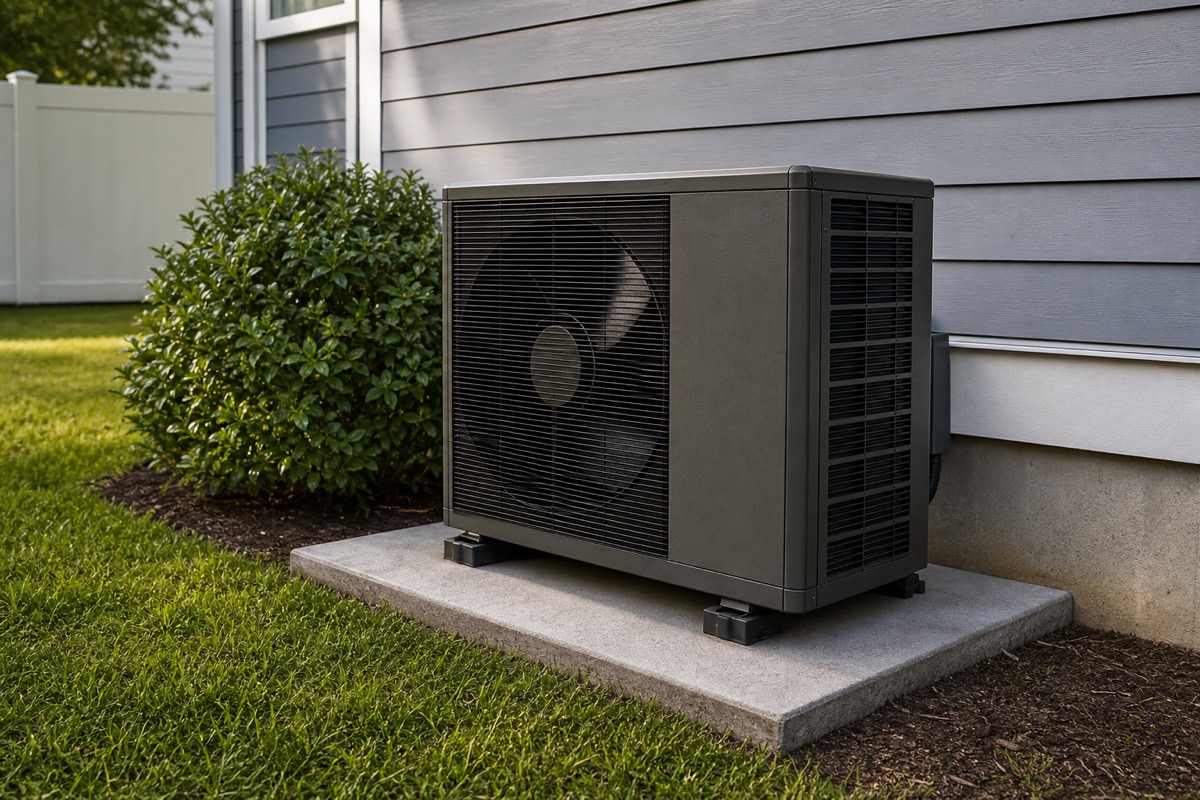
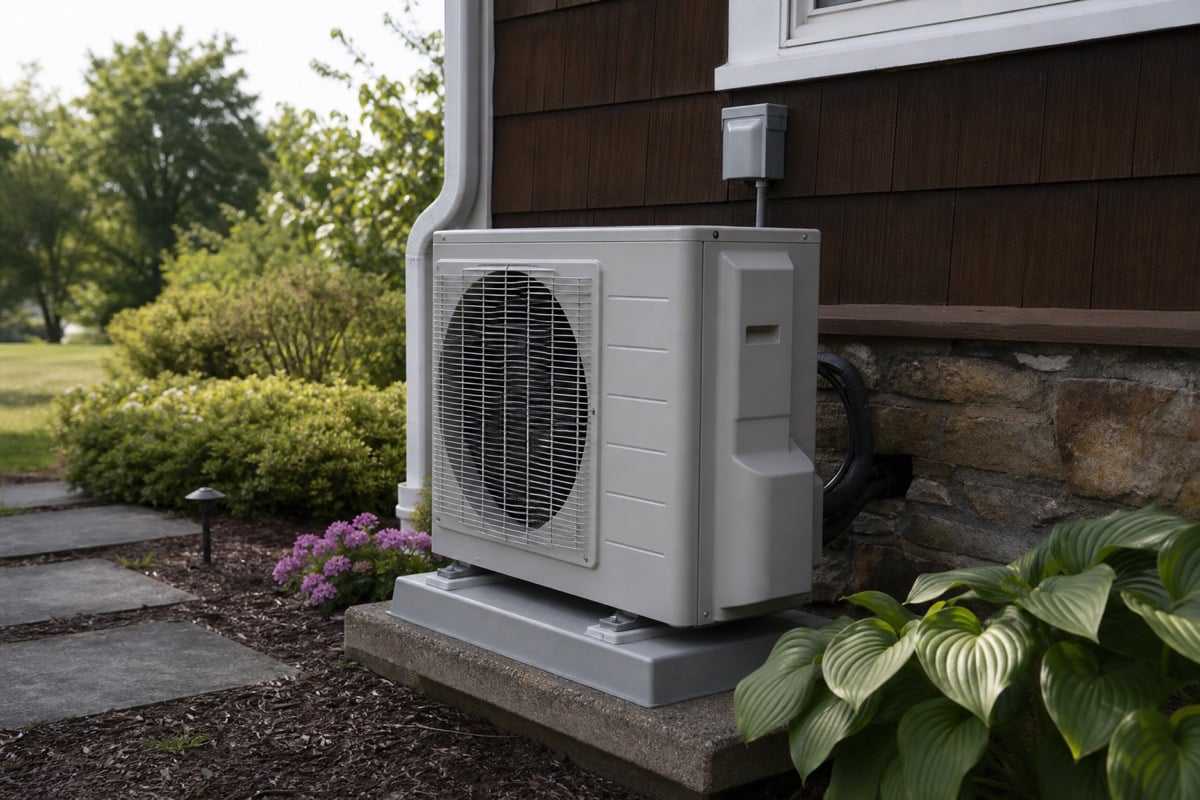
Air-source heat pump condenser beside a suburban home eligible for Ontario heat pump rebates

If you have been thinking about replacing an aging furnace or air conditioner, 2026 is a smart year to look closely at heat pumps — and at the money that can come back to you for choosing one. Across the province, a growing mix of federal, provincial, and utility-backed programs is designed to make efficient home heating and cooling more affordable, and understanding heat pump rebates Ontario homeowners can access is the first step toward putting a meaningful amount of that support to work in your own home. At Furnace King Home Services, we field questions about these incentives from Mississauga and GTA homeowners almost every week, so we wanted to lay out how they generally work.

Our goal here is not to quote a specific dollar figure or a deadline — those numbers and dates shift as programs are updated, refunded, or replaced. Instead, we want to help you understand the kinds of rebates available, the eligibility factors that tend to apply, and how a proper professional installation protects your ability to claim them. When you are ready to confirm the current details, our team can walk you through exactly what applies to your property today.

What heat pump rebates in Ontario actually are

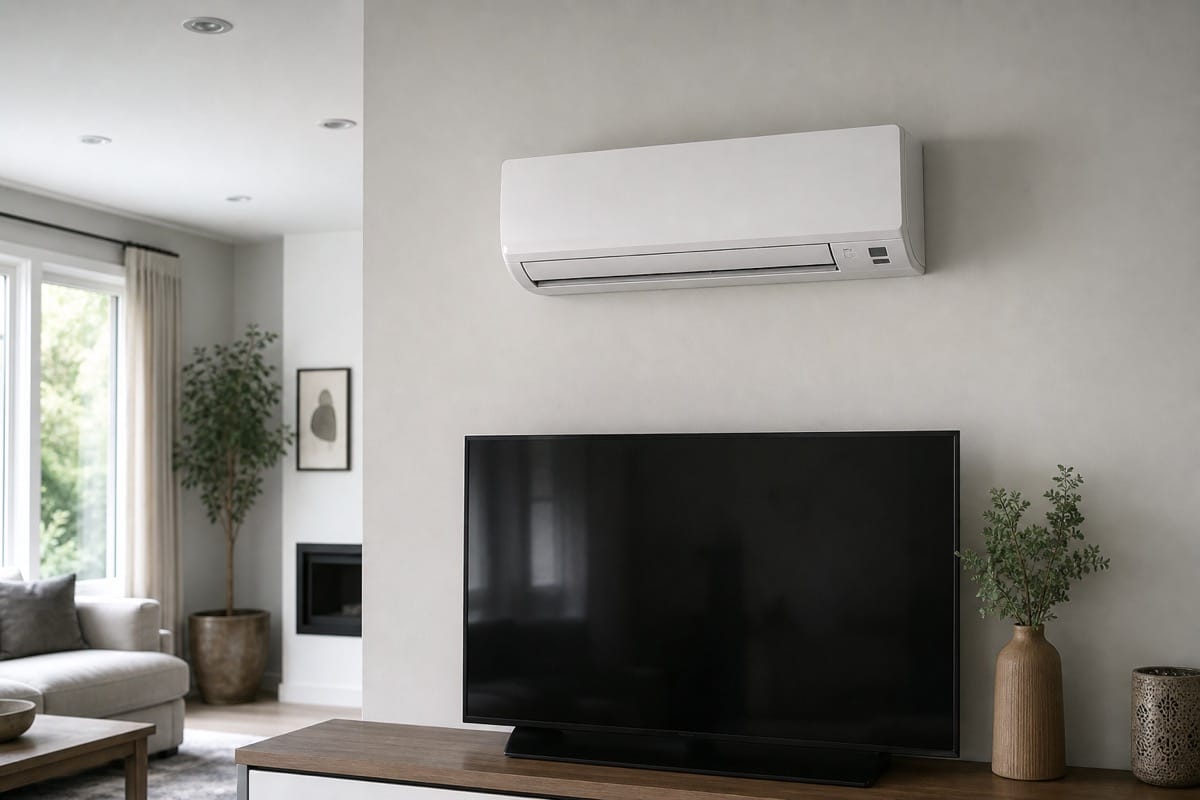
Wall-mounted ductless heat pump indoor unit in a modern living room

A heat pump rebate is an incentive that reduces the effective cost of upgrading to a high-efficiency heat pump system. Rather than a single program, the landscape of heat pump rebates Ontario households can tap into is really a layered set of offers from different administrators. Some are delivered federally, some provincially, and some through your utility. Because they come from different sources, they often have different rules, different equipment requirements, and different application steps — but they share a common purpose: encouraging homeowners to move away from less efficient systems and toward electric heat pumps that heat and cool a home using far less energy.

In practical terms, these incentives usually arrive as a rebate after your new system is installed and verified, though the exact mechanics vary by program. That is why we always encourage homeowners to understand the full path before buying equipment, so nothing is missed along the way.

The main types of programs to know about

While specifics change, the categories of support have been fairly consistent, and a few names come up again and again in conversations with our Mississauga customers:

  • Federal affordability programs — Initiatives such as the Canada Greener Homes Affordability Program are aimed at helping households move to efficient heating solutions, often with a focus on making heat pumps accessible to more homeowners.
  • Provincial and utility-delivered programs — The Home Renovation Savings Program, delivered through partners including Enbridge and the IESO, is a leading example of a provincial-level incentive that has supported heat pump upgrades and other efficiency improvements.
  • Utility and local incentives — Depending on your energy provider and where you live in the GTA, additional rebates or add-on offers may be available that stack alongside the larger programs.

The important takeaway is that these programs can sometimes be combined, and the combination is where real value lives. We help homeowners in Toronto, Vaughan, Oakville, Milton, Etobicoke, Burlington, and Brampton figure out which offers currently apply to their situation and how they fit together.

Common eligibility factors to expect

Outdoor heat pump unit installed next to a home foundation

Every program sets its own rules, but over the years a familiar set of eligibility factors tends to appear across most heat pump rebate offers. Knowing these in advance helps you avoid surprises:

Your home and ownership

  • Owner-occupied home — Most incentives are geared toward homeowners living in the property, rather than rentals or new construction.
  • Property type — Programs frequently specify eligible dwelling types, so it is worth confirming your home qualifies before moving ahead.

The equipment and installation

  • Eligible equipment — Rebates typically apply only to qualifying heat pump models that meet efficiency standards, which is a big reason cold-climate systems are favoured.
  • Professional installation — Programs generally require the work to be done by a qualified contractor, with proper documentation and invoicing.
  • Pre- and post-assessments — Some programs require an energy assessment before and after the upgrade to confirm the improvement and validate the claim.

Because these requirements can make or break an application, our team pays close attention to them from the very first conversation. You can learn more about the systems we install on our heat pump services page, where we explain the options we recommend for GTA homes.

Why rebates favour efficient cold-climate heat pumps

There is a reason these programs are built around efficiency. In our climate, older heating systems and early-generation heat pumps often struggled in deep cold. Modern cold-climate heat pumps are engineered to deliver reliable heat even when Ontario winters turn harsh, while still providing efficient cooling in summer. From a program administrator’s perspective, supporting these systems means the energy savings are real and lasting — which is exactly what a rebate is meant to reward.

For you as a homeowner, this alignment is good news. The equipment the programs encourage is also the equipment we would recommend on its own merits: a properly sized, efficient heat pump that keeps your home comfortable year-round and helps manage your energy use. When the rebate rewards the same choice that makes sense for your comfort, everyone wins.

How a proper installation protects your eligibility

One of the most overlooked parts of the rebate process is that the installation itself can determine whether you qualify. A heat pump that is undersized, oversized, or installed without the required documentation can jeopardize a claim — even when the equipment is eligible. This is where working with an experienced local team matters.

When our team at Furnace King Home Services handles your upgrade, we keep program requirements in mind throughout. That means recommending qualifying equipment, sizing the system correctly for your home, completing the work to standard, and providing the paperwork and invoicing that programs expect. We also help coordinate the assessment steps some programs require, so you are not left trying to piece together the process on your own. If a current promotion or incentive can be paired with your project, we will point you to it — our promotions page is a good place to check what we are offering alongside program rebates.

How we help you navigate the paperwork

Rebate applications can feel intimidating, with forms, documentation, and timing to track. Our role is to make that manageable. We start by understanding your home and your goals, then explain which heat pump rebates Ontario programs may realistically apply to you right now. From there, we guide you through the sequence — assessment, installation, and documentation — so each requirement is met in the right order. When you would rather confirm details directly, we can point you to the program administrator, but most of our customers appreciate having a single local team keep everything on track.

Frequently Asked Questions

Can I combine more than one heat pump rebate program?

In many cases, yes — some federal, provincial, and utility incentives can be layered together, which is often where the largest total value comes from. That said, each program sets its own stacking rules, and they change over time. We will review your specific situation and confirm what can currently be combined before you commit to an installation.

Do I have to get an energy assessment to qualify?

Some programs require a pre- and post-installation assessment, while others do not. Because this requirement varies and can affect your claim, we always confirm what applies to your home before the work begins. If an assessment is needed, we help coordinate the timing so it lines up correctly with your upgrade.

How do I find out the exact rebate amounts available right now?

Rebate values and deadlines are updated regularly, so we intentionally avoid quoting figures that may be out of date. The most reliable path is to confirm current details with our team or directly with the program administrator. Reach out and we will tell you what is active for Mississauga and GTA homeowners today.

Ready to see what you can claim? Our team at Furnace King Home Services would be glad to review your home, recommend the right cold-climate heat pump, and help you make the most of every incentive available. Call us at (905) 564-5464 or visit our contact page to get started — we will confirm the current heat pump rebate details and map out the simplest path from your first question to a warmer, more efficient home.