
Seeing steam rise from your heat pump on a cold Burlington morning can be alarming. In most cases it is defrost mode doing its job. This guide explains what is normal, what is not, and when to call a technician.
What Defrost Mode Actually Is
If you have looked out your window on a cold morning and seen a cloud of vapour rising from your heat pump, you are not alone. It is one of the most common winter questions we hear, and in most cases the answer is reassuring: the system is doing a routine job to keep itself working.
In heating mode, an air-source heat pump pulls heat from the outdoor air and moves it inside. To do that, the outdoor coil gets colder than the air around it. When the air carries moisture, a layer of frost can slowly form on that coil. Frost acts like a blanket, so the coil can no longer pick up heat as well. Defrost mode is the system’s built-in way of clearing that frost so heating can carry on.
During a defrost cycle, the unit temporarily changes how it operates so the outdoor coil warms up and melts the frost. Once the coil is clear, the system returns to normal heating. You usually will not need to do anything at all.
Why the Outdoor Coil Frosts in Humid, Cold Weather
Frost needs two things: a cold surface and moisture in the air. Halton and the western GTA often supply both at once. Winter days hovering around or just below freezing, with damp air coming off Lake Ontario, are exactly the conditions where a coil collects frost fastest.
Very cold, dry days tend to cause less frosting because there is less moisture to freeze. Mild, damp days can surprise people, since the unit may defrost more often even when it does not feel especially cold.
That is why cold-climate heat pumps are designed with Canadian winters in mind. According to Natural Resources Canada, cold climate air source heat pumps are better adapted to the colder Canadian climate than standard models. Even so, every air-source system still needs to defrost from time to time. We cover choosing one for our region in our guide to cold-climate heat pumps in Canada.
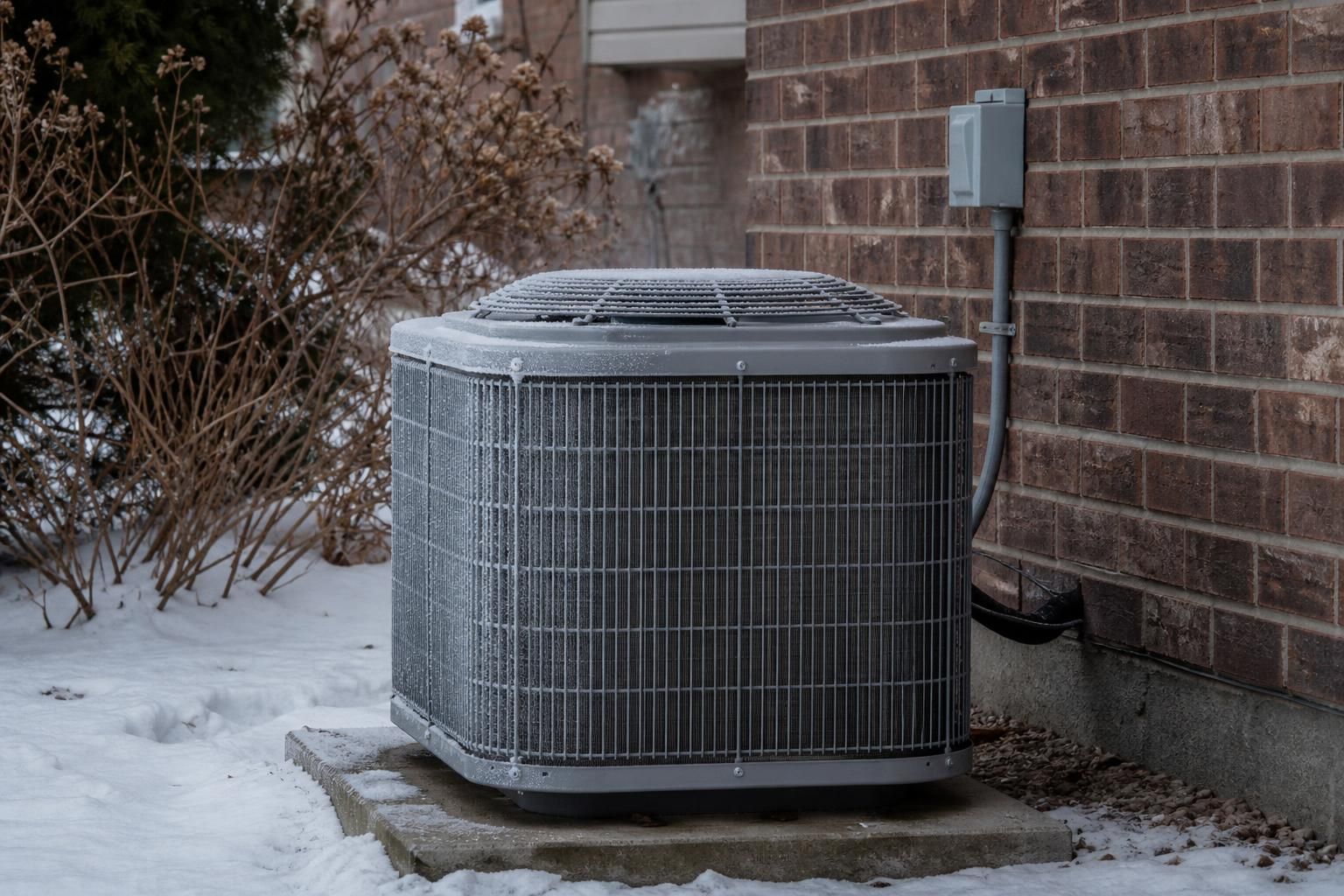
What Normal Defrost Looks and Sounds Like
Because the cycle can look dramatic from the kitchen window, it helps to know what is typical. These are all common and generally harmless:
- A plume of steam or vapour rising from the outdoor unit as the warm coil meets cold, damp air.
- The outdoor fan stopping for a while, so the coil can warm up instead of blowing cold air across it.
- A change in sound, such as a whoosh, a brief hiss or a shift in the compressor tone as the system changes mode.
- Frost or a thin layer of ice that appears on the coil and then clears.
- Auxiliary or backup heat coming on briefly, if your system has it, so the air indoors does not feel cool while the outdoor coil defrosts.
How Often and How Long a Defrost Cycle Runs
This is where we have to be careful, because it genuinely varies. Different manufacturers use different control logic, and the timing depends on outdoor temperature, humidity, how much frost has built up and how the unit is set up.
In general, defrost cycles are short compared with the time the system spends heating, and they happen more on damp, near-freezing days than on very cold, dry ones. Your installation manual or the manufacturer’s literature is the best place to see what is typical for your specific model, and a technician can tell you whether your unit’s pattern looks right.
Signs That Are Not Normal
A short, occasional defrost is routine. These situations deserve attention:
- The whole unit is encased in ice and it is not clearing, even after the system has had time to cycle.
- Ice stays on the coil for long periods instead of melting away.
- Defrosting seems nearly continuous, with the unit repeatedly stopping and starting without settling into steady heating.
- No meaningful heat for long stretches while the house gets steadily cooler.
- Strange noises such as grinding, banging, loud buzzing or squealing.
- Water pooling or ice building up below the unit, especially where it could freeze over a walkway, patio or entry.
These can point to a stuck sensor, restricted airflow, a drainage issue or a refrigerant or component problem, none of which are safe to diagnose yourself.
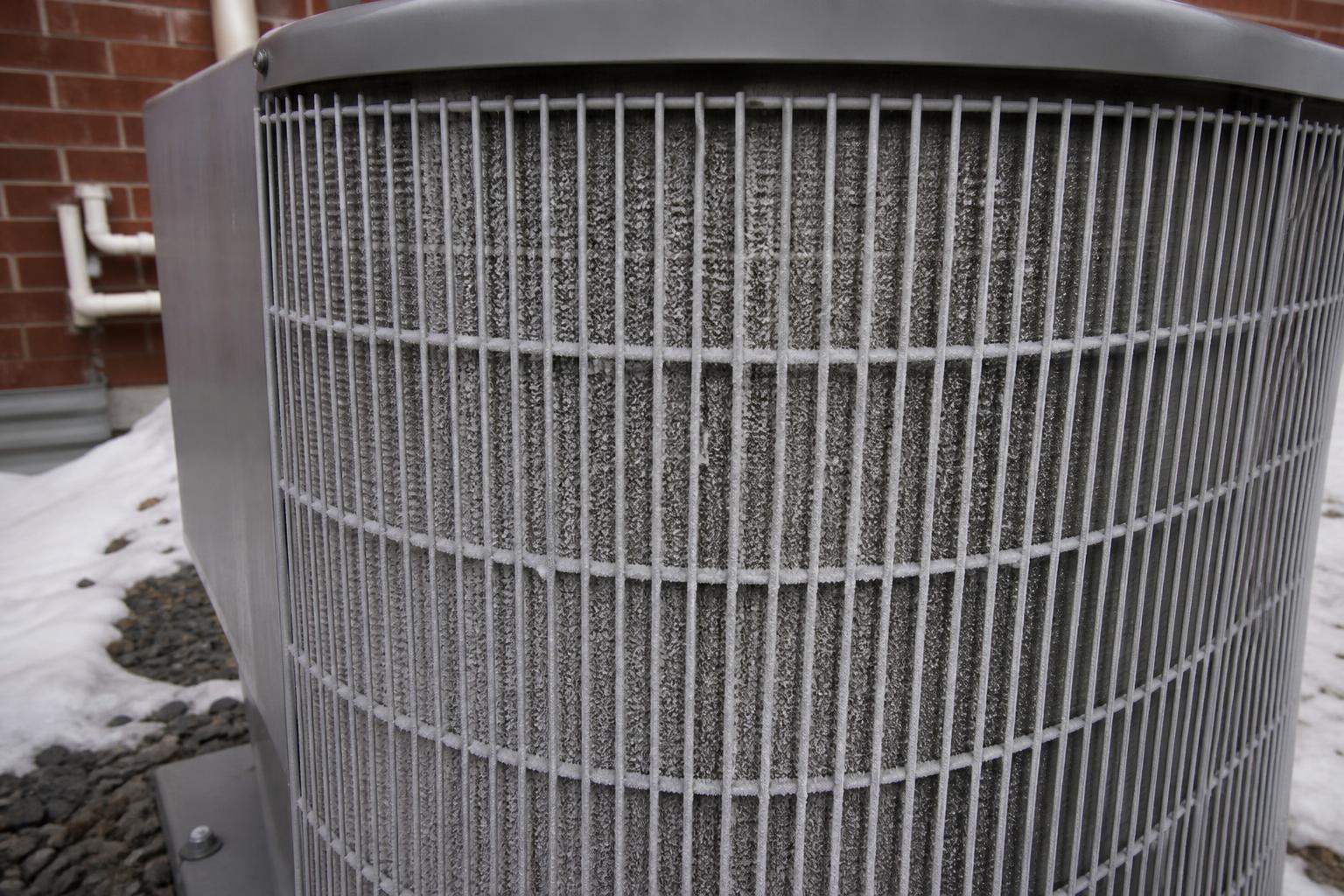
If the unit is frozen solid or the problem is not defrost at all, our guides to preventing heat pump freezes, what to do when a heat pump is not heating and common heat pump repair problems cover the fault side.
What Homeowners Can Safely Do
There are a few simple, low-risk things that help the system, and several things to avoid.
- Keep the area clear. After snowfall, gently brush loose snow away from the sides and top of the unit with a soft broom or brush. Do not let drifts pile against it.
- Maintain clearance. Keep shrubs, fencing, stored items and leaves back from the unit so air can move freely. Free airflow is one of the biggest factors in how well it handles frost.
- Check the stand or pad. The unit should sit level and raised above the ground, so melting snow can drain away and not refreeze around its base.
- Look at the indoor filter. A clogged filter reduces airflow and makes the whole system work harder. Replace or clean it as your equipment requires.
- Avoid big thermostat setbacks. Dropping the temperature several degrees overnight and then asking for a large jump in the morning can make the system lean on backup heat. Steady settings usually work better.
Just as important, here is what not to do. Never chip or pry at ice with a screwdriver, hammer or shovel, because the coil fins and refrigerant lines are delicate and easily damaged. Never pour hot water over the unit, which can damage components and create a slick patch of fresh ice nearby. And do not remove panels or reach inside the cabinet. For seasonal prep, our heat pump maintenance checklist walks through what to do before and during winter.
When to Call a Technician
Call if you see any of the not-normal signs above, or if something simply feels off. Trust your instincts: you know how your system usually sounds and how warm your home usually feels. Calling early is better than waiting for a small issue to grow.
A visit typically involves checking the outdoor coil, fan, sensors and drainage, then confirming the system moves in and out of defrost the way it should. Our team provides full heat pump services, and a regular tune-up through our HVAC maintenance program is a good way to catch small problems before the cold sets in. If your home has no heat at all, tell us when you call so we can treat it as urgent.
Frequently Asked Questions
Is the steam coming off my heat pump dangerous?
No. In nearly every case it is water vapour created as the warm outdoor coil melts frost in cold, damp air. If you smell burning or hear loud mechanical noises, shut the system off and contact a technician.
Should I turn my heat pump off if it is covered in frost?
A light layer of frost that clears during defrost is normal, so there is no need to switch it off. If the unit is heavily iced over and not clearing, turn it off at the thermostat and have it checked rather than attempting to remove the ice yourself.
Why is my heat pump blowing cooler air during defrost?
While the system reverses its process to warm the outdoor coil, the air indoors can feel a little cooler for a short time. Backup heat may help balance this. If the cooler air lasts a long time, it is worth a service visit.
Will my heat pump still heat my home on the coldest days?
Cold-climate models are built for low temperatures, and proper sizing and installation matter a great deal. Your home’s insulation and the specific model also play a role, so we assess these together.
Heat Pump Help in Burlington
Winter should not leave you wondering whether your heat pump is working properly. If you are in Burlington or nearby and want a second opinion on what your unit is doing, call us at (905) 564-5464 or contact us online. We will explain what we find in plain terms and help you decide on the right next step.